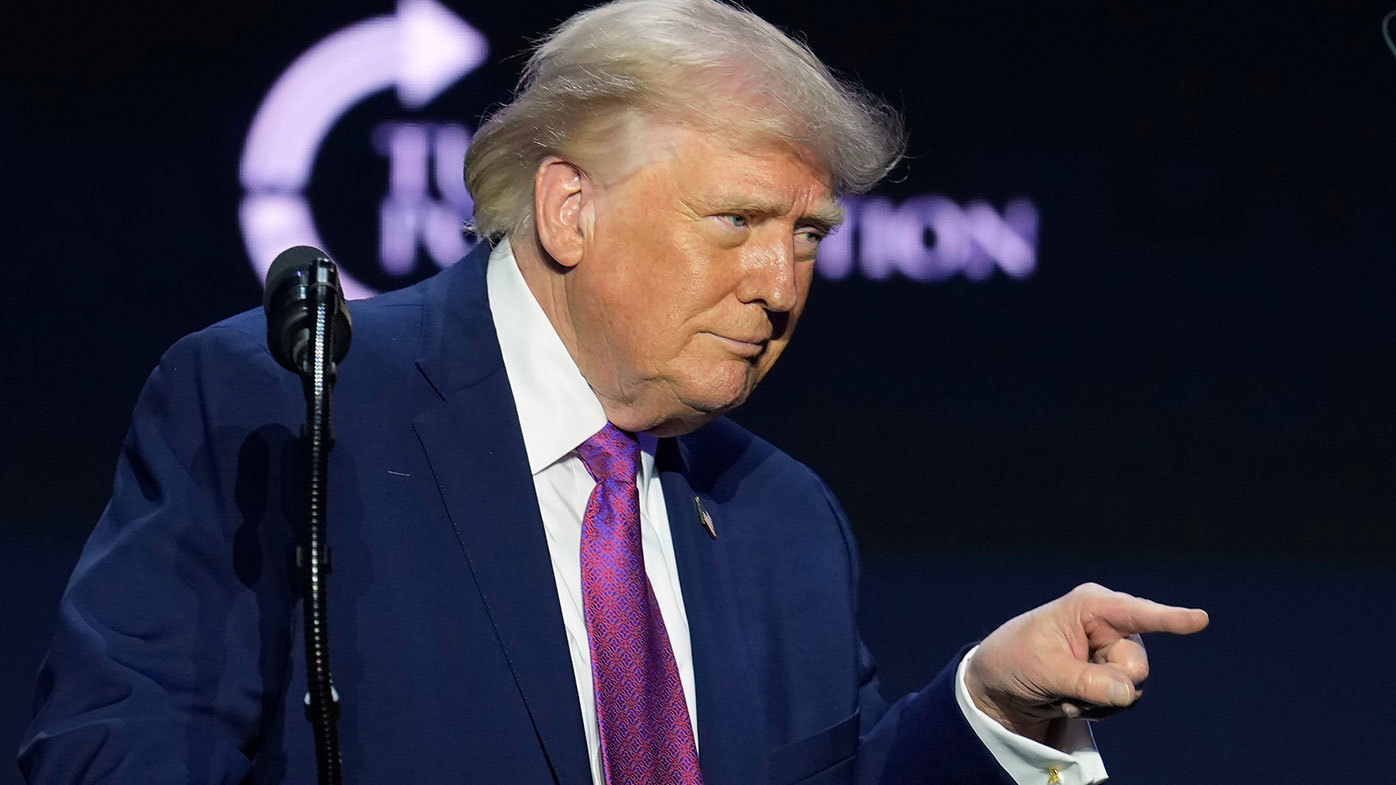
Donald Trump is moving toward a massive financial settlement with his own administration that could see billions in taxpayer funds funneled directly into his personal accounts. The President’s legal team filed a motion in a Miami federal court on Friday, April 17, 2026, requesting a 90-day pause in his long-running lawsuit against the Internal Revenue Service and the Treasury Department. This strategic timeout is designed to finalize a settlement over the 2019 and 2020 leaks of his tax records. While the initial lawsuit sought $10 billion in damages, internal estimates and the addition of claims from the Trump Organization and the President's adult sons have pushed the potential fiscal impact on the U.S. Treasury into the double digits.
The move creates a staggering conflict of interest where the plaintiff in the case is also the ultimate superior of the defendants. The Department of Justice, which represents the IRS and Treasury, reports to the President. This means Trump’s subordinates are currently negotiating how many billions of public dollars to hand over to their boss.
The Architecture of a $10 Billion Claim
The legal basis for this payout rests on the actions of Charles Littlejohn, a former IRS contractor who was sentenced to five years in prison for leaking the tax data of thousands of wealthy Americans. Trump argues that these leaks caused irreparable harm to his global brand and personal reputation. By framing the leak not just as a privacy violation but as a targeted economic assault on a multi-billion dollar real estate empire, the legal team has built a valuation model that demands an unprecedented payout.
The settlement is being handled under the Federal Tort Claims Act, which allows citizens to sue the government for the negligent or wrongful acts of its employees. However, the scale of this specific claim is without precedent.
- Reputational Damage: Lawyers argue the leaks damaged the Trump brand's "luxury" perception during critical licensing negotiations.
- Privacy Violations: Each individual disclosure is being treated as a separate statutory violation.
- Business Opportunity Cost: The Trump Organization claims the public focus on the tax data led to the cancellation of several international development deals.
A Treasury Under Siege from Within
The optics of the deal are difficult to reconcile with standard executive branch ethics. Normally, the Attorney General operates with a degree of independence in litigation, but the current political climate has blurred those lines. The Treasury Department is now led by officials appointed by the man who is suing the department.
Critics point out that the federal government rarely settles for anything close to the full amount in privacy cases. A $10 billion or $14 billion payout would dwarf any previous privacy-related settlement in American history. Usually, the IRS settles such claims for amounts in the low millions, if at all. The shift toward a multi-billion dollar resolution suggests that the defense—the U.S. Government—may not be putting up a traditional fight.
The Mechanism of Payment
If a settlement is reached, the money would likely come from the Judgment Fund, a permanent, indefinite appropriation used to pay judicial awards and settlements against the United States.
- The fund is not subject to the annual congressional appropriations process.
- Payments are managed by the Bureau of the Fiscal Service, a branch of the Treasury.
- Once a settlement is signed, the transfer of funds can happen almost automatically, bypassing a vote in the House or Senate.
This bypass is the primary reason why the 90-day stay in court is so significant. It moves the process from a public courtroom, where evidence of "harm" must be proven, to a private negotiation room where the President’s appointees hold all the cards.
Political and Fiscal Aftershocks
The timing of these settlement talks is particularly sensitive. It coincides with the massive "One, Big, Beautiful Bill" tax overhaul, which has already seen the IRS workforce reduced by 27% under the Department of Government Efficiency. While the administration touts a 24% increase in tax refunds for the average American this season, the prospect of a single individual receiving a payout equivalent to the annual budget of several federal agencies is a tough sell to the public.
Senator Ron Wyden and other members of the Senate Finance Committee have blasted the talks as a "corrupt circle of self-dealing." They argue that the same administration that is currently under fire for leaking taxpayer data to ICE is now claiming that leaks are so damaging they require a $10 billion remedy when the victim is the President.
The President has previously stated he would donate any money won in the lawsuit to charity. However, there is no legal mechanism to compel that donation once the funds are transferred to his personal accounts. Furthermore, if the money is paid to the Trump Organization, it becomes corporate revenue, complicating any "charitable" promise.
The Precedent Problem
Settling this case for a record-breaking sum sets a dangerous legal standard. If a billionaire can claim $10 billion in damages for a tax leak, every other high-net-worth individual affected by the Littlejohn leaks could theoretically demand similar treatment. This could lead to a systemic drain on the Treasury, as thousands of other wealthy filers line up for their share of the Judgment Fund.
The IRS is already in a state of flux with IRS CEO Frank Bisignano scheduled to testify about the agency's shifting priorities. If the settlement is finalized during this period of transition, it may be viewed as a final "cleaning of the slate" before the agency is fully restructured.
The 90-day window expires in mid-July. If the stay is lifted without a settlement, the case returns to a judge who has previously expressed skepticism about the magnitude of the damages. The pressure is on the administration's lawyers to ink the deal before the legal process forces a more transparent accounting of the actual losses. The outcome will decide if the U.S. Treasury is a neutral bank or a private piggy bank for the executive branch.