The guns fell silent at 17:00 EST on April 16, 2026, but the quiet along the Blue Line feels less like peace and more like a collective intake of breath before a terminal scream. Under a deal brokered by the United States, Israel and Lebanon have entered a mandatory 10-day cessation of hostilities. To the casual observer, it is a diplomatic breakthrough. To those who have spent decades watching the scorched earth of southern Lebanon, it looks like a tactical reset for two sides that have reached the limit of their current magazines.
The primary objective of this window is to transition from a "cessation" to a permanent security agreement. However, the foundational cracks in the deal are already visible. While the Lebanese government in Beirut formally commits to a "monopoly on arms" for state security forces, the reality on the ground remains a chaotic patchwork of Hezbollah defiance and Israeli skepticism.
The Disarmament Delusion
Beirut’s central promise—that only the Lebanese Armed Forces (LAF) will bear arms—is a ghost that has haunted regional diplomacy since 2006. This time, the stakes are higher. Prime Minister Nawaf Salam’s government is under immense pressure to prove it can actually exert authority over Hezbollah, a group that retains an estimated 25,000 rockets despite months of Israeli bombardment.
The hard truth is that the LAF remains a mirror of Lebanon’s sectarian fragility. Expecting a national army to forcibly disarm a battle-hardened militia that still commands the loyalty of a significant portion of the population is not a strategy; it is a hope. Israeli intelligence reports suggest that even during the lead-up to this truce, Hezbollah was shifting its Badr Unit operations north of the Litani River, preserving its precision-missile capability while offering the illusion of a withdrawal from the border.
The Trump Factor and the Iranian Shadow
The timing of this 10-day window is not accidental. It overlaps precariously with the April 19 expiration of U.S. sanctions waivers on Iranian crude oil. Washington is using the Lebanon ceasefire as a lever in a much larger game of high-stakes poker with Tehran. By securing a temporary lull in the Levant, the U.S. administration is attempting to isolate Iran’s regional proxies before the next wave of economic strangulation begins.
This puts Hezbollah in a corner. If they abide by the truce, they risk looking weakened under Western pressure. If they break it, they invite a renewed Israeli ground invasion that has already reached the outskirts of Khiam. For Israel, the "right to self-defense" remains the ultimate escape clause. Prime Minister Netanyahu has been blunt: Israeli troops are not fully withdrawing, and any perceived re-arming by Hezbollah will be met with immediate fire, truce or no truce.
The UNIFIL Exit Strategy
Perhaps the most overlooked factor in this new landscape is the impending death of UNIFIL. With the UN Security Council already committed to ending the peacekeeping mandate by December 2026, the international "buffer" is evaporating. The U.S. has stopped funding the mission, viewing it as a bloated relic that failed to prevent the very conflict now supposedly ending.
Without UNIFIL’s white SUVs acting as a physical, if symbolic, barrier, the border is becoming a binary environment. It is now LAF versus IDF, with Hezbollah moving through the shadows between them. This removes the "diplomatic speed bump" that previously delayed escalations.
A Logistics Reset in Disguise
Follow the trucks, not the tweets. Both sides are currently using this 10-day window to solve massive logistical headaches. Israel needs to rotate exhausted reservists who have been fighting since March; Hezbollah needs to replenish its depleted short-range rocket stockpiles and stabilize its shattered mid-level command structure.
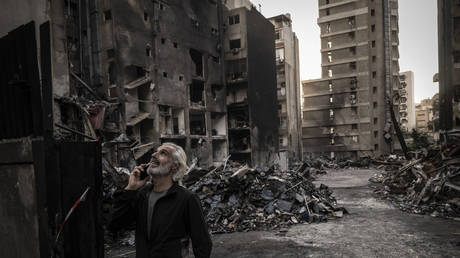
The humanitarian crisis in Lebanon, with over a million people displaced, provides the necessary cover for this pause. While the world watches aid convoys enter the south, the real movement is happening in the Bekaa Valley and the tunnels of the north. This is a "refit and rearm" period masquerading as a peace process.
If a permanent agreement is not reached by the end of the ten days—and historical precedent suggests it won't be—the resumption of violence will likely be more intense than the initial outbreak. Both sides will have fresh troops, replenished supplies, and a clearer map of their opponent's weakened positions. This is not the end of the war. It is the end of the first act.
Prepare for the silence to break on April 26.