The recent degradation of high-tier missile defense systems in active combat zones has shattered the long-standing myth of the "impenetrable bubble." For decades, aerospace contractors marketed Terminal High Altitude Area Defense (THAAD) and the S-400 Triumf as digital shields capable of rendering an entire geographic region untouchable. Reality proved more complicated. When saturated by low-cost drones and ballistic volleys, these multi-billion-dollar assets faced a brutal choice: expend limited interceptors on cheap decoys or risk being dismantled by a direct hit. The S-400 survived these specific trials not through superior electronics, but because of a layered, "onion-skin" doctrine that the West is only now beginning to scramble to replicate.
The Architecture of Survivability
Military planners often mistake a single platform for a solution. It is a common trap. In the high-stakes environment of the Middle East and Eastern Europe, the difference between a functional battery and a pile of scorched titanium came down to what surrounded the primary radar. THAAD is a precision instrument designed for a specific task—intercepting ballistic missiles in their terminal phase. It is an Olympic fencer in a bar fight. When the fight turns into a chaotic brawl involving swarms of "suicide" drones and subsonic cruise missiles, the fencer’s elegance becomes a liability.
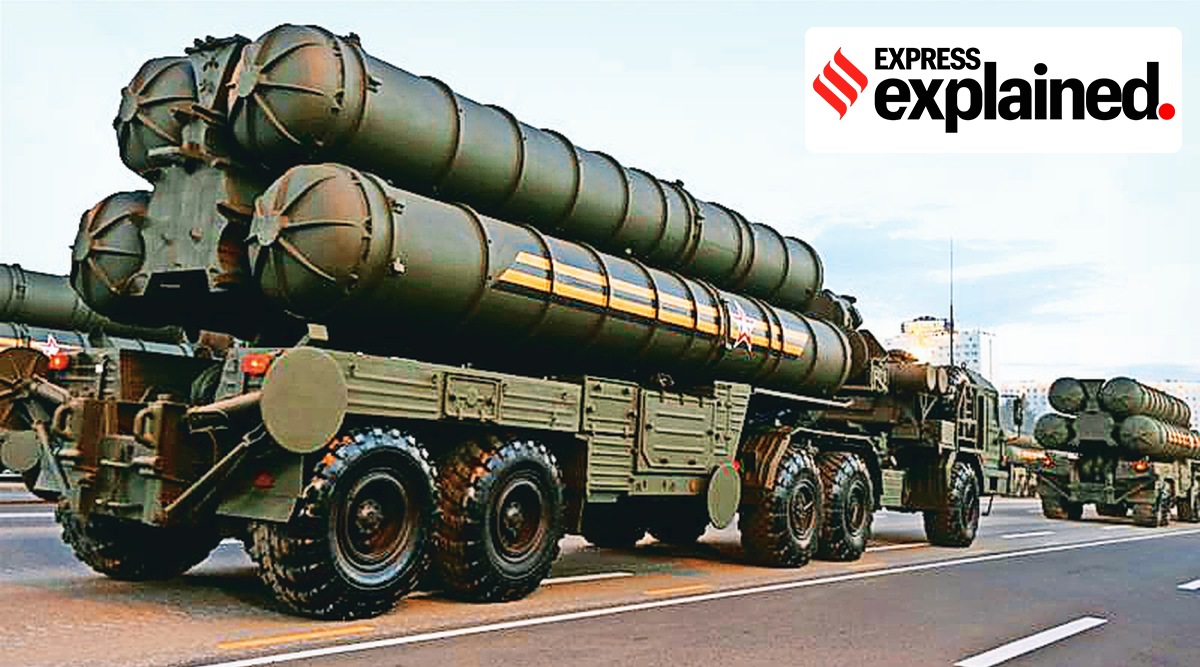
The S-400 functions differently within the Indian and Russian operational frameworks. It is never deployed as a lonely sentinel. Instead, it sits at the heart of a nested ecosystem. This is the "onion skin" strategy in practice. To kill an S-400, an incoming strike must first pass through layers of short-range systems like the Pantsir-S1 or Tor-M2. These smaller units act as the "hard-kill" bodyguards, swatting away the low-tier threats that would otherwise force the S-400 to waste its $2 million interceptors or reveal its precise location through active scanning.
Why THAAD Struggled Under Saturation
The U.S.-led architecture has historically relied on air superiority to protect its ground-based assets. If you own the skies, your missile batteries don't need to worry about a $20,000 drone loitering overhead. That assumption died in the last twenty-four months. In recent engagements, THAAD systems faced a saturation dilemma.
The primary AN/TPY-2 radar is an engineering marvel, but it is also a massive electromagnetic flare in the dark. Once it pulses, every electronic intelligence (ELINT) suite within hundreds of miles knows exactly where it is. Without a dedicated, integrated short-range layer to soak up "trash" targets, the THAAD system is forced to engage threats that are beneath its pay grade. When a system is busy tracking forty different points of light, its processing power and its magazine depth are rapidly depleted.
We saw this play out when high-value batteries were suppressed not by superior technology, but by the sheer math of the "cost-exchange ratio." If it costs the enemy $500,000 to force you to fire $50 million worth of interceptors, you have already lost the battle, even if every shot hits.
The Indian Air Force and the Integrated Shield
India’s adoption of the S-400 wasn't just about buying a Russian launcher; it was about adopting a philosophy of "active defense." The Indian Air Force (IAF) veteran community has been vocal about why the Triumf fits their specific geography. India faces a two-front threat where saturation is the primary tactic of the adversary.
By integrating the S-400 with indigenous systems like the Akash and the MR-SAM, the IAF creates a filter. The Akash handles the medium-altitude intruders. The S-400 remains silent and "cold" until a high-value, high-speed target enters the kill zone. This discipline prevents the primary radar from being baited into a premature reveal.
The Geometry of the Kill Zone
Modern missile defense is a game of geometry and timing. An S-400 battery typically controls several types of missiles simultaneously.
- The 40N6E for extreme long-range targets (up to 400km).
- The 48N6 for ballistic threats.
- The 9M96E2 for medium-range, highly maneuverable aircraft.
This internal variety allows the battery commander to "downshift" his response based on the threat. THAAD, by contrast, is largely a one-trick pony. It does that one trick—high-altitude kinetic kills—better than anything else on Earth, but it lacks the organic flexibility to survive a mixed-arms assault without heavy support from Patriot batteries or C-RAM systems.
Hard-Kill Strikes and the Radar Trap
The most dangerous moment for any Surface-to-Air Missile (SAM) site is the "dead zone" between detection and engagement. Anti-radiation missiles (ARMs) are designed to home in on the very radar waves the system uses to see.
In recent skirmishes, the "Onion Skin" proved its worth by using decoy emitters. While the S-400 radar remains mobile and intermittently active, a ring of cheaper, expendable emitters draws the fire of incoming ARMs. When the strike comes in, the "hard-kill" systems (the outer layers of the onion) intercept the incoming missile. The S-400 remains the "hidden king" on the chessboard, protected by a circle of pawns.
The failure of Western systems in certain high-intensity zones wasn't a failure of the missiles themselves. It was a failure of the deployment doctrine. We treated these systems like static "set and forget" assets. The S-400's success—or at least its continued relevance—stems from the fact that it was designed for a world where the battery is always the hunted, not just the hunter.
The Logistics of Attrition
A secondary, often overlooked factor is the "re-arm" time. The S-400 launchers are ruggedized for rapid movement. In a "shoot-and-scoot" scenario, a battery can fire, stow its masts, and relocate before the enemy can coordinate a counter-battery strike.
THAAD's footprint is significantly more cumbersome. The logistics chain required to keep a THAAD battery operational is massive. In a fast-moving conflict where the front lines are blurred by drone penetration, the ability to disappear is more valuable than the ability to hit a target. The S-400 was built for the mud and the chaos of the Eurasian steppe; THAAD was built for the pristine, coordinated environment of a high-tech theater of war that may no longer exist.
Rethinking the Integrated Air Defense System
The lesson for global military powers is clear. Buying the best missile is useless if you don't have the "cheap" missiles to protect it. The future of air defense isn't a single, perfect system, but a messy, redundant, and deeply integrated web of sensors and shooters.
We are moving into an era where "expensive" defense is a liability. The S-400's ability to act as a command-and-control hub for cheaper systems is its true "secret sauce." It isn't just a launcher; it is a brain that manages a multi-layered slaughterhouse for incoming threats.
The U.S. is currently attempting to bridge this gap with the Integrated Battle Command System (IBCS), which aims to allow any sensor to talk to any shooter. It is a noble goal. But until the West can field a "hard-kill" layer that is as cost-effective and rugged as the Pantsir or Tor, its high-end assets like THAAD will remain vulnerable to the "death by a thousand cuts" strategy employed by modern drone-heavy militaries.
The "Onion Skin" isn't a suggestion. It is the only way to survive the next generation of kinetic warfare. To ignore the layers is to invite the strike that finally pierces the core. Ground your defense in the reality of the swarm, or watch your multi-billion dollar shield crumble under the weight of a few dozen plastic drones.