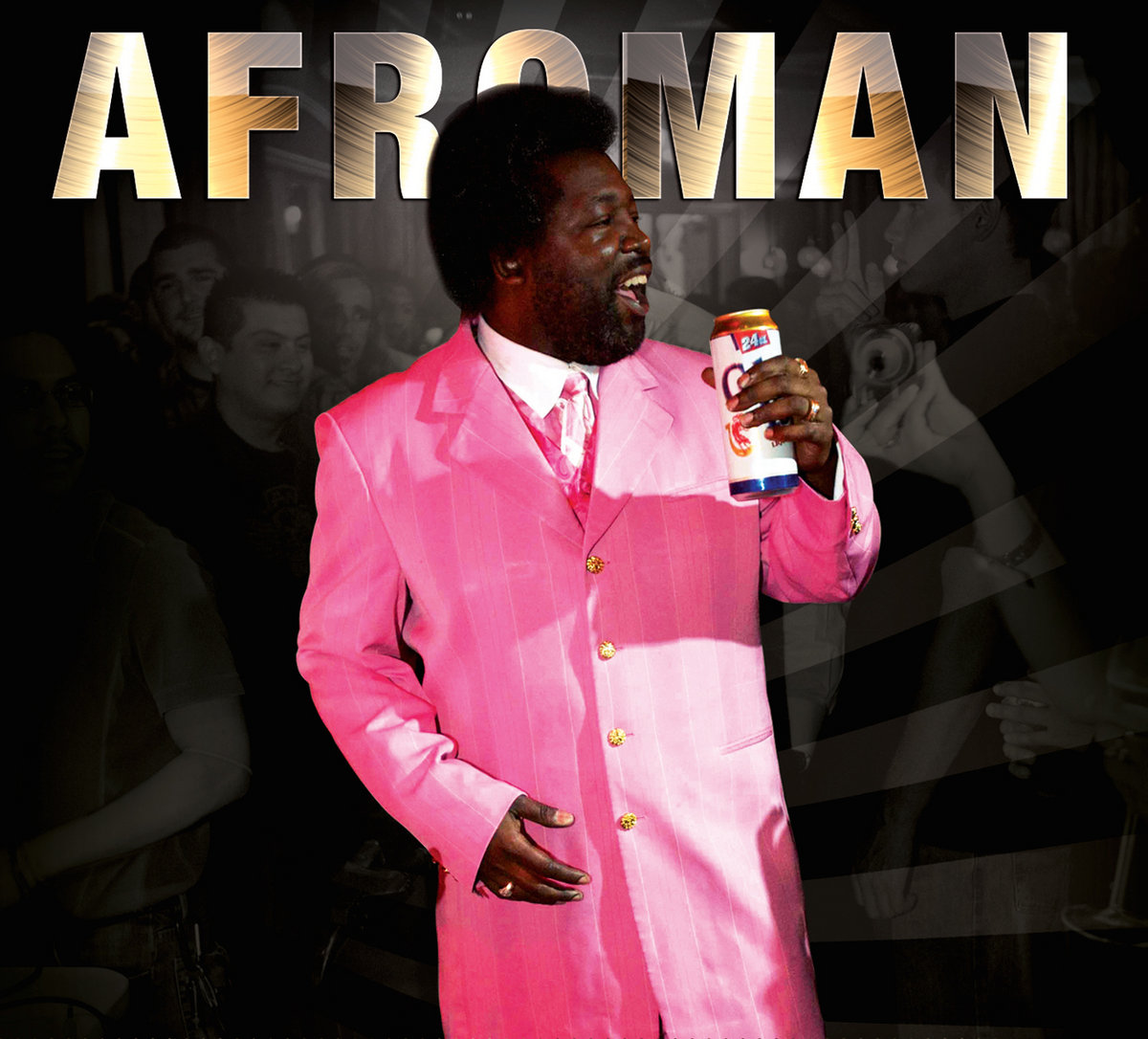
The legal battle between Joseph "Afroman" Foreman and the Adams County Sheriff’s Office is no longer just a bizarre footnote in the history of hip-hop litigation. It has evolved into a foundational test of the First Amendment in the era of ubiquitous home surveillance. When masked deputies smashed through Foreman’s front door in August 2022, they weren't expecting to become the unwilling stars of a viral music video. They certainly didn't expect to be sued—and then to sue back—over the right to their own likenesses while executing a botched raid.
Foreman’s recent testimony in an Ohio courtroom underscores a shift in how public figures and private citizens alike are fighting back against perceived state overreach. The rapper maintains that the deputies are responsible for their own "unflattering" portrayals because they were the ones who chose to engage in the conduct caught on camera. By turning security footage of the raid into promotional material for his albums and merchandise, Foreman didn't just recoup his financial losses; he weaponized the imagery of the state against itself.
The Anatomy of a Failed Search
The catalyst for this legal circus was a search warrant based on suspicions of drug trafficking and kidnapping. It was an aggressive, high-stakes entry that yielded nothing. No drugs were found. No victims were rescued. The only thing the deputies actually seized was several hundred dollars in cash, a portion of which later went missing while in police custody—an "omission" that only added fuel to Foreman’s fire.
In the aftermath, most people would have called a lawyer and waited years for a settlement that might never come. Foreman took a different route. He looked at his Ring camera footage and saw a goldmine. He saw deputies rifling through his drawers, a deputy eyeing a lemon pound cake on the kitchen counter, and the sheer chaos of a tactical team realizing they were at the wrong house for the wrong reasons.
He set the footage to music. He put the deputies' faces on t-shirts. He turned a traumatic invasion of privacy into a business model.
Privacy as a Shield for the State
The core of the deputies' counter-suit is an argument that borders on the absurd in a modern democracy. They claimed that Foreman’s use of their images caused them "emotional distress" and "humiliation," citing Ohio’s right of publicity laws. This statute is typically used to prevent companies from using a celebrity’s face to sell shoes without paying them. Here, it was being used by armed agents of the state to argue that they have a private interest in their appearance while performing public duties.
This is a dangerous legal gambit. If a law enforcement officer can sue a citizen for publishing footage of a public act, the concept of police accountability dies in the crib. The deputies weren't "performing" in a way that deserves a royalty check; they were exercising the most extreme power the government holds—the power to forcibly enter a home.
During his testimony, Foreman remained steadfast. He argued that the "unflattering" nature of the videos wasn't a result of his editing, but of their actions. You cannot behave poorly on camera and then sue the cameraman for making you look bad. The camera is a mirror, not a filter.
The Missing Money and the Credibility Gap
One of the most damning elements of the entire saga is the $400 that vanished. After the raid, Foreman noticed the cash returned to him was short. An investigation eventually confirmed that the money had been "miscounted" or gone missing while under the control of the Sheriff’s Office.
This isn't just a minor clerical error. It is the thread that unravels the entire cloak of "professionalism" the deputies tried to wrap themselves in during the lawsuit. When the state enters a home under the color of law and property goes missing, the state loses the moral high ground required to claim "emotional distress" over a music video.
The missing money transformed the narrative from a simple story of a botched raid into a story of systemic incompetence. It gave Foreman the "truth" defense that is so vital in defamation and privacy cases. If the deputies are seen on camera behaving in a way that suggests they are looking for spoils rather than evidence, that is a matter of intense public interest.
Reversing the Surveillance State
We live in a world where the government constantly monitors the citizenry. License plate readers, facial recognition, and street-level cameras have made anonymity a luxury of the past. The Afroman case represents a rare "reverse surveillance" moment.
Foreman used the very tools often used to prosecute civilians to instead prosecute a narrative against the police. He bypassed the traditional media gatekeepers and went straight to his audience. By doing so, he created a deterrent. The message to the Adams County Sheriff’s Office was clear: if you come into my home without a valid reason, I will make you a part of my brand.
This isn't just about "revenge" or "clout." It is about the economics of justice. A civil rights lawsuit can cost tens of thousands of dollars in legal fees and take half a decade to resolve. A viral video can generate enough revenue to pay for those lawyers in a week. Foreman found a way to make the defense of his Fourth Amendment rights self-funding.
The Failure of the Right of Publicity Argument
The judge’s eventual dismissal of the deputies' claims was a victory for common sense, but the fact that the case got as far as it did is chilling. The deputies' legal team tried to argue that Foreman was "commercially exploiting" them.
But the law generally recognizes a "newsworthiness" exception. The conduct of police officers during a raid is inherently newsworthy. You cannot separate the "commercial" aspect of a song from its "expressive" or "political" aspect. If a journalist writes a book about a corrupt cop and sells that book for profit, they aren't violating the cop's right of publicity. They are reporting on a matter of public concern.
Foreman is, in his own way, a chronicler of his own life. His music has always been autobiographical. To suggest he can't sing about a raid on his own house because the people who raided it might feel embarrassed is a direct assault on the freedom of speech.
Practical Implications for Homeowners
What does this mean for the average person who doesn't have a million followers or a record deal? It means that the high-definition security system you installed is more than just a theft deterrent. It is a legal insurance policy.
If you find yourself in a situation where your rights are being violated, the footage is your primary leverage. However, the Afroman strategy is not without risks. Most people do not have the resources to fight a counter-suit from a government entity with deep pockets and a bruised ego.
Foreman’s "victory" was his ability to outlast them. He turned the lawsuit itself into more content, further increasing the "cost" to the deputies in terms of public relations. He didn't just win the legal battle; he won the war of attrition.
The Transparency Trap
Law enforcement agencies often claim they want transparency. They push for body cameras and dash cameras, arguing that these tools protect both the officer and the citizen. Yet, the moment a citizen provides their own "transparency," the narrative changes.
The Adams County deputies didn't want the body camera footage of the raid released. They certainly didn't want it edited into a song called "Will You Help Me Repair My Door?" This highlights a fundamental hypocrisy: the state wants the power to watch you, but it refuses to be watched back.
When Afroman testified that the deputies were "the ones that came to my house," he was pointing out the obvious. They initiated the interaction. They created the scene. They provided the performances. In a world of digital receipts, the state no longer has the luxury of controlling the "official" version of events.
Why the Settlement Matters
The Sheriff’s Office eventually settled Foreman’s claims regarding the missing money and the damage to his property. While the deputies' privacy suit was thrown out, the financial resolution was a quiet admission of failure.
But a settlement isn't an apology. It’s a transaction. It’s the price the department was willing to pay to make the headlines stop. What they didn't account for was that Foreman doesn't need the headlines to stop; he thrives on them. He has built a career on being the underdog who refuses to play by the rules.
The real takeaway here is that the power dynamic is shifting. The "imperfect raid" used to be something a department could sweep under the rug with a boilerplate press release. Now, an imperfect raid is an intellectual property asset for the victim.
The End of Professional Immunity
For decades, "qualified immunity" has acted as a nearly impenetrable shield for police officers. It protects them from personal liability unless they violated a "clearly established" right.
Afroman’s approach bypasses the qualified immunity debate entirely. He isn't just suing them in federal court for damages; he is holding them accountable in the court of public opinion and the marketplace. You can’t use qualified immunity to stop someone from putting your face on a "Lemon Pound Cake" t-shirt if that face was captured by a private camera on private property.
This is the new frontier of civil rights. It is messy, it is loud, and it is undeniably effective. The deputies of Adams County learned the hard way that when you break down a door, you are stepping onto a stage. And in 2026, everyone is a producer.
Check your camera's cloud storage settings tonight.