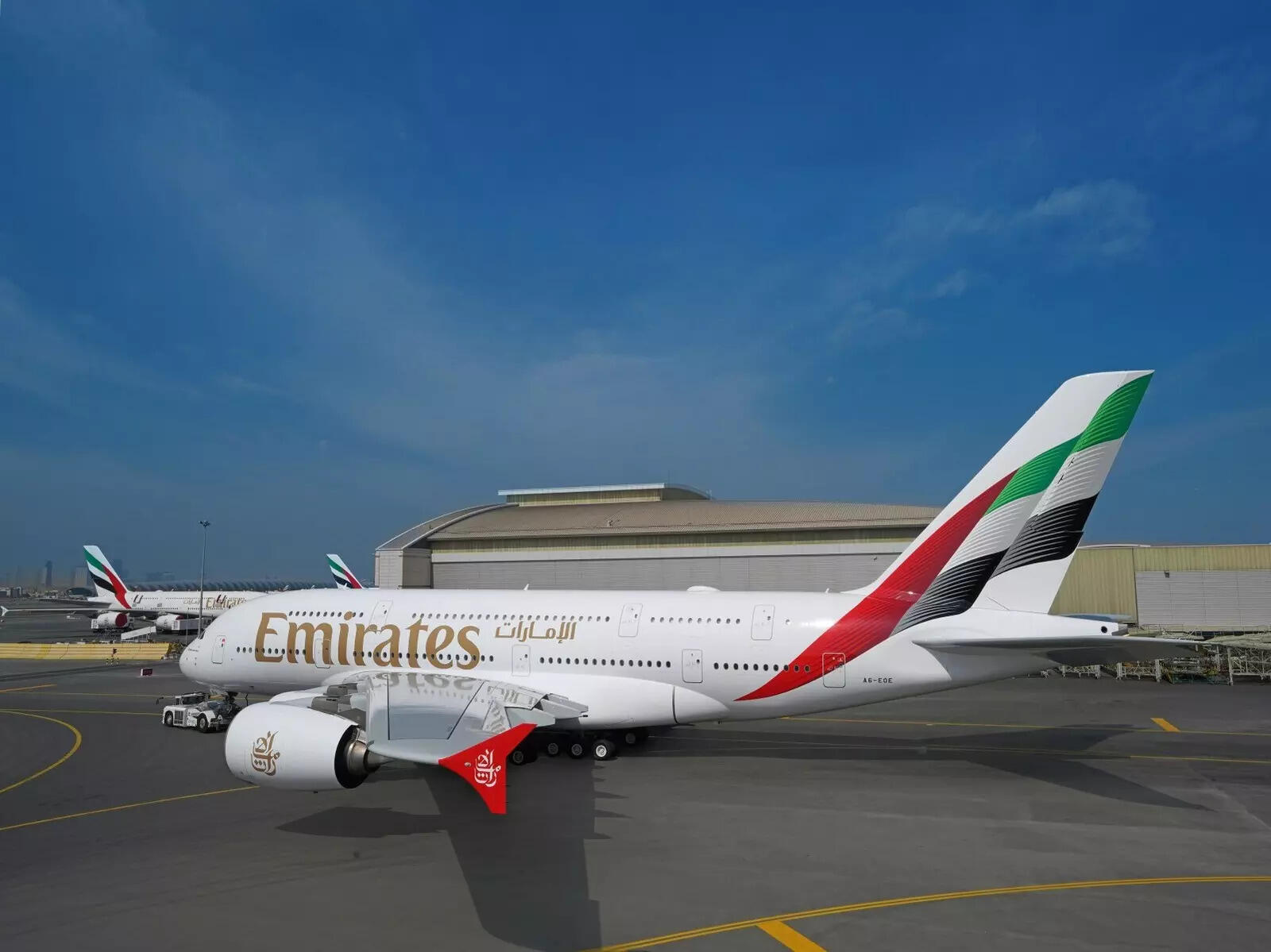
The headlines are screaming about chaos. Emirates extends flight suspensions. Middle East airspace is a "no-go" zone. Travelers are stranded, and the global supply chain is supposedly on the brink of a nervous breakdown.
The mainstream media is selling you a narrative of fragility. They want you to believe that a few closed corridors over Baghdad or Tehran represent a systemic failure of modern aviation. They are wrong. These disruptions aren't the "crisis" the talking heads claim they are; they are a long-overdue stress test that exposes the bloated, inefficient nature of how we move people and goods across the planet. Building on this idea, you can also read: Why the Green Party Victory in Manchester is a Disaster for Keir Starmer.
The Myth of the Essential Hub
For two decades, the "Super Connector" model—pioneered by the likes of Emirates, Qatar Airways, and Etihad—has been treated as the pinnacle of aviation strategy. The idea was simple: funnel everyone through a single, massive shiny point in the desert.
It was a brilliant marketing trick. It was also a massive single point of failure. Observers at Associated Press have also weighed in on this matter.
When airspace shuts down, the "hub-and-spoke" model doesn't just bend; it snaps. The competitor articles focus on the "tragedy" of canceled flights in Dubai. The real story is the absurdity of our dependence on a geography that has been a geopolitical tinderbox for a century. We’ve built the world's most sophisticated transport network on a foundation of sand and regional volatility.
If your entire global business model relies on the permanent stability of a handful of flight paths over contested territory, you don't have a business model. You have a gamble.
Efficiency is a False God
Aviation experts love to talk about "optimal routing." They calculate the exact $CO_2$ output and fuel burn of a Great Circle route. When a war starts and planes have to fly around an entire country, these experts cry about "inefficiency."
I’ve spent fifteen years watching logistics directors lose their minds over a 90-minute detour. Here is the truth they won't tell you: Inflexibility is more expensive than extra fuel.
The current "crisis" is actually forcing airlines to do something they hate: diversify. Instead of obsessing over the shortest path, smart operators are finally building the "long-way-around" infrastructure that should have existed years ago. We are seeing a forced migration toward ultra-long-haul point-to-point travel—the kind of flights that skip the Middle Eastern hubs entirely.
The closure of airspace isn't "stopping" travel. It is killing the middleman. It is killing the 3:00 AM layover in a terminal that looks like a luxury mall. That isn't a loss for the consumer; it's an evolution.
The Logistics of Fear vs. The Logistics of Reality
Let’s look at the data. When airspace closes, fuel costs go up. This is a fact. But let’s dismantle the "People Also Ask" nonsense about ticket prices.
Does closed airspace mean I’ll never afford a flight to Asia again?
No. It means you’ll stop paying for the subsidization of empty A380s.
The industry uses "geopolitical tension" as a convenient blanket excuse to hike margins. In reality, the cost of flying a 12-hour route versus a 14-hour route does not justify a 40% spike in ticket prices. If an airline tells you otherwise, they are clawing back revenue lost to poor hedging strategies, not the price of kerosene.
I have sat in boardrooms where "disruption" was categorized as a "yield management opportunity." They love the chaos because it allows them to reset the price floor. The airspace closure isn't the villain; the lack of transparent pricing is.
Stop Praying for "Normal"
Every time a missile is fired or a border is closed, the industry holds its breath and waits for a "return to normal."
There is no normal.
The last decade was a geopolitical anomaly of relatively open skies. We are returning to the historical mean: a world of fractured, protected, and expensive airspace.
- Scenario A: We keep pretending the Middle East is a permanent, stable bridge between East and West. We get surprised every six months when a new conflict erupts.
- Scenario B: We accept that the "bridge" is broken and invest in the technology to bypass it.
We should be cheering for these closures. They are the only thing that will push Boeing and Airbus to stop tweaking 50-year-old designs and start delivering the range and efficiency required for a truly decentralized sky. We need planes that can do London to Sydney or New York to Singapore without needing to stop for gas in a combat zone.
The Environmental Hypocrisy
The "green" aviation lobby is currently silent about the detours. Why? Because it exposes their biggest lie: that they care about the planet more than the schedule.
Flying around closed airspace adds thousands of tons of emissions every day. If the industry were serious about its "Net Zero" targets, it would be leading the charge for a global, unified air traffic control system that ignores borders. But they don't want that. Borders allow for "sovereignty fees" and "overflight royalties."
The current "airspace shutdown" is a masterclass in how much the industry is willing to pollute just to keep the hub-and-spoke model on life support. They would rather fly an extra 2,000 miles than admit that the Dubai-centric world order is over.
The Strategy for the New Era
If you are a traveler or a logistics manager, stop looking at the flight boards. Start looking at the map.
The winners of the next decade won't be the airlines with the gold-plated lounges in the desert. They will be the ones with the longest legs and the most creative routing.
- Ditch the Hubs: If you can book a direct flight that stays over the poles or the open ocean, do it. It’s not just about comfort; it’s about risk mitigation.
- Ignore the "Suspension" Drama: When Emirates "suspends" flights, they aren't being cautious. They are being tactical. They are waiting for the insurance premiums to drop.
- Bet on the Periphery: Watch cities like Perth, Anchorage, and Casablanca. These are the new strategic nodes in a world where the "center" is too hot to handle.
We have spent thirty years trying to make the world smaller by forcing it through a handful of narrow corridors. Nature, and human conflict, are finally telling us that the world is big, and we need to start acting like it.
The Middle East airspace shut down isn't a tragedy. It's a reminder that geography still matters, and we’ve been ignoring it for too long.
Stop asking when the flights will resume. Start asking why we ever needed to fly over a powder keg just to get from Point A to Point B.
The golden age of the desert hub is dead. Good riddance.