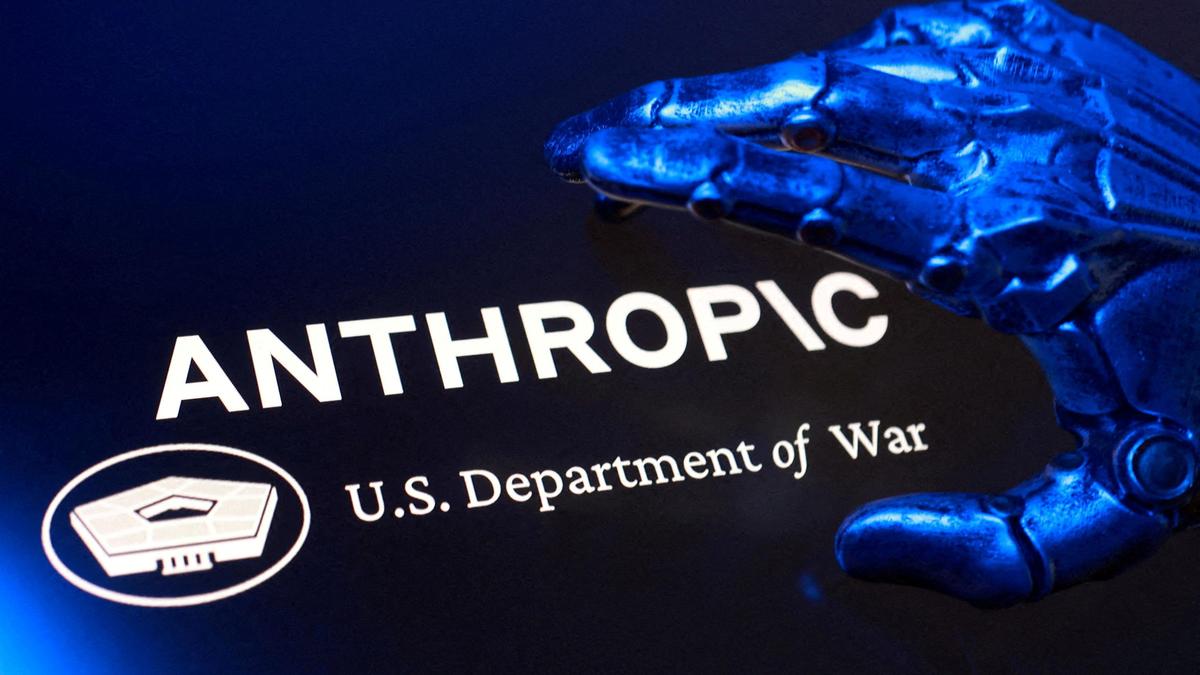
Anthropic’s lawsuit against the Trump administration is a masterclass in corporate gaslighting. By framing their challenge to the "supply chain risk" designation as a fight for "innovation" and "fairness," they are betting that the public is too distracted by the technical jargon of large language models to notice the massive security vacuum they’ve created.
The industry consensus is already forming: "The government is overreaching." "This stifles competition." "It’s a political hit job." Read more on a similar issue: this related article.
They are wrong.
The designation isn't an overreach. It is a late, blunt, and entirely necessary response to an industry that has treated national security as a secondary feature—something to be "solved" with a blog post and a few red-teaming exercises rather than baked into the hardware and capital structure of the business. Additional reporting by Ars Technica highlights related views on the subject.
The Myth of the Neutral Model
The core of Anthropic’s legal argument rests on the idea that their models are neutral tools. They want you to believe that an LLM is like a hammer; if someone uses it to build a house, great, and if they use it to break a window, that’s on the user.
This is a lie.
Modern frontier models are not hammers. They are force multipliers for intelligence, and intelligence is the primary currency of modern warfare. When the Department of Commerce or the Treasury flags a company as a supply chain risk, they aren't looking at the output of the chatbot. They are looking at the input of the capital.
Anthropic’s cap table is a global map of interests that don't always align with the sovereignty of the United States. You cannot take billions of dollars from multinational conglomerates with deep ties to adversarial markets and then act surprised when the federal government asks to see the receipts.
If you build the engine of the next century’s economy using parts and money provided by people who want to see that economy fail, you are a supply chain risk. Period.
Why Software-Only Security is a Fantasy
I’ve sat in rooms where "safety researchers" talk about alignment. They obsess over whether a model will give instructions on how to make a bomb. They spend millions of hours fine-tuning the "tone" of the AI to ensure it doesn't offend anyone.
This is theater. It’s security at the application layer while the foundation is rotting.
True supply chain risk in AI occurs at three distinct levels:
- Compute Sovereignty: Who owns the physical chips and where are they located?
- Data Provenance: Where did the training sets come from, and who has the "backdoor" to poison them?
- Capital Influence: Who can pull the plug on the company’s funding if they refuse to implement a "feature" requested by a foreign power?
Anthropic argues that the government hasn't proven their models have "backdoors." This misses the point entirely. In the world of high-stakes intelligence, you don't wait for the backdoor to be opened. You prevent the house from being built by the guy who owes money to the burglar.
The Innovation Scare Tactic
"This will kill American AI."
Every time a regulator breathes, the tech giants scream that we are "handing the lead to China." It’s the ultimate get-out-of-jail-free card. They use the specter of foreign dominance to excuse their own lack of transparency.
But let’s look at the reality. Real innovation doesn't happen in a vacuum of accountability. The most successful American technologies—GPS, the internet, semiconductors—were forged in the fires of strict government standards and national security mandates.
By resisting the "supply chain risk" designation, Anthropic isn't protecting innovation. They are protecting their ability to scale without friction. They want the subsidies of the CHIPS Act and the protection of American IP law without the "inconvenience" of vetting their partners.
You don't get both.
The Problem With "Transparency"
The lawsuit claims the administration was "arbitrary and capricious." In legal terms, that’s code for "they didn't explain their work."
Here is the brutal truth: The government cannot always explain its work.
When intelligence agencies identify a risk in a supply chain, the evidence is often classified. Anthropic is demanding a level of transparency that would effectively burn the sources and methods used to identify the threat. They are asking the government to choose between winning a lawsuit and protecting national secrets.
It’s a cynical move.
If I’ve learned anything from watching the defense industrial base over the last twenty years, it’s that when a company screams this loudly about "due process," it’s because they know the actual evidence against them is devastating but unproducible in an open court.
Stop Asking if it’s Fair
People ask: "Is it fair to single out Anthropic when other companies have similar investors?"
That is the wrong question. Fairness is for kindergarten. Geopolitics is about survival.
If the Trump administration determined that Anthropic’s specific combination of investor influence, compute dependency, and talent pool constitutes a unique vulnerability, their job is to act. They aren't required to wait until they have a perfect, "fair" policy that covers every startup in Silicon Valley. They are required to plug the holes they find, when they find them.
The "supply chain risk" label is a signal to the market. It tells other investors: "If you want to play in the frontier AI space, you need to clean up your cap table." It’s a prophylactic measure.
The Actionable Reality for the Industry
If you are a founder or an investor in this space, stop crying about "overreach." Start auditing your dependencies.
- Purge Vulnerable Capital: If your Series C comes from a fund with heavy ties to state-owned enterprises in adversarial nations, expect a target on your back.
- On-Shore Everything: If your model weights or training environments are sitting on servers in jurisdictions that don't respect US export controls, you are a liability.
- Hardware Paranoia: Stop assuming the chips are clean just because they have a familiar logo on them.
Anthropic’s mistake wasn't being "targeted." Their mistake was believing they were too big, and too "important" to the future of humanity, to be subject to the same rules as a defense contractor.
They aren't. They are a software company with a massive ego and a precarious balance sheet.
The government isn't trying to kill AI. It’s trying to ensure that when the AI revolution arrives, the keys aren't held by someone else. Anthropic should stop suing and start complying. If they have nothing to hide, the "risk" designation will eventually become a badge of cleared security. But their frantic attempt to litigate their way out of oversight suggests they know exactly how deep the rabbit hole goes.
Pick a side: the mission or the money. You can’t have both anymore.


