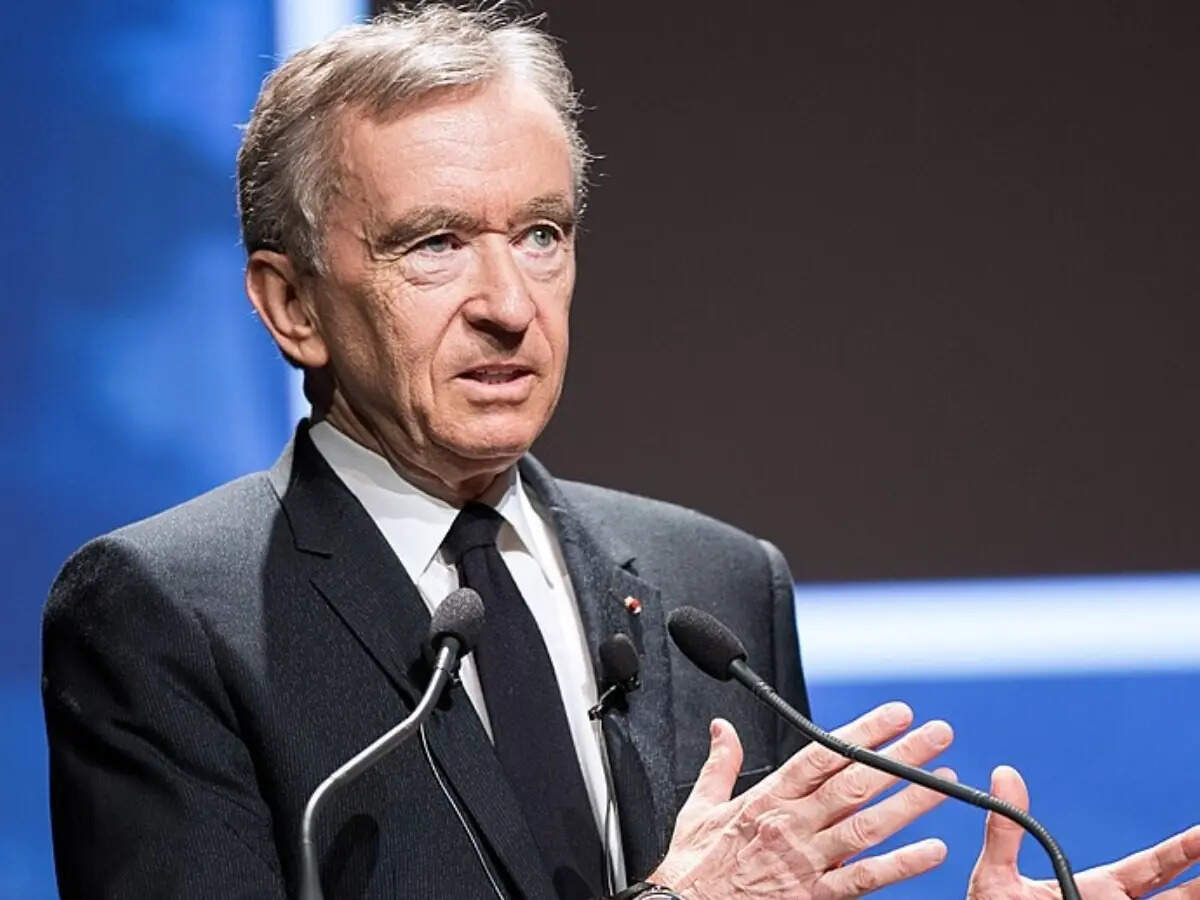
Bernard Arnault’s management of LVMH rests on a fundamental rejection of the standard discount rate applied to quarterly earnings. While most firms succumb to the "Urgency-Quality Trade-off"—where short-term liquidity needs force a degradation of brand exclusivity—Arnault operates on a multi-decadal horizon. This is not a vague preference for "patience"; it is a calculated structural strategy designed to exploit the arbitrage between immediate volume and long-term price elasticity.
The core mechanism of LVMH’s success is the deliberate suppression of the supply curve to ensure that demand remains permanently in a state of deficit. In standard economic theory, a firm should increase production until marginal cost equals marginal revenue ($MC = MR$). Arnault violates this by maintaining a marginal cost of production significantly lower than the market-clearing price, yet refusing to scale volume. This creates a "scarcity premium" that functions as a self-reinforcing asset.
The Dual-Horizon Management Model
Most corporations fail because they possess a monistic view of time. They optimize for the current fiscal year, which leads to "Brand Dilution," a process where a luxury asset is over-exposed to mass markets to meet growth targets. LVMH utilizes a Dual-Horizon Management Model that separates operational efficiency from brand positioning.
- The Artistic Horizon: This is the non-negotiable preservation of the brand’s "DNA." It involves high-cost, low-yield investments in craftsmanship and heritage that do not provide an immediate ROI.
- The Operational Horizon: This is the aggressive, data-driven optimization of the supply chain, retail footprint, and media buying.
By decoupling these two, Arnault ensures that the "Modernity" of the marketing does not erode the "Timelessness" of the product. The tension between these two poles is the engine of the LVMH margin.
The Mathematics of Desire and Price Inelasticity
The fundamental billionaire lesson Arnault exemplifies is the understanding of Veblen Goods. In most industries, as price increases, demand decreases. In the ultra-luxury segment, the inverse can occur. The price itself becomes a feature of the product's utility.
LVMH’s strategy revolves around maximizing the Desire Quotient (DQ), which can be defined by the following logic:
- Scarcity Factor ($S$): The ratio of units available to the total addressable market of high-net-worth individuals.
- Cultural Capital ($C$): The perceived historical and artistic significance of the brand.
- Aspiration Gap ($G$): The distance between those who desire the brand and those who can afford it.
$DQ = \frac{C \times G}{S}$
When a company comes under pressure, the first instinct is to increase $S$ (volume) to generate cash. This immediately collapses the Aspiration Gap ($G$) and erodes Cultural Capital ($C$). Arnault’s "simple lesson" is that under pressure, the firm must protect $S$ at all costs. This preserves the $DQ$, allowing for aggressive price increases later that more than compensate for the lost volume during the downturn.
The Structural Cannibalization of Mediocrity
A significant reason companies forget this lesson is the "Cost of Carrying Heritage." Maintaining artisanal workshops in France or Italy is significantly more expensive than outsourcing to lower-cost geographies. When margins tighten, CFOs target these "inefficiencies."
Arnault views these inefficiencies as Entry Barriers. If any competitor can replicate your supply chain, you no longer have a luxury brand; you have a premium commodity. LVMH’s vertical integration ensures that they control the entire value chain, from the tannery to the flagship store on Avenue Montaigne. This control prevents "Value Leakage," where third-party distributors or manufacturers capture a portion of the brand's prestige.
The second structural advantage is the "House of Brands" architecture. By acquiring heritage brands like Tiffany & Co. or Dior, LVMH can apply its operational rigor (Horizon 2) to brands that have historically only focused on the Artistic Horizon (Horizon 1). This allows LVMH to scale its infrastructure while keeping the individual brands exclusive.
The False Proxy of Market Share
Modern business education emphasizes market share as the primary indicator of health. In Arnault’s world, market share is a lagging, and often dangerous, indicator. High market share in luxury often signals that the brand has become too accessible, crossing the "Ubiquity Threshold."
The moment a brand is seen everywhere, it loses its signaling value for the ultra-wealthy. Arnault’s strategy is to prioritize Mindshare and Margin Share over Market Share.
- Mindshare: Being the first brand a consumer thinks of when they reach a certain level of wealth.
- Margin Share: Capturing the highest possible percentage of the total profit pool in a category, even if you sell the fewest units.
This requires a brutal discipline in distribution. Arnault famously pulled brands out of multi-brand retailers to sell exclusively through LVMH-owned boutiques. This move sacrificed immediate volume but granted total control over the customer experience and, crucially, the data.
The Architecture of Long-Term Resilience
Companies forget these lessons under pressure because of "Incentive Misalignment." Most CEOs are on five-year contracts and are compensated based on stock price performance. Arnault, as a majority owner, has an incentive structure aligned with the next fifty years.
This leads to a specific tactical approach during economic contractions:
- Aggressive Talent Acquisition: During downturns, LVMH often hires top creative talent or acquires struggling competitors with high heritage value.
- Real Estate Land Grabs: Luxury is inherently tied to physical space. LVMH buys the buildings its stores occupy, turning a retail expense into a real estate asset and insulating the brand from rent hikes.
- Counter-Cyclical Marketing: Increasing ad spend when competitors are cutting back ensures that when the economy recovers, the brand's Mindshare is at an all-time high.
Quantifying the "Timelessness" Variable
How does one measure if a brand is truly "timeless" or just trending? Arnault uses the "Star Brand" framework. A Star Brand must be:
- Timeless: Its core products (e.g., the Birkin bag, though Hermès, follows the same logic LVMH uses for the Lady Dior) do not go on sale and do not become obsolete.
- Modern: It stays relevant through collaborations and contemporary marketing.
- Fast-Growing: It maintains high margins while expanding into new geographic markets (like the shift toward the Asia-Pacific region).
- Highly Profitable: It generates the cash flow necessary to subsidize the development of the next Star Brand.
This framework creates a portfolio effect. The cash flow from a "Star" like Louis Vuitton allows Arnault to be patient with a smaller, developing brand like Loewe. He can afford to wait a decade for a brand to find its footing, a luxury that a standalone company or a PE-backed firm does not have.
The Risks of the Arnault Model
The primary risk to this strategy is Creative Stagnation. If a brand becomes too focused on its heritage, it becomes a museum piece rather than a living brand. Arnault mitigates this by rotating "Radical Creatives" (e.g., Virgil Abloh at Louis Vuitton) through heritage houses. This creates a controlled "Brand Shock" that prevents the brand from becoming static.
The second risk is Geopolitical Concentration. A significant portion of LVMH’s growth is tied to the Chinese middle and upper classes. Any structural decoupling or shift in Chinese consumer sentiment represents a systemic risk that craftsmanship alone cannot solve.
Tactical Implementation for Non-Luxury Entities
While few firms operate at the scale of LVMH, the underlying logic of the "Arnault Paradox" is applicable to any business seeking to escape the commodity trap.
The first step is identifying the Non-Negotiable Asset. What is the one component of the business that, if scaled for efficiency, would destroy the long-term value of the firm? For a software company, it might be the purity of the codebase; for a consultancy, the seniority of the practitioners.
The second step is the Introduction of Friction. Efficiency is the enemy of exclusivity. By deliberately introducing friction into the customer acquisition process—through waitlists, rigorous vetting, or limited availability—a firm can increase the perceived value and long-term loyalty of its client base.
The final move is the Elimination of the Discount Culture. Discounting is a signal of a broken supply-demand balance. Instead of lowering prices to clear inventory, a firm should follow the Arnault playbook: reduce future supply, destroy excess stock (though now pivoting toward recycling due to ESG pressures), and refocus on the core demographic that is price-insensitive.
Strategic resilience is not found in the ability to pivot quickly to market trends, but in the institutional "stubbornness" to refuse to participate in the race to the bottom. The LVMH empire is built on the realization that in an era of infinite digital reproduction, the only thing that appreciates in value is that which cannot be easily scaled, hurried, or replicated.
The objective is to move from being a vendor of products to a curator of legacy. This requires an operational shift from "How many can we sell?" to "How many should we allow to be bought?" This pivot is the only way to maintain high margins in a deflationary, AI-driven economy where the marginal cost of production for most goods is trending toward zero. The future of high-margin business lies in the deliberate, systematic manufacturing of scarcity.