The heat shield held. The parachutes deployed. Four humans just returned from the far side of the moon, and they’re doing just fine. Reid Wiseman, Victor Glover, Christina Koch, and Jeremy Hansen didn't just survive the Artemis II mission; they thrived. After 10 days of pushing the Orion spacecraft to its limits, the crew stepped onto the deck of the USS San Diego looking remarkably steady. They aren't just "happy and healthy." They're the living proof that NASA's return to the lunar vicinity isn't a fluke. It's a functional reality.
You've probably seen the grainy footage of past splashdowns where astronauts have to be carried out on stretchers. This wasn't that. While the physical toll of re-entry is brutal—hitting the atmosphere at 25,000 miles per hour creates forces that make you feel like an elephant is sitting on your chest—the Artemis II team walked out under their own power. That's a huge win for long-term space travel. If we can't get humans back in "ready to work" condition, the dream of a Mars base stays a dream.
Why the Artemis II Splashdown Changed Everything
People often underestimate the sheer violence of coming home from the moon. It’s not like returning from the International Space Station (ISS). When you come back from the moon, you’re coming in "hotter." The velocity is significantly higher, and the thermal protection system has to shed heat reaching nearly 5,000 degrees Fahrenheit.
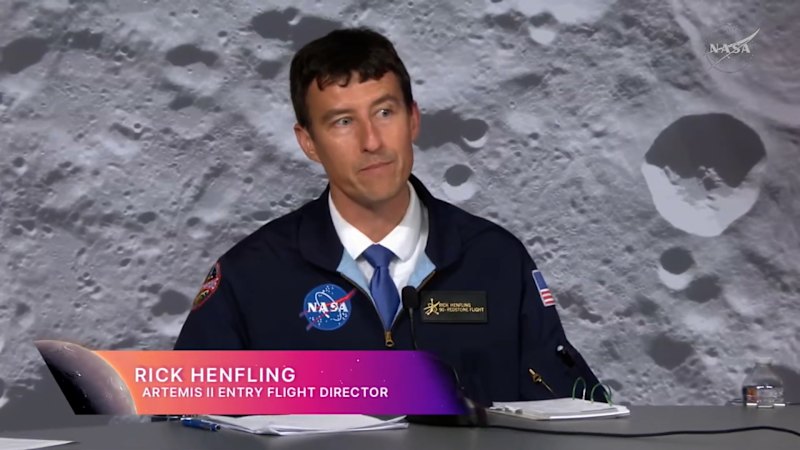
NASA engineers were sweating the performance of the heat shield after some minor charring issues on the uncrewed Artemis I flight. This time, the data looks clean. The crew reported a smooth ride through the "skip re-entry" maneuver. This is a technique where the capsule dips into the atmosphere, skips out briefly to shed speed, and then dives back in for the final descent. It’s a precise bit of celestial acrobatics. Orion nailed it.
The health of the crew wasn't just luck. It was the result of a rigorous exercise regimen designed to combat the bone density loss and muscle atrophy that happens in microgravity. Even on a short 10-day trip, the fluid shifts in the body can mess with your vision and balance. Seeing Victor Glover crack a smile and Christina Koch waving enthusiastically tells us that the life support systems and the mission profile are dialed in.
The Physical Toll of Lunar Re-entry
Don't let the smiles fool you. Space travel is still a physiological nightmare. When you spend over a week in weightlessness, your blood volume drops. Your heart doesn't have to work as hard to pump blood to your head. Then, suddenly, gravity returns at several times its normal strength.
- Vestibular Disorientation: Your inner ear is screaming. For the first few hours, the crew likely felt like the world was spinning every time they moved their heads.
- Orthostatic Intolerance: This is a fancy way of saying you faint when you stand up. The crew used specialized compression garments to keep blood from pooling in their legs.
- The Smell of Ozone: Astronauts often describe the scent of the capsule after re-entry as metallic or scorched. It’s a visceral reminder that they just survived a controlled fireball.
Medical teams from NASA and the Department of Defense were on them within minutes. They aren't just checking heart rates. They're looking at cognitive function and fine motor skills. Why? Because on future missions to Mars, there won't be a recovery ship waiting. The crew will have to land and immediately start setting up camp. Artemis II shows that we're getting closer to that level of resilience.
Orion Proved It Can Handle the Radiation
One of the biggest "unknowns" going into Artemis II was how the crew would handle the Van Allen radiation belts. The ISS sits safely below these belts. Artemis II went right through them. Twice.
The spacecraft’s shielding held up. The crew wore radiation monitors throughout the flight, and preliminary reports suggest the exposure was well within the safety margins. This is the data we needed. We've spent decades theorizing about deep space radiation, but having four humans go out there and come back without their DNA being shredded is the ultimate validation.
I’ve talked to flight surgeons who were worried about the "SANS" (Spaceflight-Associated Neuro-ocular Syndrome) issues that plague long-duration flyers. While 10 days is a relatively short window, the lack of significant vision changes in the Artemis II crew is an encouraging sign for the Artemis III landing mission.
What Happens Behind the Hangar Doors Now
The recovery is just the beginning. The Orion capsule is being transported back to Kennedy Space Center for a "post-mortem" that would make a forensic scientist blush. Every bolt, every tile, and every software log will be scrutinized.
The crew is currently undergoing a "debrief" phase. This isn't just a chat over coffee. It’s weeks of intensive medical testing and technical reporting. They have to explain every weird noise the ship made and every time a button felt "mushy." Their lived experience is more valuable than any sensor data.
We often focus on the hardware, but the "human-machine interface" is where missions succeed or fail. Did the seats vibrate too much during the burn? Was the display glare an issue during the splashdown? These are the details that will be baked into the Artemis III lander design.
The Path to the Lunar Surface
The success of Artemis II means the "Go" signal for the moon landing is looking brighter than ever. We've proven we can send humans to the lunar neighborhood and bring them back without breaking them.
The next step is the heavy lift. Artemis III will involve docking with a SpaceX Starship in lunar orbit and sending two people down to the South Pole. It sounds like science fiction, but after seeing the Artemis II crew walk off that ship, it feels like an inevitability.
If you're following this, keep your eyes on the heat shield analysis. That’s the "make or break" component for the next flight. If the ablation was uniform and the internal temps stayed steady, we’re in the clear.
The era of just "visiting" space is over. We’re moving into the era of living there. The Artemis II crew didn't just come home; they opened the door for everyone else. Watch the technical briefings from NASA’s Johnson Space Center over the next month. They’ll be releasing the hard telemetry data on the Orion’s life support performance. That’s where the real story lives. Check the NASA Artemis blog for the raw imagery of the heat shield inspections. It’s a masterclass in engineering resilience.