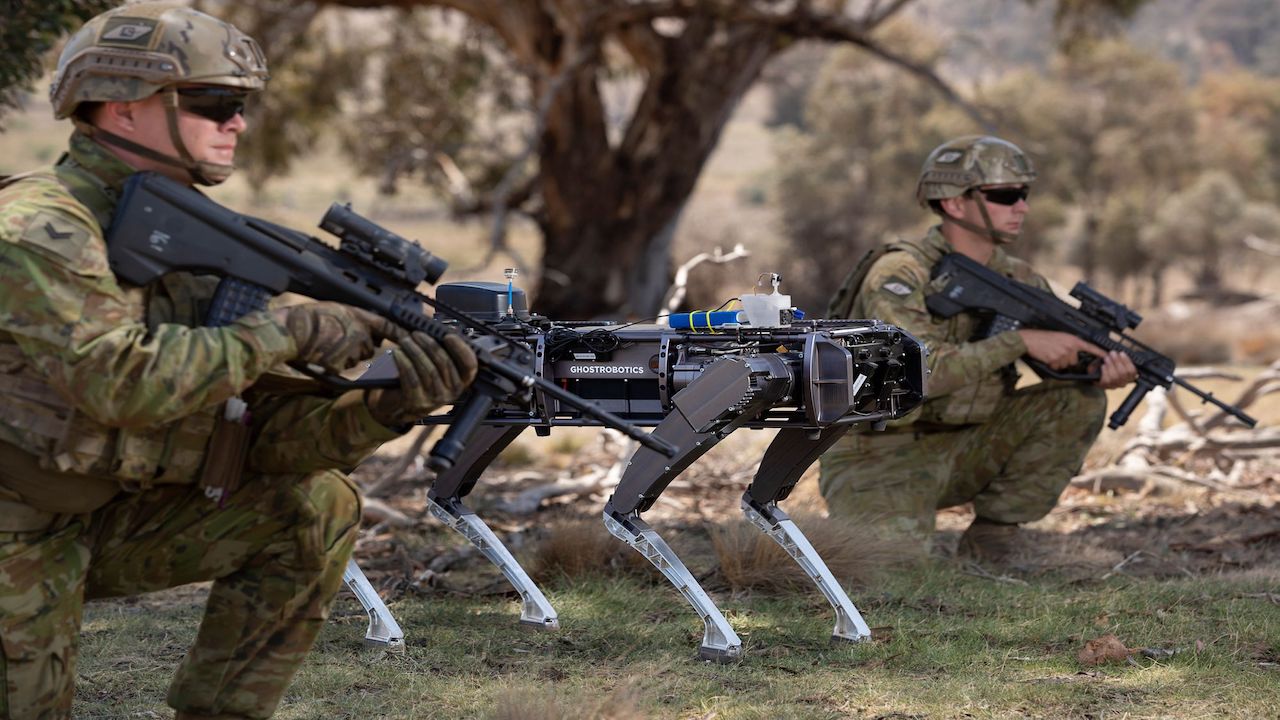
The Australian Army has finally shattered a 125-year glass ceiling by appointing Lieutenant General Susan Coyle as its first female chief. While the headlines focus on the historic optics of July 2026, the real story lies in the desperate urgency of a military facing its most severe workforce and budget crisis since the Second World War. This is not a victory lap for diversity; it is a calculated survival move for a force that is currently shrinking while its regional threats are expanding.
Prime Minister Anthony Albanese and Defence Minister Richard Marles framed Coyle’s appointment as a "proud moment" for the nation. It is. But as Coyle prepares to replace Lieutenant General Simon Stuart, she inherits a command structure that is effectively cannibalizing itself to fund the AUKUS nuclear submarine program. The Army is being gutted, its recruitment is in a freefall, and the appointment of a woman known for "warfighting domain" expertise in cyber and space is a signal that the traditional, boots-on-the-ground infantry era is being forced into a painful evolution. For a closer look into similar topics, we recommend: this related article.
The Workforce Hemorrhage Behind the Promotion
The Australian Defence Force (ADF) is currently short roughly 4,500 personnel against its recruitment targets. For years, the military has operated on a culture that inadvertently pushed talent out the door, particularly women, who make up only 19.2 percent of the force. Coyle’s rise is the ultimate stress test for the government's "whole-of-nation" defense strategy. If her presence at the top cannot stem the flow of talent leaving for the private sector, the Army’s "integrated force" will exist only on paper.
The recruitment process in Australia has become a bureaucratic nightmare, often taking up to 300 days to clear a candidate. By the time a recruit is approved, they have already taken a job in tech or mining. Coyle, who previously served as the Chief of Joint Capabilities and oversaw information warfare, knows this friction better than anyone. She isn’t being brought in to be a figurehead; she is being tasked with redesigning a workplace culture that is currently failing to compete with a modern economy. For additional information on this development, in-depth coverage is available at The New York Times.
A Force Cut to the Bone
While the promotion makes for a good press release, the fiscal reality is grim. The Army’s Infantry Fighting Vehicle program was recently slashed from 450 vehicles to just 129. This 70 percent reduction means Coyle will lead an Army that can barely equip a single brigade for high-end conflict. The government is betting the house on long-range maritime strike and denial, effectively telling the Army it is no longer the priority.
| Program | Original Target | Current Status (2026) |
|---|---|---|
| Infantry Fighting Vehicles | 450 | 129 (71% cut) |
| Self-Propelled Howitzers | 2nd Regiment | Cancelled |
| MQ-9B Sky Guardian Drones | Full Fleet | Terminated |
| AUKUS Submarine Spending | Low | $2.75 Billion (Annual) |
This creates a "temporal paradox" for the new Chief. Coyle must prepare her soldiers for a future of autonomous systems and high-tech warfare, yet she has fewer platforms on which to train them. The budget for core defense funding has actually declined in real terms between 2023 and 2026 when adjusted for exchange rates. Coyle is being asked to do more with significantly less, at a time when the strategic warning time for a regional conflict has effectively shrunk to zero.
The Intelligence Factor
Unlike many of her predecessors who rose through the traditional "mud and boots" infantry or armor pathways, Coyle’s background is steeped in Joint Capabilities and Information Warfare. This is a deliberate pivot. The Australian Army is no longer being groomed for the dusty counter-insurgency operations of the Middle East. It is being refitted as a high-tech, littoral force capable of operating from Australia’s northern bases to deter a major power.
Her expertise in cyber and space is the Army’s last hope for relevance in an AUKUS-dominated budget. If the Army cannot be the biggest kid on the block, it must be the smartest. Coyle’s appointment suggests that the "professionalization" of the force will now prioritize electronic warfare and intelligence-led operations over traditional massed land maneuvers.
The AUKUS Shadow
Every dollar Coyle needs for Army retention and modernization is currently being sucked into the AUKUS vacuum. Submarine spending is projected to hit $4.97 billion annually by 2027. This is the "AUKUS tax" that every other branch of the military is paying. Former Major General Mick Ryan has been vocal about the math: spending roughly 2 percent of GDP is simply not enough to fund both a nuclear-powered navy and a functional land force.
Coyle’s biggest battle won't be in the field; it will be in the Expenditure Review Committee. She has to convince a government distracted by domestic economic pressures that a hollowed-out Army is a liability that no amount of high-tech submarines can fix.
The Risk of the Glass Cliff
In leadership theory, the "glass cliff" describes the phenomenon where women are appointed to top roles during periods of crisis when the risk of failure is highest. Coyle is stepping into the top job at a moment when the Army is under-resourced, under-staffed, and strategically sidelined. If the recruitment targets continue to fail and the equipment cuts lead to a loss of operational edge, she—not the politicians who signed the checks—will be the one facing the inquiry.
However, Coyle has a track record of navigating these "gray areas." Her time leading Joint Task Force 633 in the Middle East and her work in information warfare show a commander who understands that modern war is won through integration, not just attrition.
The appointment of the first female Chief of Army is a landmark for equality, but it is also a desperate plea for a new type of thinking. The Australian Army is currently a force in retreat, not from a foreign enemy, but from its own budget and its own outdated culture. Susan Coyle has until July to decide if she is the leader who will modernize the force, or the one who will be forced to preside over its downsizing.
Success now depends on whether the government provides the resources to match the rhetoric of this historic promotion.


