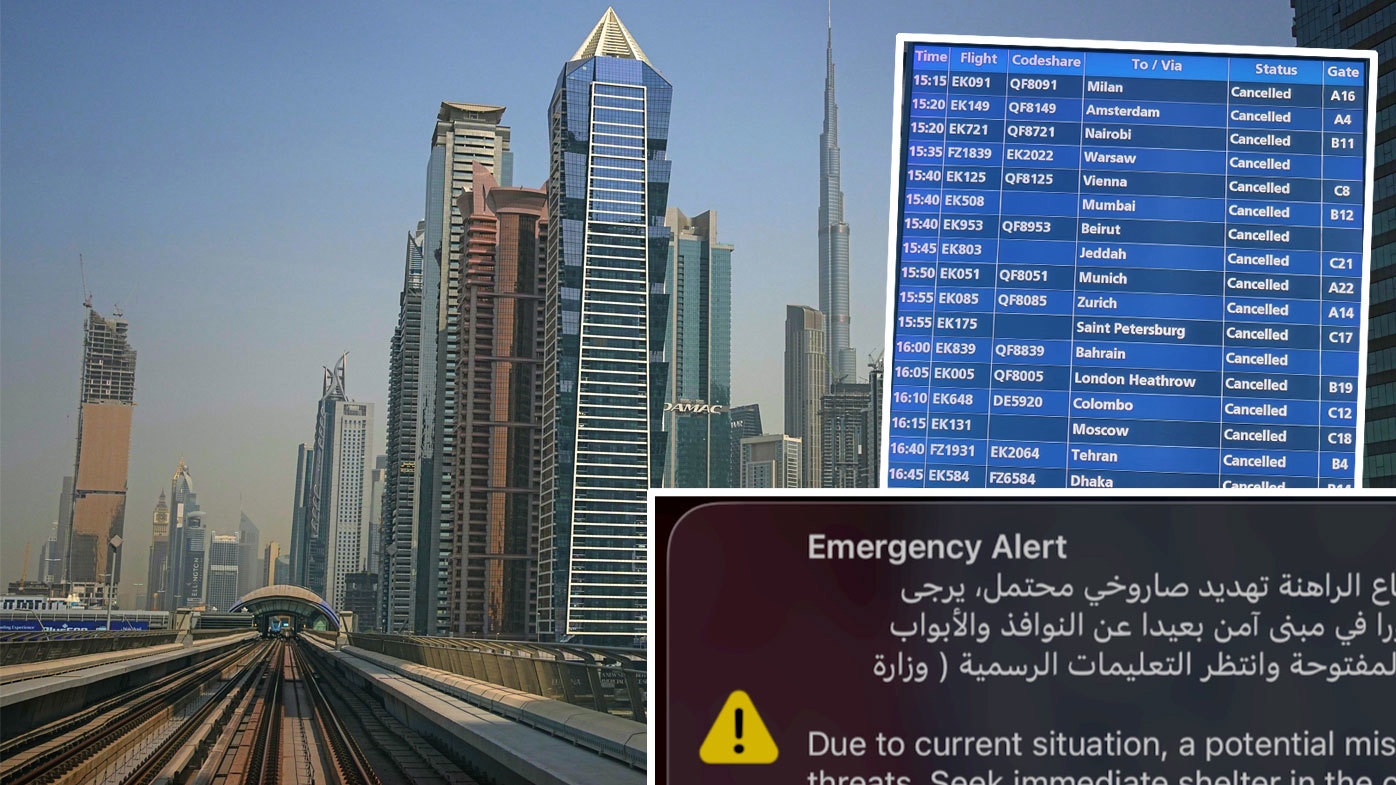
The global aviation network operates on the premise of predictable airspace sovereignty and standardized risk mitigation. When kinetic conflict escalates in the Middle East, this system does not merely "slow down"; it undergoes a structural re-routing that triggers a cascade of operational inefficiencies, cost surges, and logistical bottlenecks. The current wave of flight cancellations by major carriers—Lufthansa Group, Air France-KLM, and United Airlines—is not a reactionary panic. It is a calculated response to the breakdown of three specific pillars: legal liability frameworks, physical safety thresholds, and the economic viability of ultra-long-haul detours.
The Triad of Aviation Risk Assessment
Airlines categorize the suspension of service into three distinct risk domains. Understanding these explains why a "ceasefire" or a lull in activity does not immediately restore flight schedules.
1. Kinetic and Ballistic Reality
The primary driver of cancellations is the proliferation of surface-to-air missile (SAM) systems and long-range drone incursions. Modern commercial avionics are not designed to evade military-grade electronic warfare or kinetic interception. When an airspace like Lebanon’s or Israel’s is declared a high-risk zone, the decision to cancel is often binary. If the probability of a "misidentification event"—similar to the 2020 downing of Ukraine International Airlines Flight 752—rises above a negligible fraction, the hull insurance premiums become prohibitive, effectively grounding the fleet through financial rather than purely safety-related mechanisms.
2. Regulatory and Insurance Constraints
Airlines do not operate in a vacuum of individual choice. They are governed by the European Union Aviation Safety Agency (EASA), the Federal Aviation Administration (FAA), and national civil aviation authorities. When EASA issues a Conflict Zone Information Bulletin (CZIB), it acts as a soft prohibition. While not always a legal ban, it triggers "War Risk" clauses in insurance contracts. If a carrier ignores a CZIB and an incident occurs, the liability shifted onto the airline’s balance sheet could bankrupt even a flag carrier. This creates a "forced consensus" where airlines cancel flights in unison to maintain their insurability.
3. Logistical Chain Reaction
A flight cancellation in Tel Aviv or Beirut is not an isolated event; it is a "lost tail." An aircraft scheduled to fly from Frankfurt to Tel Aviv and then to New York is now out of position. This creates a systemic deficit in seat capacity across the entire network.
The Geography of Inefficiency: Rerouting Mechanics
The Middle East serves as the critical "land bridge" for Euro-Asian transit. The closure of Iranian, Iraqi, or Israeli airspace forces traffic into two primary alternative corridors: the Northern Route (over Central Asia) or the Southern Route (over the Saudi Peninsula and Egypt).
The Fuel-Payload Tradeoff
Aviation physics dictates that for every extra hour of flight time added by a detour, an aircraft must carry more fuel. This creates a negative feedback loop:
- Fuel Weight: The aircraft becomes heavier, requiring more fuel just to carry the extra fuel.
- Payload Displacement: To stay under the Maximum Take-Off Weight (MTOW), the airline must offload "revenue-generating" weight. This means fewer passengers or less high-value cargo.
- Crew Duty Limits: Long detours often push crews past their legal "Flight Duty Period" (FDP). This necessitates mid-route stops for crew changes, adding the cost of landing fees, hoteling, and ground handling.
Strategic Bottlenecks
As traffic migrates to safer corridors, those corridors become congested. The Cairo Flight Information Region (FIR) and the Ankara FIR experience surges in volume that exceed their air traffic control (ATC) capacity. This results in "flow management" delays—planes sitting on the tarmac in London or Singapore because the narrow "safe" slots over Turkey are full.
The Economic Cost Function of Airspace Instability
The financial impact on the aviation sector is modeled through three primary variables: the Direct Operating Cost (DOC) increase, the Opportunity Cost of fleet utilization, and the Demand Elasticity of the region.
Direct Operating Cost (DOC) Inflation
For a Boeing 787 or Airbus A350, an additional two hours of flight time (a common requirement to bypass the Levant) increases fuel burn by approximately 10,000 to 15,000 kilograms. At current jet fuel prices, this adds $10,000 to $15,000 to the trip cost. When multiplied across a fleet of 50 wide-body aircraft operating daily, the monthly burn rate on margins is catastrophic.
Revenue Leakage and Brand Erosion
The Middle East is a high-yield market for "Premium Heavy" configurations (Business and First Class). Cancellations do not just lose the ticket price; they lose the loyalty of corporate travelers who move to competitors with more resilient hubs (e.g., the "ME3" carriers: Emirates, Qatar Airways, and Etihad). These Gulf carriers often maintain operations longer than Western peers due to different state-backed risk appetites and advanced indigenous defense integration, allowing them to capture market share during crises.
Technical Limitations of "Safe" Corridors
Even within "open" airspace, technical hazards persist that the general public overlooks.
- GPS Spoofing: In conflict zones, electronic warfare units frequently jam or spoof GNSS (Global Navigation Satellite System) signals. Pilots report "phantom" locations on their cockpit displays. While aircraft have inertial reference systems (IRS) that don't rely on satellites, the loss of GPS degrades the accuracy of the Required Navigation Performance (RNP), making landings in low visibility much more dangerous.
- Emergency Diversion Lack: A flight path is only as safe as its nearest emergency landing strip. If a flight over the Red Sea experiences an engine failure or a medical emergency, the list of viable "diversion airports" is shrinking as regional tensions rise. An airline cannot legally fly a route if it cannot guarantee a safe landing site within a 60-to-180-minute window (depending on ETOPS certification).
The Disruption Lifecycle
The restoration of service follows a lagging indicator pattern. Even if a peace agreement were signed today, flights would not resume tomorrow.
- Security Audit Phase: Airline security teams must physically inspect ground operations, fuel security, and catering integrity at the destination airport.
- Repositioning Phase: Aircraft must be ferried from storage or alternate hubs back into the schedule.
- Booking Window Recovery: It takes 4-8 weeks for passenger confidence to return. Flying an empty plane is more expensive than not flying it at all.
This lag creates a "permanent" shift in travel patterns where certain destinations are de-prioritized in the long-term fleet planning of Western airlines.
Operational Directives for the Current Climate
The volatility of the Middle Eastern air corridor necessitates a shift from "just-in-time" scheduling to "resiliency-first" planning.
The immediate strategic priority for carriers is the decoupling of hub-and-spoke dependencies from the Levant. This involves shifting medium-haul capacity toward North African or Eastern European hubs to maintain fleet utilization without exposing high-value assets to kinetic risk. For passengers and corporate travel managers, the "direct flight" must be viewed as a high-variance asset. The logic of "one-stop" through a neutral, stable hub (such as Istanbul or Dubai) currently offers a higher probability of arrival than a direct flight into a conflict-adjacent airport, despite the geographical inefficiency.
The aviation sector is no longer merely managing delays; it is navigating the permanent fragmentation of the global sky. The "safe" sky is shrinking, and the cost of that shrinkage will be permanently reflected in the premium for transcontinental transit.