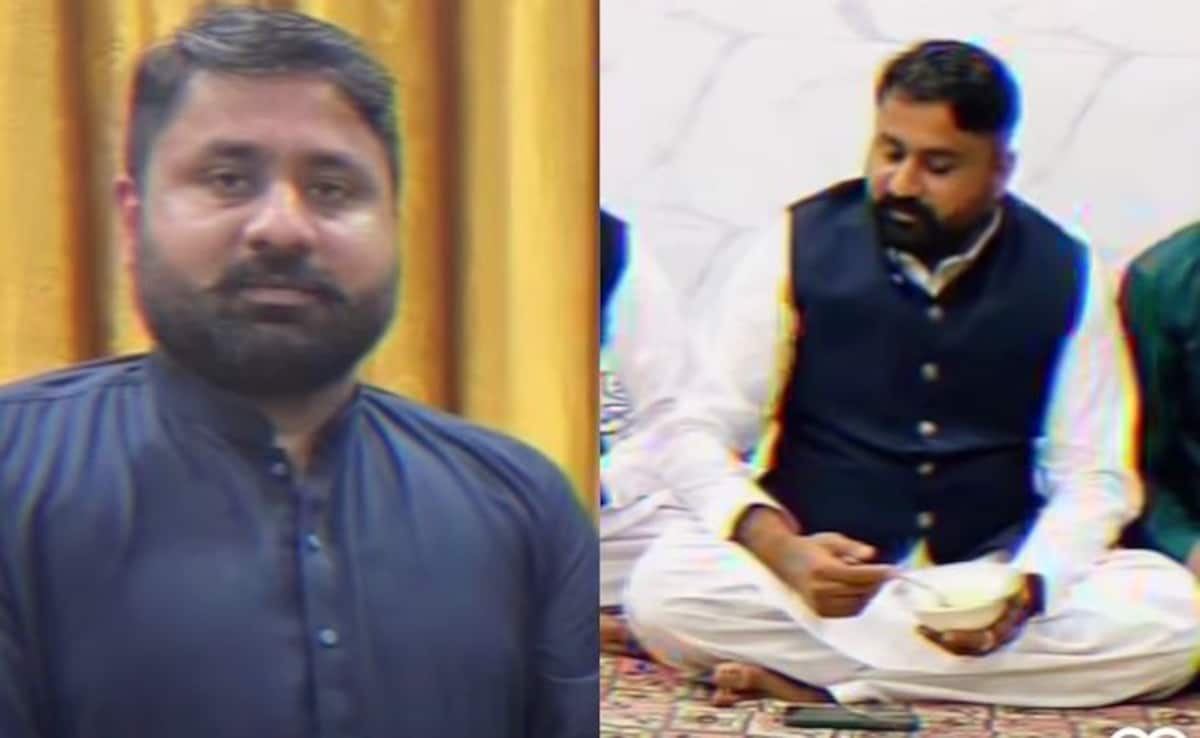
The mainstream media is feeding you a fairy tale about Bilal Arif Sarafi.
If you believe the sanitized reports trickling out of the Punjab province, you’re looking at a simple domestic dispute. A "Lashkar terrorist" meets a grizzly end at the hands of his own kin. It’s a clean narrative. It suggests that even the most radicalized elements aren’t immune to the friction of family drama. It implies a localized, organic rejection of militancy.
It is also almost certainly a lie.
In the complex ecosystem of Pakistani militancy and its intersections with state intelligence, "killed by family" is the ultimate convenient autopsy. It’s the bureaucratic equivalent of a rug to sweep the dirt under. When a high-value asset or a liability like Sarafi is liquidated, the narrative is never about the systemic rot; it’s about a personal grudge.
The Anatomy of a Convenient Disposal
Let’s look at the mechanics of the "family feud" trope. Sarafi, a known operative associated with Lashkar-e-Taiba (LeT) or its various offshoots, wasn't just some guy in a village. Men like him exist within a rigid hierarchy. They are protected by local networks and often monitored by the "establishment"—the shorthand for Pakistan's military-intelligence complex.
The idea that a family simply decided to stab and shoot him in a fit of pique ignores the reality of how these organizations operate. If you touch a protected asset, you don't just face the law; you face the wrath of the cell. Unless, of course, the cell—or the people who fund it—wanted him gone.
I’ve watched these "inter-familial" killings play out for two decades in the region. They follow a specific pattern:
- The target becomes a liability due to international pressure or internal dissent.
- A local dispute is manufactured or amplified.
- The target is eliminated in a way that allows the state to claim it was a "law and order" issue rather than an extrajudicial hit.
Why the "Terrorist" Label is a Smoke Screen
The media loves the "Lashkar" tag because it drives clicks. It provides a villain. But by focusing on his affiliation, the reports miss the structural failure. Sarafi’s death isn't a victory against terrorism. It is a refinement of it.
When these organizations "clean house," they do so to maintain a lower profile. Under the shadow of FATF (Financial Action Task Force) monitoring and shifting geopolitical alliances, Pakistan has had to look like it’s doing something about militancy without actually dismantling the infrastructure. Killing off the loud, messy, or compromised operatives through "family brawls" is the perfect low-cost solution.
The Logic of the Blade and the Bullet
The brutality of the act—stabbing followed by shooting—is being framed as a sign of personal hatred. This is a misunderstanding of operational psychology.
In a high-tension environment, overkill serves a dual purpose. It ensures the job is done, yes, but it also creates enough chaos in the forensic narrative to stall any real investigation. If it’s a "crime of passion," the police can close the book without asking who provided the coordinates or who looked the other way while the "family" moved in.
Imagine a scenario where a mid-level operative starts talking too much to the wrong people. Or perhaps he starts skimming off the top of the local "charity" collections. You don't court-martial a militant. You make his existence untenable. You find the cousins who have a land dispute with him, you give them a green light, and you let the biological ties do the dirty work.
Misconception 1: This Signals the Weakening of Lashkar
Don't fall for the idea that this indicates a breakdown in discipline. On the contrary, if the organization allowed—or facilitated—this, it shows they are more controlled than ever. They are pruning the hedges.
The "lazy consensus" says that if the families are turning on the terrorists, the ideology is failing. That's a comforting thought for a Western audience, but it’s detached from the ground reality. Ideology in these regions is secondary to patronage. If the patronage shifts, the family "turns." It’s not a moral awakening; it’s a survival tactic.
Misconception 2: The Police Account is Final
In the Punjab hinterlands, the First Information Report (FIR) is a work of fiction. I have seen countless cases where "encounters" or "private disputes" were later revealed to be coordinated hits. To take the initial police statement at face value is to admit a total lack of understanding of how the provincial machinery works.
The police are often the cleaning crew. They arrive to frame the scene, not to solve the crime. By labeling it a family matter, they bypass the need for a deeper probe into Sarafi’s recent contacts, his handlers, or his specific activities in the weeks leading up to his death.
The Cost of the Narrative
When we accept the "family feud" story, we stop looking for the broader shifts in the militant landscape. We stop asking:
- Who benefits from Sarafi being silenced?
- What was he working on that made him a target?
- Why now, when regional tensions are at a specific boiling point?
The reality is that Sarafi was a small cog in a massive, grinding machine. His death is not a sign of the machine breaking down. It’s the sound of the machine shifting gears.
The Brutal Truth
The "family" didn't kill Bilal Arif Sarafi because they suddenly hated his politics. If they killed him, they did it because he no longer had the protection that made him untouchable.
In this world, you are only as safe as your utility to the men above you. The moment your utility drops below the cost of your upkeep, you become a headline about a "tragic domestic dispute."
Stop reading the news as a series of isolated events. Start reading it as a series of balance sheets. Sarafi’s account was settled. That’s all this is.
Go back and look at the names of those "arrested" in the coming weeks. If they are relatives, watch how quickly they vanish from the legal system. If they are never heard from again, you’ll know exactly who gave the order.
Don't wait for a follow-up story that explains the "why." There won't be one. The silence that follows a hit like this is the only confirmation you need that the status quo remains perfectly intact.
Stop looking at the family. Start looking at the vacuum he left behind. That’s where the real story is buried.


