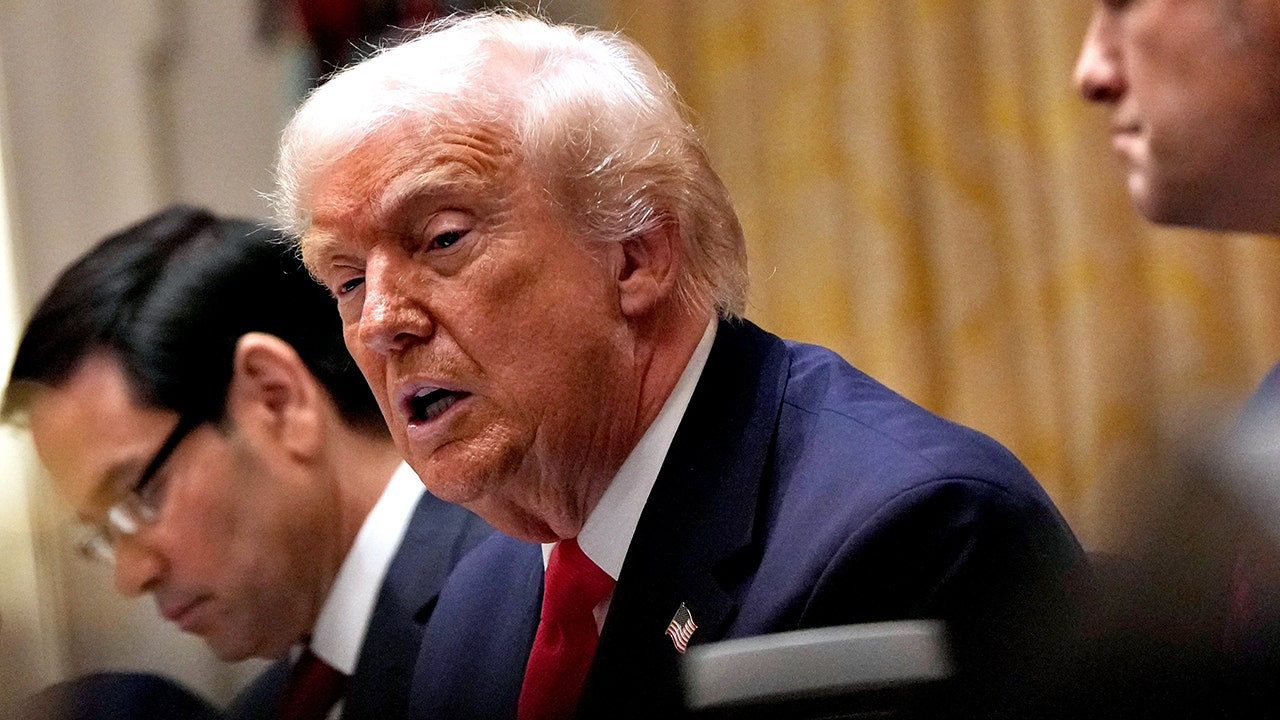
Senate Democrats are moving to block a $1 billion Republican proposal aimed at renovating and securing a massive event space frequently used for high-profile political functions associated with the Trump administration. The dispute centers on whether taxpayer funds should support a venue that critics argue functions more as a private clubhouse for a specific political movement than a necessary piece of national infrastructure. While Republicans frame the expenditure as an essential security upgrade and a modernization of a historic asset, Democrats see a blatant attempt to subsidize the former president's personal and political brand using the public purse.
This is not a standard budget spat. It is a fundamental disagreement over the definition of public utility and the boundaries of executive legacy.
The Price of Prestige
At the heart of the controversy lies a massive line item tucked into a broader infrastructure bill. One billion dollars is a staggering sum for a single venue. To put that in perspective, that amount could fund the replacement of dozens of structurally deficient bridges or jumpstart regional water treatment projects in a dozen struggling municipalities. Instead, the proposal earmarks these funds for what is being termed a "National Event Complex," a title that Democrats claim is a thinly veiled euphemism for the Mar-a-Lago ballroom and its surrounding security perimeter.
The logistics of the plan are dense. Proponents argue that the current facilities are woefully inadequate for the level of international diplomacy and high-security gatherings that occur there. They point to aging HVAC systems, outdated communication lines, and a physical layout that makes Secret Service protection a logistical nightmare. They argue that if the government is going to use a site for official business, the government must ensure that site meets modern standards.
However, the "official business" tag is exactly what the opposition is picking apart. They argue the line between private campaign events and official state functions has become so blurred that the taxpayer can no longer tell where their money is going.
Security as a Smokescreen
Every major funding request involving a high-profile political figure eventually falls back on the "security" defense. It is the ultimate trump card because nobody wants to be responsible for a lapse in protection. The $1 billion plan includes reinforced blast-proof glass, a subterranean command center, and a dedicated encrypted communications hub.
From a purely technical standpoint, these upgrades are legitimate requirements for any site hosting a president or a former president with a heavy public schedule. The reality of modern threats requires more than just a few guys in suits with earpieces. It requires a digital and physical fortress.
The investigative question, however, is why this specific site requires a permanent, billion-dollar taxpayer-funded overhaul when other secure government locations already exist. Camp David, for instance, is already bought and paid for. The various military bases across the country offer unparalleled security at a fraction of the additional cost. By pushing for this specific ballroom funding, Republicans are essentially asking the public to build a permanent, private-sector West Wing in Florida.
The Precedent of Private Subsidies
We have seen this play out before, though rarely on this scale. Historically, the government has covered the costs of "incidental" security upgrades at private residences—think of the fences at Joe Biden’s home in Delaware or the various modifications made to George W. Bush’s ranch in Crawford. But those costs were typically measured in the low millions, not the billions.
The jump to a ten-figure budget represents a shift in how we handle the intersection of private wealth and public office. If this funding passes, it sets a precedent that any future president with a sprawling real estate portfolio can demand the government renovate their properties under the guise of national security. It turns the presidency into a mechanism for property appreciation.
Architectural analysts who have reviewed the preliminary "wish list" for the ballroom project suggest that much of the work is aesthetic. High-end marble, custom lighting arrays, and acoustic treatments designed for televised galas are hard to justify as "essential security."
The Democratic Counter-Offensive
The strategy from the Senate floor is clear: tie the funding to the ongoing debate over the national debt. By highlighting the $1 billion price tag, Democrats are forcing their colleagues to choose between "fiscal responsibility" and loyalty to the party leader. It is a clever move. It puts the GOP in the position of defending a massive spending bill immediately after railing against social program costs.
Independent auditors have also raised concerns about the procurement process. Usually, a project of this magnitude would go through a rigorous, multi-year bidding cycle. The Republican plan seeks to fast-track the funding, bypassing several layers of oversight that usually govern how federal construction contracts are awarded.
This lack of transparency is the primary target for investigators. When money moves this fast for a project this specific, it usually means the deals have already been made behind closed doors. We are looking at a potential gold mine for contractors with close ties to the administration.
The Economic Ripple Effect
Beyond the beltway politics, there is the local impact to consider. A billion-dollar injection into a single property creates a localized economic bubble. It inflates property values in the immediate vicinity and crowds out smaller, local construction firms that can't compete with the massive conglomerates that typically handle "classified" government builds.
Critics in the Florida real estate market, speaking off the record, suggest that this project would effectively turn the area into a "Green Zone," making it nearly impossible for regular commerce to function without heavy federal interference. The ballroom isn't just a room; it’s the anchor for a massive expansion of federal presence in a private residential area.
The Structural Reality of Modern Politics
We are living through the era of the "Permanent Campaign." There is no longer an off-season for political fundraising or messaging. This ballroom is the physical manifestation of that reality. It is a stage built for the cameras, designed to project power and opulence to a global audience.
If the government pays for the stage, the government is effectively sponsoring the message. That is the core of the ethical quagmire. While the GOP argues that the site is a historical landmark and a hub of modern political thought, the opposition sees a taxpayer-funded studio for a singular political brand.
The technical specifications of the proposed "command center" under the ballroom are particularly telling. It isn't just a security office; it’s a high-bandwidth media suite. It allows for the seamless broadcast of events to any network in the world. This is about more than just keeping a former president safe; it’s about ensuring he has the most sophisticated platform on the planet, courtesy of the American taxpayer.
The Fight for Oversight
If the Democrats fail to kill the bill entirely, their fallback position is a series of "poison pill" amendments. These include requirements for the property to be deeded to the public if government spending exceeds a certain percentage of its value, or mandatory public access days to ensure the "National Event Complex" actually serves the nation.
Republicans are unlikely to accept these terms. They view the property as a private asset that the government happens to be using. This leads back to the fundamental question of who owns a space that is built with public money but sits on private land. The legal precedents are murky and haven't been tested at this scale since the era of the Great Depression-era public works projects, which were almost always on 100% public land.
The Bottom Line on the Billion
The battle over the $1 billion ballroom is a proxy war for the future of the GOP and the limits of federal spending. It isn't about the money in the context of the total federal budget—$1 billion is a rounding error in Washington—but it is about the symbolism of where that money goes.
When you spend a billion dollars on a ballroom, you aren't just buying marble and secure lines. You are buying a legacy. You are cementing a specific location as the center of power, regardless of who holds the official keys to the White House. This is an attempt to create a permanent shadow capital, funded by the very people who are often the most skeptical of government waste.
Follow the contract trail. The companies that win these bids will tell you more about the future of this project than any press release from a Senator’s office. Look for the sub-contractors handling the "specialty finishes" and the security firms with long-standing ties to the principals involved. That is where the real story of the $1 billion ballroom is written.
The vote scheduled for next Tuesday will determine if the "National Event Complex" becomes a reality or remains a fever dream of a political movement looking to institutionalize its home base. The outcome will signal whether the era of the private-public presidency is here to stay or if the Senate still has the stomach to draw a line in the Florida sand.