A stack of banknotes HK$1.13 billion high doesn’t just sit on a table. It breathes. It represents schools not built, hospital beds not occupied, and thousands of hours of human labor redirected toward a single, choreographed event. In Hong Kong, that sum was the price tag for the 2023 District Council elections. It is a number so vast that it feels abstract, yet it is rooted in the very tangible reality of a city recalibrating its soul.
Walk through Sham Shui Po on a humid afternoon. You see the elderly hunched over cardboard, the neon signs flickering with the buzz of a thousand small businesses, and the relentless pace of a city that measures success in square footage and stock indices. Now, consider that the cost of organizing the local polls jumped 35 percent compared to the 2021 legislative elections. The math doesn't seem to track with the quietude of the streets on polling day. Why did a local election cost more than a city-wide legislative shift?
The answer isn't found in a single line item. It is buried in the machinery of "patriots only" governance.
The Weight of the Paper Trail
When the Constitutional and Mainland Affairs Bureau pulled back the curtain on the spending, the figures felt heavy. HK$1.13 billion. For context, the 2021 Legislative Council election—a much larger administrative undertaking—cost roughly HK$829 million.
The increase wasn't accidental. It was a deliberate investment in a new reality.
Imagine a civil servant named Mr. Chan. He isn't a politician. He is a middle-manager in a government department who found himself drafted into the massive electoral army. For weeks, his life revolved around logistics. He wasn't just counting votes; he was part of a 30,000-strong force of government employees deployed to ensure the gears turned without a hitch. Staffing costs alone swallowed HK$437 million. That is nearly 40 percent of the total budget.
Every polling station needed to be a fortress of efficiency. Every ballot box required a chain of custody so rigid it bordered on the ceremonial. When the rules change, the cost of compliance skyrockets. The 2023 elections were the first under a revamped system that slashed the number of directly elected seats and introduced a rigorous vetting process. To make this system work, the government didn't just need voters; it needed a flawless execution of the "improved" electoral process.
The Price of Visibility
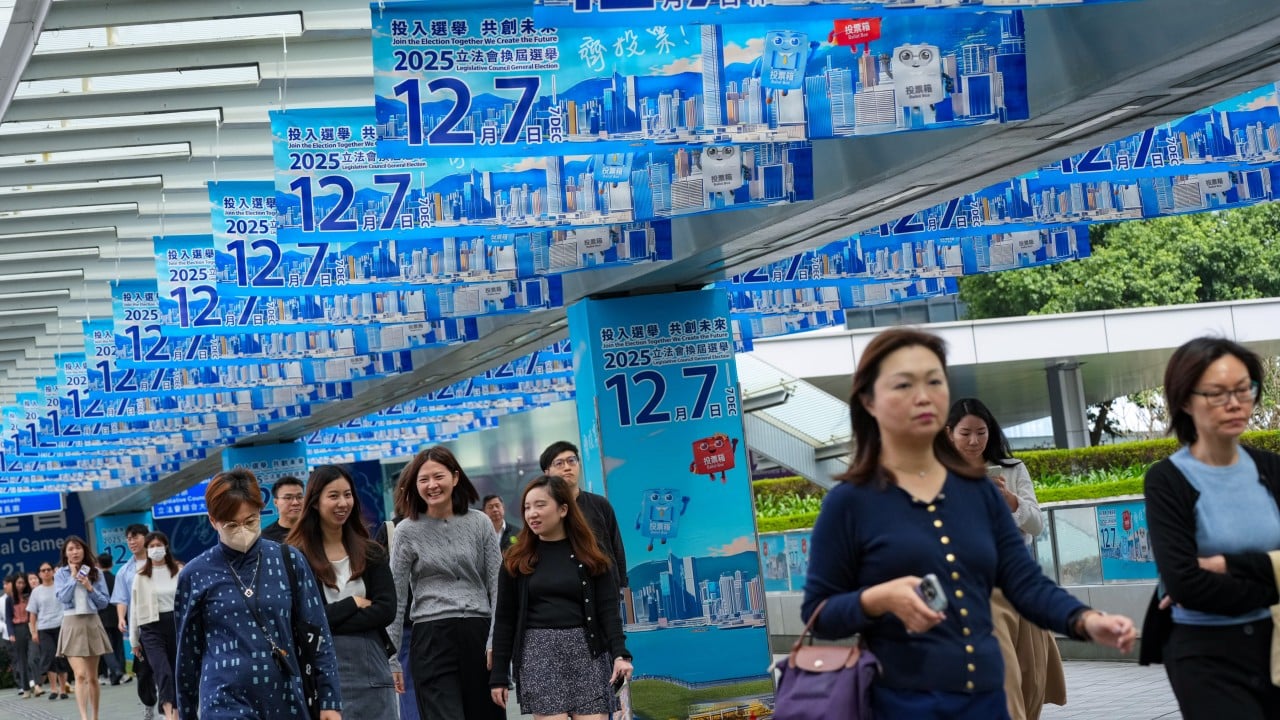
If you lived in Hong Kong during the lead-up to December 10, you couldn't escape the color blue and the promise of a "better community." The city was draped in it.
The government spent HK$69 million on publicity. That’s a staggering amount of ink, vinyl, and digital airtime. It wasn't just about telling people where to vote. It was a campaign to convince a weary public that their participation still mattered in a system where the outcome felt, to many, like a foregone conclusion.
Banners hung from highway overpasses. Advertisements played on loop in the MTR. There were "District Council Election Day" carnivals and posters plastered on the sides of ancient tenement buildings. This wasn't just information; it was a performance of legitimacy. When the "market" for an idea is tough, the marketing budget has to be massive.
Consider the hypothetical shopkeeper in Mong Kok. He sees the posters every day. He knows his tax dollars paid for the glossy paper. He also knows his rent is rising and the tourists aren't spending like they used to. To him, that HK$69 million feels like a loud shout in a room where everyone is trying to sleep. He wonders if that money could have subsidized electricity bills or revamped the crumbling drainage system on his street.
The Digital Safety Net
Then there is the matter of the glitch.
In the middle of the 2023 polling day, the electronic voter registration system crashed. It was a moment of pure, bureaucratic panic. For a system that cost over a billion dollars, a server failure is more than a technical hiccup—it is a crack in the armor.
The fallout from that crash forced the government to extend voting hours into the midnight oil. More hours meant more overtime pay. More security. More logistics. The "Information Technology" slice of the budget pie was HK$72 million. It is a bitter pill to swallow: paying tens of millions for a system that falters when the eyes of the city are watching most closely.
This technical failure necessitated a specialized task force to investigate. Investigation costs money. Redundancy costs money. In the quest to prove that Hong Kong could run a high-tech, secure, and patriotic election, the bill for the "tech" was only eclipsed by the bill for the "people."
Comparing the Years
Comparing 2021 to 2023 is like comparing a marathon to a sprint where the runners are required to wear suits of armor.
- 2021 Legislative Council Poll: HK$829 million.
- 2023 District Council Poll: HK$1.13 billion.
The 35 percent increase happened despite the fact that the number of candidates was smaller and the "competition" was strictly curated. Logic suggests that fewer candidates and a more controlled environment should lead to lower costs. The reality of Hong Kong’s new political landscape dictates the opposite.
Control is expensive.
To maintain the appearance of a vibrant, participatory democracy while ensuring the guardrails of the National Security Law are never touched requires an incredible amount of friction. Friction generates heat, and in government terms, heat is paid for in cash. The "other expenses" category—a catch-all for the thousands of moving parts required to keep the engine humming—totaled HK$153 million.
The Human Subsidy
We often talk about government spending as if it is a withdrawal from a faceless vault. But every dollar is a choice.
The 2023 District Council election ended with a turnout of 27.54 percent. That is the lowest since the 1997 handover. When you divide the total cost of HK$1.13 billion by the 1.19 million people who actually cast a ballot, the math reveals a haunting truth.
The government spent roughly HK$950 for every single vote recorded.
Think about that. Nearly a thousand dollars per person to get them to walk to a community center and put a piece of paper in a box. In a city where a bowl of wonton noodles costs HK$40 and a sub-divided flat can rent for HK$6,000, that "per-vote" cost is a king's ransom.
It is the cost of a silent conversation. The government spoke through its billion-dollar infrastructure, its 30,000 staff members, and its wall-to-wall advertising. The public responded with a quiet walk in the park or a Sunday spent at home.
The stakes were never about who would win the seats. With the vetting process in place, the "who" was already settled within a specific spectrum of loyalty. The stakes were about the "how." How much will it cost to build a new political normal? How much are we willing to pay to ensure the procedure is followed, even if the passion has evaporated?
The Ledger Stays Open
The bureau’s report is a post-mortem of a Sunday in December. It tells us that paper, people, and pixels are getting more expensive. But the document is silent on the most important metric: the return on investment.
Money can buy a flawlessly executed election. It can buy thousands of hours of civil service labor. It can buy every billboard in the city. It can even buy a digital system that, eventually, gets back online.
But as the HK$1.13 billion settles into the history books, the question remains whether that investment bought the one thing a city needs to thrive. You can audit a budget, and you can count a ballot, but you cannot force a connection between a government and its people, no matter how many zeros you add to the check.
The ledger is balanced, the bills are paid, and the city moves on, carrying the weight of a billion-dollar silence into the next fiscal year.