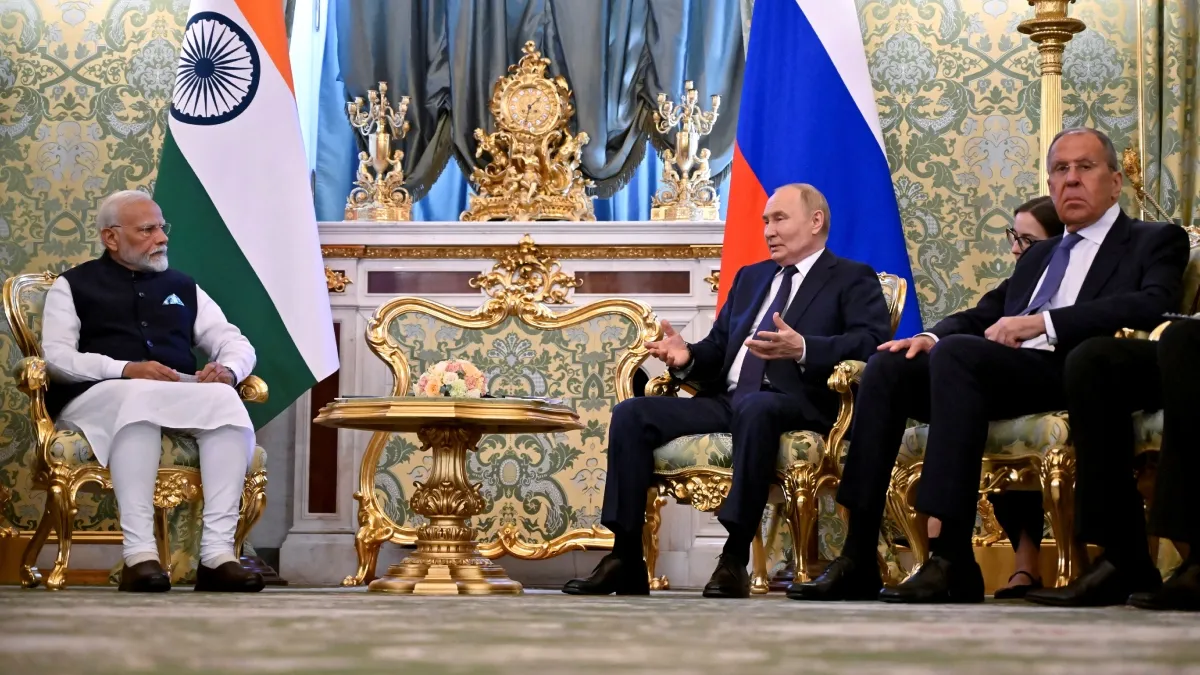
The current global governance framework is undergoing a forced recalibration as the BRICS bloc transitions from a symbolic investment grouping into a functional mechanism for institutional arbitrage. This shift is not merely a diplomatic preference but a structural response to the perceived obsolescence of post-1945 multilateralism. To analyze the trajectory of BRICS under the current South African mandate, one must evaluate the organization through three specific vectors: institutional density, financial decoupling, and the expansion of the "Global South" as a coherent negotiating bloc.
The Mechanistic Failure of Bretton Woods Institutions
The primary driver for the increased relevance of BRICS is the inertia within the International Monetary Fund (IMF) and the World Bank. These institutions operate on a quota system that fails to reflect contemporary GDP distributions. When voting power remains decoupled from economic output, the system creates a high-friction environment for emerging economies.
The BRICS strategy seeks to solve this through Institutional Parallelism. Rather than attempting to dismantle the IMF, the bloc is building redundant systems that provide similar utility with fewer ideological constraints.
The New Development Bank as a Proof of Concept
The New Development Bank (NDB) functions as the structural core of this movement. Unlike the World Bank, which often attaches "structural adjustment" conditions to its lending—requiring specific fiscal or social policy changes—the NDB prioritizes project-based infrastructure financing.
- Risk Mitigation: By providing loans in local currencies, the NDB addresses the "original sin" of emerging market finance—the dependency on USD-denominated debt that leads to balance-of-payment crises when the Federal Reserve raises interest rates.
- Capital Efficiency: The NDB’s ability to maintain high credit ratings while operating outside the traditional Western oversight framework allows it to bridge the infrastructure gap without the political overhead required by the G7-aligned banks.
The Strategic Expansion and the "Plus" Factor
The inclusion of Saudi Arabia, Iran, Ethiopia, Egypt, and the United Arab Emirates represents a move toward controlling critical commodity corridors. This is a deliberate attempt to verticalize the supply chains of the Global South.
Geopolitical Aggregation and Bargaining Power
The expansion shifts BRICS from a group of regional powers to a global energy and logistics cartel. The logic follows a standard power-projection model:
- Energy Sovereignty: With the inclusion of major OPEC+ members, BRICS now accounts for a significant plurality of global oil production and reserves. This allows for the internal settlement of energy trades, bypassing the SWIFT messaging system and the petrodollar requirement.
- Logistical Nodes: Control over the Suez Canal (via Egypt) and the Persian Gulf (via Iran and the UAE) gives the bloc a veto-like influence over maritime trade routes.
This expansion introduces a new complexity: The Consensus Bottleneck. As the membership grows, the internal variance in political systems and economic priorities increases. The challenge for leaders like South Africa’s Ronald Lamola is maintaining a unified stance on global governance reform while navigating the disparate national interests of an eleven-member (and growing) body.
The Architecture of Financial Autonomy
The most significant threat to the current global order is not military, but the development of the Contingent Reserve Arrangement (CRA). The CRA is a framework for providing liquidity and precautionary support in response to actual or potential short-term balance-of-payments pressures.
Currency Statecraft and De-dollarization
The rhetoric regarding a "BRICS currency" is often overstated, but the underlying mechanism of increased local currency settlement is factual and accelerating. This is driven by the weaponization of the dollar-based financial system. When a currency is used as a tool for sanctions, it ceases to be a neutral global utility and becomes a liability.
The transition toward a multi-polar financial system follows a three-stage progression:
- Bilateral Settlement: Russia and India, or China and Brazil, settle trade in their respective currencies. This removes the "spread" lost to USD conversion.
- Multilateral Clearing Houses: Developing a common platform (like the proposed "BRICS Bridge") to clear trades without touching Western banking infrastructure.
- Synthetic Accounting Units: Using a basket of currencies or a digital ledger to price commodities, reducing the volatility associated with any single national currency.
South Africa’s Role as the Diplomatic Architect
South Africa occupies a unique position as the bridge between the BRICS core and the African Continental Free Trade Area (AfCFTA). The South African strategy is focused on Multilateral Reform via Inclusion.
The G20 and the African Union
A major achievement of the BRICS-led pressure campaign was the permanent inclusion of the African Union in the G20. This was not a symbolic gesture; it was a tactical win that altered the voting and agenda-setting dynamics of the world's premier economic forum. By ensuring the AU has a seat, BRICS leaders ensure that the "Development Agenda" remains prioritized over "Security Agendas" favored by the Global North.
South Africa’s emphasis on "fairness" in global governance is actually an argument for proportional representation. If the United Nations Security Council (UNSC) is not expanded to include permanent representation from Africa and Latin America, its resolutions will increasingly be viewed as regional rather than universal. This perception of illegitimacy is the vacuum that BRICS is designed to fill.
Structural Constraints and Execution Risks
The BRICS project is not without severe limitations that could impede its objective of restructuring global governance.
- Intra-Bloc Rivalry: The China-India border dispute remains the single largest point of failure. Unlike the G7, which shares a common security umbrella (NATO) and a unified ideological framework (Liberal Democracy), BRICS is a marriage of convenience.
- Economic Asymmetry: China’s GDP is larger than that of all other BRICS members combined. This creates a risk that the bloc will transition from a Western-dominated system to a Sino-centric system, rather than a truly multipolar one.
- Institutional Infancy: The bloc still lacks a permanent secretariat or a codified charter. Its reliance on annual summits and rotating chairmanships makes long-term policy execution difficult compared to the permanent bureaucracies of the EU or the UN.
The Shift from Reform to Replacement
The discourse has moved past the point where minor tweaks to the IMF or UN will suffice. BRICS is now building a Counter-Institutional Stack. This is visible in the development of:
- Independent credit rating agencies to counter the perceived bias of the "Big Three" (Moody’s, S&P, Fitch).
- Alternative undersea internet cables to secure data sovereignty.
- Educational and cultural exchanges designed to build a professional class that is not exclusively trained in Western institutions.
The "more critical than ever" status mentioned by Minister Lamola is an acknowledgment that the window for peaceful institutional evolution is closing. As Western powers move toward protectionism and industrial policy (such as the Inflation Reduction Act or the Carbon Border Adjustment Mechanism), the BRICS nations view collective bargaining as their only viable defense.
The Strategic Path Forward
To maintain momentum, the BRICS bloc must move from high-level declarations to technical standardization. The immediate strategic requirements are:
- Standardization of Digital Assets: The development of Central Bank Digital Currencies (CBDCs) that are interoperable across the bloc to facilitate instant, low-cost cross-border payments.
- Harmonization of Trade Rules: Aligning the BRICS expansion with existing regional trade blocks like MERCOSUR and the AfCFTA to create a "Southern Common Market" that can negotiate with the EU and North America from a position of parity.
- The "BRICS Bond" Market: Creating a deep, liquid market for sovereign debt denominated in local currencies or a BRICS basket unit to provide an alternative to US Treasuries for global reserve managers.
The transition to a multipolar world is no longer a theoretical debate; it is an active engineering project. The success of this project depends on the bloc's ability to provide a more stable, predictable, and inclusive alternative to the current high-friction global governance model. The focus must remain on the technical delivery of financial and logistical independence, as these are the only metrics that will truly shift the global balance of power.