Donald Trump is not a man of extensions. He is a man of deadlines, and the ticking clock on the current two-week ceasefire with Iran is his favorite leverage. While the rest of the diplomatic world scrambles to find a way to lengthen the reprieve before its April 22 expiration, the President has signaled he sees no need to wait. His logic is blunt: the Iranian military is fractured, their Supreme Leader is dead, and the U.S. Navy has successfully locked down the Strait of Hormuz. In Trump’s view, the weekend’s upcoming talks in Islamabad are not a negotiation for more time; they are a summons for a final surrender.
The conflict, which flared into a high-intensity kinetic war earlier this year, has reached a critical juncture. On Wednesday, Trump told reporters he wasn't "thinking about extending" the truce because a permanent deal might be reached in the next forty-eight hours. This isn't just optimism; it is a calculated pressure campaign designed to force the new, more fragile Iranian regime into a corner. By refusing to promise more time, the White House is essentially telling Tehran that the B-21 bombers and the naval blockade will resume their work on Monday morning unless a signature is on the paper by Sunday night.
The Islamabad Squeeze
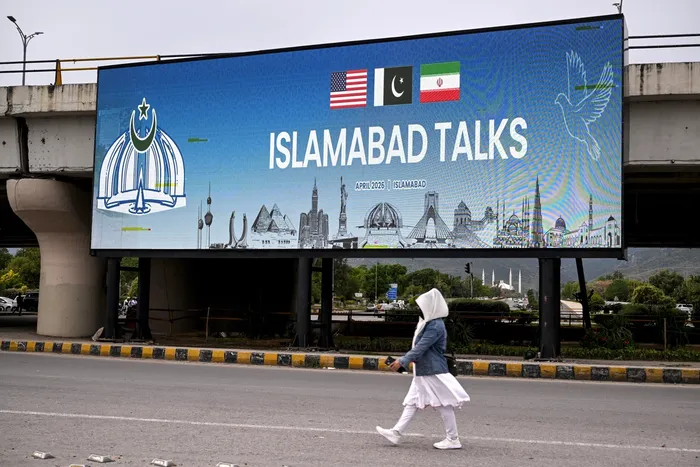
The venue for this weekend’s high-stakes theater is the Serena Hotel in Islamabad. Pakistan has emerged as the indispensable middleman, with Field Marshal Asim Munir leading a delegation that has spent the week shuttling between Washington and Tehran. The primary friction point isn't just the cessation of fire; it’s the price of the peace. The U.S. demand is a 20-year moratorium on all nuclear activity and a complete reopening of the Strait of Hormuz under international—read American—oversight.
Tehran’s new leadership, installed in the chaotic vacuum following the death of Ayatollah Ali Khamenei during "Operation Epic Fury," is facing a domestic nightmare. They are being asked to trade their regional influence and their nuclear "insurance policy" for the mere chance to stop being bombed. Trump’s "amazing two days ahead" comment suggests he believes the Iranian negotiators are ready to fold. But history suggests that cornered regimes often find a way to lash out when they feel the floor dropping beneath them.
The Blockade and the Barrel
While the diplomats talk, the U.S. Central Command is doing the heavy lifting. The naval blockade has turned the Persian Gulf into a one-way street. In the last 72 hours alone, American warships have turned back 14 vessels, including a Chinese-owned tanker attempting to breach the Strait of Hormuz. This is the "financial equivalent" of the air war.
- Oil Volatility: Brent crude is currently hovering at $95 a barrel. Markets are pricing in a deal, but any hint of a breakdown in Islamabad will send prices into triple digits instantly.
- China’s Silence: Trump claims he has secured a promise from Xi Jinping to halt arms shipments to Iran. If true, this removes Tehran’s last great-power lifeline.
- The Drone Gap: Despite the naval dominance, military analysts point to a worrying reality. The U.S. has burned through a massive portion of its anti-drone interceptor stockpile. If the ceasefire fails and Iran launches a saturation strike of its remaining "suicide" drones, the cost of defense may soon exceed the cost of the war itself.
The Lebanon Complication
The most dangerous variable in this weekend’s talks is the shadow of Hezbollah. A separate 10-day truce between Israel and Lebanon went into effect on Thursday, but the links between the two theaters are inextricably tied. Iran has spent decades building Hezbollah as its forward-deployed deterrent. If the Islamabad talks fail to include a broader regional settlement, the Lebanon truce will likely evaporate within hours of the first missile launched over the Persian Gulf.
Trump’s public message to Hezbollah—to "act nicely"—is typical of his personalized diplomacy. It treats a complex, religiously motivated paramilitary group like a business rival. However, the IRGC remnants within Iran still view Hezbollah as their last card. They may be willing to sacrifice Tehran’s infrastructure if it means keeping a foothold on the Mediterranean.
The Logistics of a Deal
What does a "Trump Deal" actually look like in 2026? It is far more draconian than the 2015 JCPOA. It demands the unfreezing of assets, yes, but only after the physical destruction of centrifuge cascades under the eyes of U.S. inspectors. It requires a permanent end to the "shadow war" in the shipping lanes. Most significantly, it seeks to codify a new Middle Eastern order where Iran is a contained middle-power rather than a regional hegemon.
The risk of Trump’s "no extension" policy is the lack of an exit ramp. By narrowing the window to 48 hours, he has left no room for the face-saving maneuvers that usually allow Middle Eastern powers to concede. If the Iranian delegation walks away on Sunday, they aren't just walking back to a stalemate; they are walking back to a blockade that is slowly strangling their economy and a military that is waiting for the order to "blast them into the Stone Ages," as the President so vividly put it.
The next forty-eight hours will determine if 2026 is remembered as the year of a new Persian peace or the start of a much longer, much darker occupation. Trump is betting that the regime is too broken to fight. Tehran is betting that the world cannot afford $150 oil. One of them is about to be proven wrong.
The weekend’s schedule is set. The Islamabad Serena is locked down. The carriers are in position. Now, we see if the "art of the deal" can survive the reality of a war that has already cost too many lives and too much treasure to end with anything less than a total transformation of the map.
Get ready for the most expensive 48 hours in modern history.