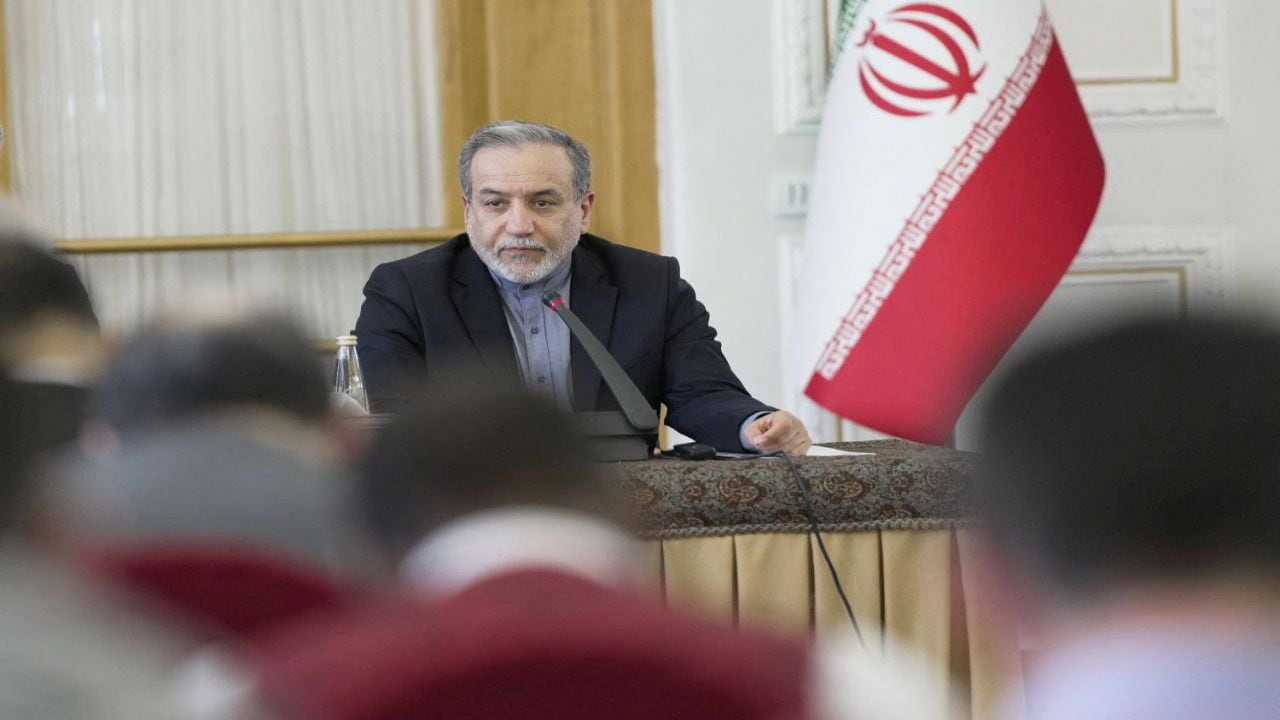
Iranian Foreign Minister Abbas Araghchi recently characterized American regional strategy as a "military adventure," a blunt assessment that signals a total breakdown in the back-channel communications that once kept the Middle East from the edge. The core of the current crisis is not just a disagreement over borders or nuclear centrifuges. It is a fundamental shift where both Washington and Tehran have abandoned the negotiation table in favor of high-stakes psychological warfare and kinetic posturing. Diplomacy has become a secondary tool, used only to explain why the missiles are flying.
The shift toward "crude pressure" represents a gamble that assumes the other side will blink before a regional conflagration becomes inevitable. But history suggests that when military posturing replaces clear diplomatic roadmaps, the margin for error vanishes. We are no longer seeing a chess match. We are seeing a demolition derby.
The Architecture of Escalation
For years, the relationship between the United States and Iran relied on a set of unspoken rules. There were red lines that everyone understood. You could proxy-war in the shadows, but you didn't target high-level diplomats or sovereign soil directly without expecting a total collapse of the status quo. Those rules are gone.
When Araghchi slams the U.S. for choosing adventure over diplomacy, he is highlighting a specific tactical change in the White House. The current administration has moved away from the incrementalism of the past. Instead, they are utilizing massive carrier strike group deployments and targeted strikes as their primary means of communication. This is "gunboat diplomacy" updated for the 21st century. It aims to cow an opponent into submission, but it often has the opposite effect. It backs a regime into a corner where domestic survival depends on looking tough.
The "why" behind this is simple. The U.S. political climate no longer rewards nuanced foreign policy. It rewards strength. Any attempt to sit down with Iranian officials is framed by domestic rivals as weakness. This political reality has stripped American diplomats of their most valuable asset: the ability to offer credible carrots alongside the sticks.
Intelligence Gaps and the Fog of Peace
One of the most dangerous aspects of the current "military adventure" is the degradation of intelligence. When you stop talking, you stop understanding the internal pressures facing your adversary.
Tehran is not a monolith. There are factions within the Islamic Revolutionary Guard Corps (IRGC) that thrive on conflict. They use Western pressure to justify their grip on the Iranian economy and their suppression of domestic dissent. When the U.S. opts for military pressure, it inadvertently hands these hardliners a victory. They can point to the warships in the Persian Gulf and tell the Iranian public that the West was never interested in peace.
Conversely, the U.S. intelligence community often struggles to read the true intent behind Iranian "slams" and rhetoric. Is Araghchi’s statement a genuine plea for a return to the JCPOA framework, or is it a calculated distraction while the IRGC prepares a fresh shipment of drones to its regional proxies? Without a direct line of communication, Washington is forced to guess.
Miscalculation is the greatest threat to global security. In a world where hypersonic missiles can cross borders in minutes, waiting to see "what happens next" is a recipe for disaster. We saw this in 1914, and we are seeing the same patterns of blind escalation today.
The Proxy Problem
You cannot talk about U.S.-Iran relations without looking at the chessboard of proxies. From the Houthis in Yemen to Hezbollah in Lebanon, the region is a tinderbox of groups that have their own agendas. Araghchi’s critique of "military adventure" conveniently ignores Iran's own role in fueling these fires.
The U.S. views its military movements as a necessary deterrent against these groups. From the Pentagon's perspective, if you don't show force, the proxies will feel emboldened to shut down global shipping lanes or strike allied bases. This creates a feedback loop.
- The U.S. deploys a carrier to deter proxies.
- Iran views the carrier as an existential threat.
- Iran increases support to proxies to create "strategic depth."
- The U.S. sees the increased support and sends another carrier.
This cycle is what Araghchi calls a pressure tactic, but it’s actually a structural trap. Neither side knows how to de-escalate without losing face.
Economic Warfare as Kinetic Action
The term "military adventure" usually brings to mind tanks and jets. However, the modern version of this adventure includes the weaponization of the global financial system. The sanctions regime currently imposed on Iran is, for all intents and purposes, a state of siege.
When a country’s currency is decimated and its ability to sell its primary export—oil—is crippled, the leadership views it as an act of war. The U.S. treats sanctions as a "peaceful" alternative to bombing, but to the person on the ground in Tehran, the result is the same: the destruction of their livelihood. This is why the Iranian leadership reacts with such vitriol. They don't see a "diplomatic alternative"; they see a slow-motion execution.
The failure of the "maximum pressure" campaign under previous administrations showed that sanctions alone rarely force a regime to change its fundamental nature. Instead, they often harden the regime’s resolve. The current administration has kept many of these sanctions in place while simultaneously trying to signal a desire for a "diplomatic path." This mixed messaging is a primary driver of the current friction. You cannot hold someone’s throat and ask them why they aren't speaking clearly.
The Vanishing Middle Ground
There was a time when neutral parties like Switzerland or Oman could bridge the gap. They provided a space where messages could be exchanged without the heat of the public eye. That middle ground is shrinking. The polarization of global politics means that even neutral mediators are being forced to pick sides.
Russia and China have stepped into the vacuum left by the West. By aligning more closely with Tehran, they have provided Iran with an economic lifeline and a diplomatic shield at the UN Security Council. This has changed the math for Araghchi and the Iranian leadership. They no longer feel they must come to the table with Washington. They have other options.
This makes the American "military adventure" even riskier. If the goal was to isolate Iran, it has failed. Iran is now more integrated into a non-Western power bloc than it has been in decades.
The Reality of the "Diplomatic Path"
When critics talk about returning to diplomacy, they often point to the 2015 nuclear deal. But that deal was a product of a specific moment in time that no longer exists. The trust is gone. The geopolitical landscape has shifted.
A new diplomatic path would require both sides to acknowledge uncomfortable truths. The U.S. would have to accept that Iran is a regional power with legitimate security concerns. Iran would have to accept that its support for militant proxies is a non-starter for any long-term peace. Neither side is currently capable of making those concessions.
Instead, we get "slams" and "adventures." We get press releases that sound like threats and military exercises that look like rehearsals for a third world war.
The "crude pressure" Araghchi mentions isn't just a tactic; it’s a symptom of a world that has forgotten how to talk. We are living through a period of "diplomatic illiteracy." Leaders are fluent in the language of force but have lost the vocabulary of compromise.
The danger is that someone eventually takes the "adventure" too far. A drone hits the wrong target. A sailor misreads a radar signature. A commander on the ground decides to take the initiative. In that moment, it won't matter who slammed whom in a press conference.
The only way out of the brinkmanship trap is a deliberate, quiet, and painful return to the basics of statecraft. This means talking to people you don't like, about things you don't want to discuss, without the cameras running. It means trading the "adventure" for the hard, boring work of incremental progress. If that doesn't happen, the next "slam" we hear won't be a verbal one. It will be the sound of a region finally reaching its breaking point.
The clock is ticking, and the carriers are already in position. Stop looking for a victory and start looking for a way home.