Gravity is a cruel master to those who have spent months defying it. When the Artemis II crew splashes down in the Pacific, they will not emerge as conquering heroes ready for a press conference. They will be fragile, dizzy, and physically compromised biological systems struggling to remember how to exist in a 1G environment. The physical tests these astronauts face back on Earth are not mere fitness checks. They are high-stakes diagnostic hurdles designed to determine if a human being can survive the transition from deep space back to the harsh reality of our home planet.
The public often sees the glory of the launch, but the real story of human spaceflight is written in the grueling recovery process. NASA’s return-to-Earth protocols are a mix of clinical observation and physical torture. For the Artemis generation, the stakes are higher than they were for the Space Shuttle or even the International Space Station crews. These men and women are traveling farther, faster, and through more intense radiation belts than anyone in half a century. Their bodies pay the price.
The Vestibular Collapse
The most immediate and violent challenge is the complete failure of the inner ear. In microgravity, the vestibular system—the fluid-filled canals that tell your brain which way is up—goes dormant. When the capsule hits the ocean, that system wakes up with a vengeance.
Astronauts describe the sensation as being trapped in a spinning centrifuge while someone tilts your head back and forth. This is not simple motion sickness. It is a fundamental disconnect between what the eyes see and what the brain feels. To test this, NASA employs the Tilt Test.
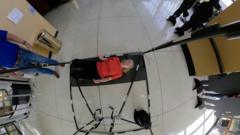
An astronaut is strapped to a table that moves from a horizontal to a vertical position. In a healthy person, the heart and blood vessels compensate instantly, tightening up to keep blood flowing to the brain. For a returning Artemis pilot, the system fails. The blood pools in the legs. The heart rate spikes. The world goes black at the edges. If they cannot pass this basic test of cardiovascular stability, they remain grounded and under constant medical supervision. It is the first barrier to reclaiming their life on Earth.
Muscle Atrophy and the Bone Density Deficit
Despite hours of daily exercise on the Orion spacecraft, the human body sheds muscle mass like dead skin in space. The "anti-gravity" muscles—the calves, quadriceps, and lower back—are hit the hardest. They are no longer required to support the body’s weight, so the body, ever the efficient machine, begins to dismantle them.
The tests performed at the Johnson Space Center focus on functional strength rather than bodybuilding. Researchers use the Functional Task Test (FTT) battery. This isn't about bench pressing a personal best. It involves climbing a ladder, carrying a 40-pound load, and rising from a seated position. These sounds like mundane activities for a professional athlete. For an astronaut who has lived for weeks in a pressurized tin can, these tasks are Herculean.
The Hidden Danger of Bone Resorption
While muscles can be rebuilt with sweat and protein, bone loss is a more sinister foe. In space, the body leaches calcium into the bloodstream. This is known as bone resorption. The skeletal structure becomes porous, mimicking a rapid onset of osteoporosis.
The physical tests here are longitudinal. Medical teams use Dual-energy X-ray Absorptiometry (DXA) scans to map the damage. The danger isn't just a broken leg. The excess calcium in the blood increases the risk of kidney stones, which, in a remote mission environment, could be fatal. The post-flight testing regime looks for these chemical markers long before the astronaut is allowed to go home to their family.
The Neurological Reset
Proprioception is the body's ability to sense its position in space. In microgravity, you don't need to know where your feet are because they aren't touching anything. On Earth, proprioception is what keeps you from tripping over a curb or missing a step.
The Obstacle Course is the gold standard for testing this recovery. Astronauts are asked to navigate a series of foam pads, hurdles, and inclined surfaces. To a casual observer, they look like toddlers learning to walk. They stumble. They overcorrect. Their brains are trying to use a software package designed for a weightless environment to run hardware that is suddenly heavy and clumsy.
This neurological lag is why astronauts are forbidden from driving a car for weeks after their return. The reaction time required to hit a brake pedal simply isn't there. The brain is busy re-mapping the entire concept of "down."
The Psychological Weight of the Return
Physical tests usually focus on the heart, lungs, and limbs, but the Artemis missions introduce a unique psychological strain. Unlike the Apollo missions, which were short sprints, Artemis represents a move toward sustained lunar presence. The transition from the isolation of deep space to the sensory overload of Earth is jarring.
Psychiatrists monitor the crew for signs of post-mission sensory integration disorder. The smell of grass, the sound of wind, the feel of rain—these are alien sensations after weeks of recycled air and machine hum. The testing here is subtle, involving interviews and cognitive assessments designed to catch the early signs of burnout or clinical depression.
The Mission Beyond the Mission
Why does NASA subject its elite pilots to this gauntlet? Because the data harvested from these tests is the blueprint for Mars. If we cannot reliably return a human being from a three-week lunar mission without significant physiological decay, a three-year round trip to the Red Planet is a death sentence.
The Artemis II crew are the guinea pigs for a new era of human expansion. Every stumble on the obstacle course and every failed tilt test provides the data points needed to develop better exercise equipment, better pharmaceuticals, and better recovery protocols.
We are learning that the human body is remarkably adaptable, but it is also stubborn. It evolved for Earth. It wants to be on Earth. Forcing it to live elsewhere requires a heavy tax, and these physical tests are the IRS of the space age, coming to collect what is owed.
The recovery process is not a period of rest. It is a phase of the mission every bit as dangerous as the re-entry itself. When the heat shield is glowing at 5,000 degrees Fahrenheit, the physics are predictable. When a human heart is trying to remember how to pump blood against gravity after weeks of silence, the outcome is far less certain.
The Artemis tests reveal a sobering truth about our future in the stars. We can build the rockets. We can calculate the trajectories. We can land on the Moon. But we are still tethered to Earth by the very chemistry of our blood and the architecture of our bones. Every step an astronaut takes during their post-flight testing is a reminder that we are, at our core, creatures of the dust, and the road to the heavens is paved with the physical resilience of those willing to break themselves for the sake of the journey.
The next time you see an astronaut being helped out of a capsule, don't look for a wave. Look at their eyes. They are focused on the simple, agonizing task of staying upright in a world that suddenly weighs far too much. This is the unglamorous reality of the Artemis era. It is a slow, painful crawl back to being human.