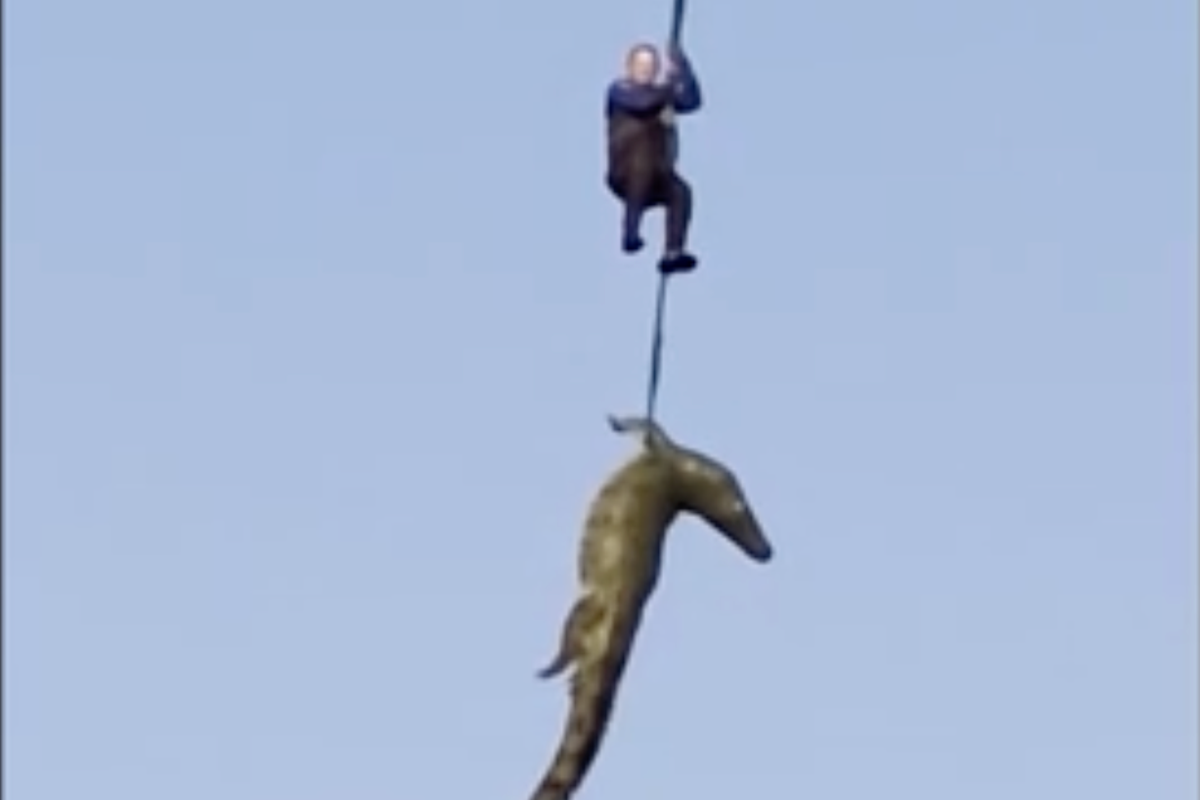
The sight of a four-meter Nile crocodile suspended by cables beneath a helicopter is more than a spectacle for the cameras. It is a grim necessity born of a collapsing boundary between human expansion and the territory of a prehistoric hunter. When a predator of this magnitude is suspected of taking a human life in the South African bush, the response is swift, expensive, and technically grueling. Most observers see the dramatic photos and think of a rescue or a relocation. The reality is far more clinical. This is a forensic extraction, a desperate attempt to manage the fallout of an encounter where nature and civilization collided with lethal results.
South Africa’s rural waterways are increasingly becoming battlegrounds. As human settlements push further into the fringes of the bush and water scarcity drives livestock and people toward the same riverbanks used by crocodiles, the frequency of these fatal interactions has climbed. Managing a "problem animal" of this size is not as simple as setting a trap and driving it to a new home. It requires a synchronized operation involving wildlife biologists, specialized police units, and heavy aviation assets.
The Physical Reality of the Nile Crocodile
To understand why an airlift is necessary, you have to grasp the sheer physics of a mature Nile crocodile. These are not just large lizards. They are armored tanks of bone and muscle. A specimen measuring four meters can easily weigh over 400 kilograms. On land, they are deceptively fast over short distances, but their real power lies in their ability to remain nearly invisible in inches of murky water.
Once a crocodile has been identified as a threat—often because it has lost its fear of humans or has been linked to a specific disappearance—the capture process begins. This is a high-stakes chess match played in the mud. Teams use heavy-duty snares and specialized traps, but the danger does not end when the animal is restrained. A crocodile of this size can suffer from fatal lactic acid buildup if it struggles too long against its bonds. Its own biology can kill it before the rangers even move it.
The decision to use a helicopter is driven by geography. The South African bush is often inaccessible to heavy vehicles. Mud, thick scrub, and lack of roads make it impossible to transport a ton of thrashing predator by truck. The airlift is the only way to get the animal out of the strike zone and into a controlled environment for examination or relocation.
Forensic Extraction and the Search for Truth
When a crocodile is suspected of a fatal attack, the recovery of the animal is part of a larger investigation. In many cases, the goal is not just removal but confirmation. Families of the missing deserve answers, and authorities need to know if they have caught the right individual.
This leads to a process that most news reports gloss over. Wildlife experts may use gastric lavage—a non-invasive stomach pumping technique—to check for human remains or clothing. In more severe cases, or if the animal is deemed too dangerous to release elsewhere, it may be euthanized and a full necropsy performed. It is a cold, methodical end to a creature that has survived for decades.
The logistics of the lift itself are a feat of engineering. The animal must be securely strapped to a specialized litter or harness. If the straps are too tight, they can crush the ribcage or impede the animal's breathing. If they are too loose, the shifting weight could destabilize the aircraft. The pilot has to manage the "pendulum effect" of a massive, living weight swinging beneath the belly of the helicopter while navigating the erratic thermal currents of the African plains.
The Myth of Relocation as a Cure-All
There is a popular belief that moving a "man-eater" to a distant national park solves the problem. It rarely does. Nile crocodiles are highly territorial and possess a strong homing instinct. Studies have shown that large crocodiles can travel hundreds of kilometers to return to their original territory. If they are dropped into a new area already occupied by other large males, the resulting territorial fights can be catastrophic.
The relocation of a suspected killer is often more about public optics than long-term conservation. It removes the immediate threat from a specific community, but it does not address the underlying issue of habitat encroachment. We are building our lives in their dining rooms, and then we are surprised when they show up for dinner.
The cost of these operations is staggering. A single helicopter extraction can run into thousands of dollars per hour. In a country with competing social and economic priorities, the expenditure of these resources on a single animal highlights the tension between wildlife preservation and public safety.
Infrastructure and the Human Cost
While the world watches the dramatic aerial footage, the communities living on the edge of the bush face a different reality. For them, the crocodile is not a majestic relic of the Jurassic period; it is a constant, lurking danger. Women washing clothes, children fetching water, and men tending cattle are the ones who pay the price for the lack of basic water infrastructure.
If these villages had reliable, piped water and secure fencing, the need for these expensive airlifts would plummet. The "problem" isn't just the crocodile; it is the systemic failure to provide safe alternatives to river use. We see a crocodile being flown over the trees and call it an extraordinary event. The local residents see it and know that without changes to their daily lives, another predator will simply move into the vacant territory within weeks.
The Ecological Vacuum
Removing a dominant male crocodile creates an ecological vacuum. These large individuals keep the populations of smaller crocodiles and certain fish species in check. When the "king" of a stretch of river is removed, younger, more aggressive males often move in to claim the territory. This can lead to an increase in attacks as these younger animals are more prone to taking risks and are less experienced in avoiding humans.
Wildlife managers are trapped in a cycle of reactive management. They wait for a tragedy, mobilize a massive response, and then wait for the next inevitable encounter. The data suggests that as long as humans and crocodiles are forced into the same small pockets of water, these events will continue.
The technical proficiency required to execute a "sling load" of a living predator is a testament to the skill of South African pilots and rangers. They are performing some of the most dangerous work in the world of conservation. Yet, every time a helicopter lifts off with a crocodile dangling beneath it, it serves as a reminder that we are failing to manage the intersection of our two worlds.
Managing the Unmanageable
We have to stop looking at these incidents as freak accidents. They are predictable outcomes of a changing landscape. The focus needs to shift from high-altitude extractions to ground-level prevention. This means investing in physical barriers, bridge construction, and community education.
The crocodile is an opportunistic hunter. It does not distinguish between a buck and a human being; it only sees a target at the water’s edge. Our fascination with the "extraordinary pictures" of the airlift distracts us from the mundane, gritty reality of life in the bush. The real work happens in the mud, in the meetings with grieving families, and in the difficult decisions made by rangers who have to balance the survival of a species against the survival of a community.
The next time a massive predator is hauled into the sky, remember that the flight is the easy part. The hard part is everything that happens after the rotors stop spinning. We are not just moving an animal; we are attempting to put a bandage on a wound that continues to grow.
Stop looking at the sky and start looking at the water’s edge.