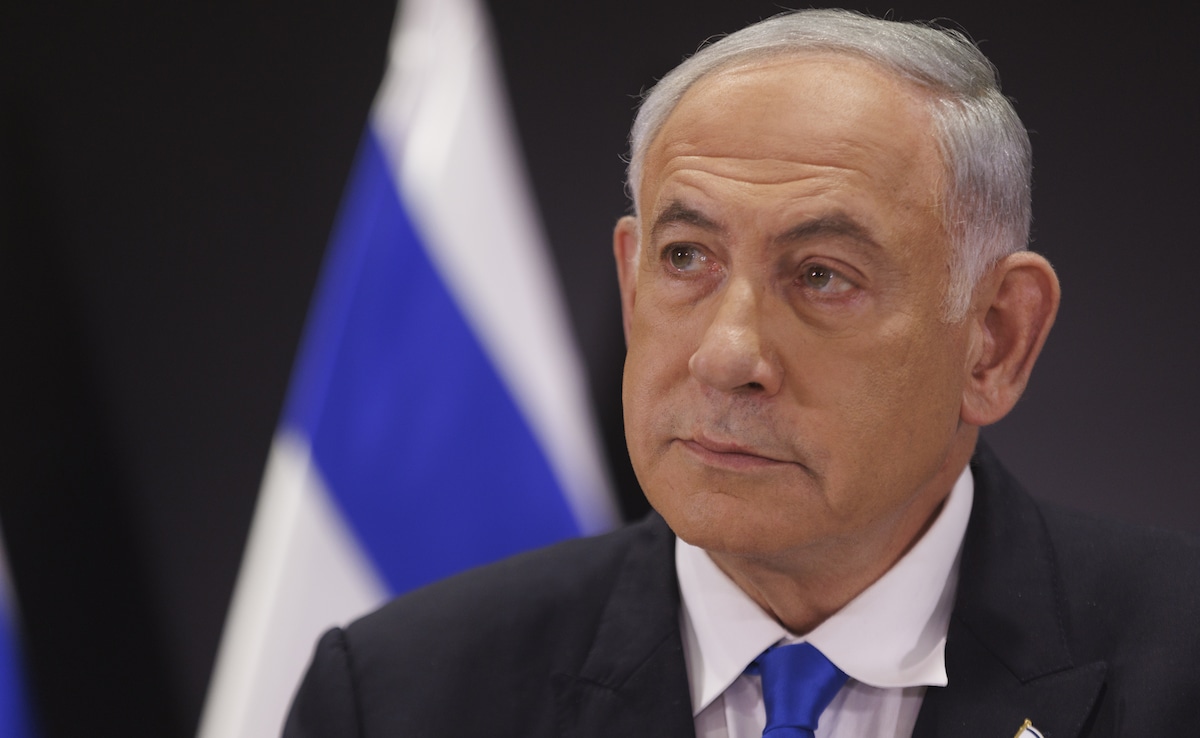
Benjamin Netanyahu wants to cut the cord. For decades, the $3.8 billion in annual military assistance from the United States has been viewed as the lifeblood of Israeli security, but the Prime Minister is now signaling a desire to drive that figure to zero. This is not a sudden whim born of diplomatic friction. It is the culmination of a long-standing ideological conviction that American aid, while generous, has become a strategic shackle that limits Israel’s operational freedom and stunts its domestic defense industry.
The "why" behind this push is rooted in a desire for absolute strategic autonomy. By phasing out Foreign Military Financing (FMF), Netanyahu aims to transform Israel from a client state into a sovereign partner, capable of acting without the looming threat of a Washington "red line" or a delayed munitions shipment.
The Cost of Free Money
While the $38 billion ten-year Memorandum of Understanding (MOU) signed in 2016 provides immense hardware, it comes with a restrictive price tag. Historically, Israel was permitted to spend a portion of this aid—roughly 26%—within its own borders. This "Off-Shore Procurement" allowed Israel to fund its own R&D, fueling the rise of giants like Elbit Systems and Rafael. However, the current agreement began phasing this out, mandating that by 2028, 100% of the funds must be spent in the United States.
This policy shift effectively forces Israel to subsidize American defense contractors at the expense of its own factories. When Israel buys an American interceptor because it is "free" via aid, it often ignores a superior or more cost-effective domestic alternative. Industry insiders argue this has created a "defensive" military culture, focused on US-funded shield systems like Iron Dome rather than the offensive capabilities Israel might prioritize if it were spending its own shekels.
The 1996 Blueprint
This is not the first time Netanyahu has made this play. In 1996, standing before a joint session of Congress, he famously declared that Israel would begin the process of achieving "economic independence" by phasing out economic aid. He succeeded. Today, Israel receives zero dollars in direct economic assistance from the US.
The current move to eliminate the military component is the second act of that same play. Netanyahu’s logic is simple. A country with a GDP approaching $500 billion should not be begging for a few billion dollars in annual credit. The optics of dependence damage Israel’s deterrence, signaling to regional rivals that Jerusalem cannot sustain a long-term conflict without an American airlift.
Operational Chains and Diplomatic Friction
Beyond the balance sheet, the aid functions as a high-tensile leash. During recent escalations in the Middle East, the White House has used the flow of spare parts and precision-guided munitions as a lever to influence Israeli cabinet decisions. For a leader like Netanyahu, who views Israeli security through a lens of "Iron Wall" self-reliance, this dependency is a liability.
Ending the aid would theoretically allow Israel to:
- Export without Veto: Currently, the US can block Israeli arms sales to third countries if they contain US-funded technology or compete with American firms.
- Diversify Supply Chains: Israel could source components from Europe, Asia, or domestic startups without clearing it through the State Department.
- Project Power Unfiltered: Decisions on when and where to strike would no longer be subject to the domestic political cycles of a foreign capital.
The High Stakes of Decoupling
Breaking up is rarely easy, and the risks of a hard exit are substantial. The $3.8 billion represents roughly 15-20% of Israel’s total defense budget. Absorbing that cost would require massive domestic tax hikes or deep cuts to social services. Furthermore, the aid is not just about money; it is a signal of a "Special Relationship."
Critics of the phase-out warn that Iran and its proxies would view a cessation of aid as a fracturing of the US-Israel alliance. Former diplomats argue that the MOU provides a predictable, ten-year framework that ensures Israel’s Qualitative Military Edge (QME). Without it, Israel becomes just another buyer in the global arms market, subject to the whims of shifting international alliances.
There is also the "Bait and Switch" concern. Some analysts suggest that Netanyahu isn't looking to end the relationship, but rather to shift the funding model. By moving away from FMF and toward "co-production" and "co-development" grants—similar to how the Arrow missile program is funded—Israel could potentially receive even more money through the Pentagon’s budget rather than the State Department's foreign aid bucket. This would bypass the public and political scrutiny that often dogs "foreign aid" bills.
A New Era of Partnership
The shift Netanyahu is proposing represents a fundamental "reset" of the Zionist project. It moves the needle from a state that requires a guarantor to a state that stands as a regional hegemon in its own right. It is a gamble that Israel's economy is now robust enough to pay its own way and that its military is sophisticated enough to build its own future.
If Netanyahu succeeds, the $3.8 billion check will be replaced by a more complex, transactional relationship. The era of the "client state" is ending, replaced by a colder, more pragmatic alliance where Israel pays its own bills and, in exchange, answers to no one but itself. The transition will be painful, expensive, and politically fraught, but for a leader obsessed with legacy and sovereignty, the price of independence is never too high.