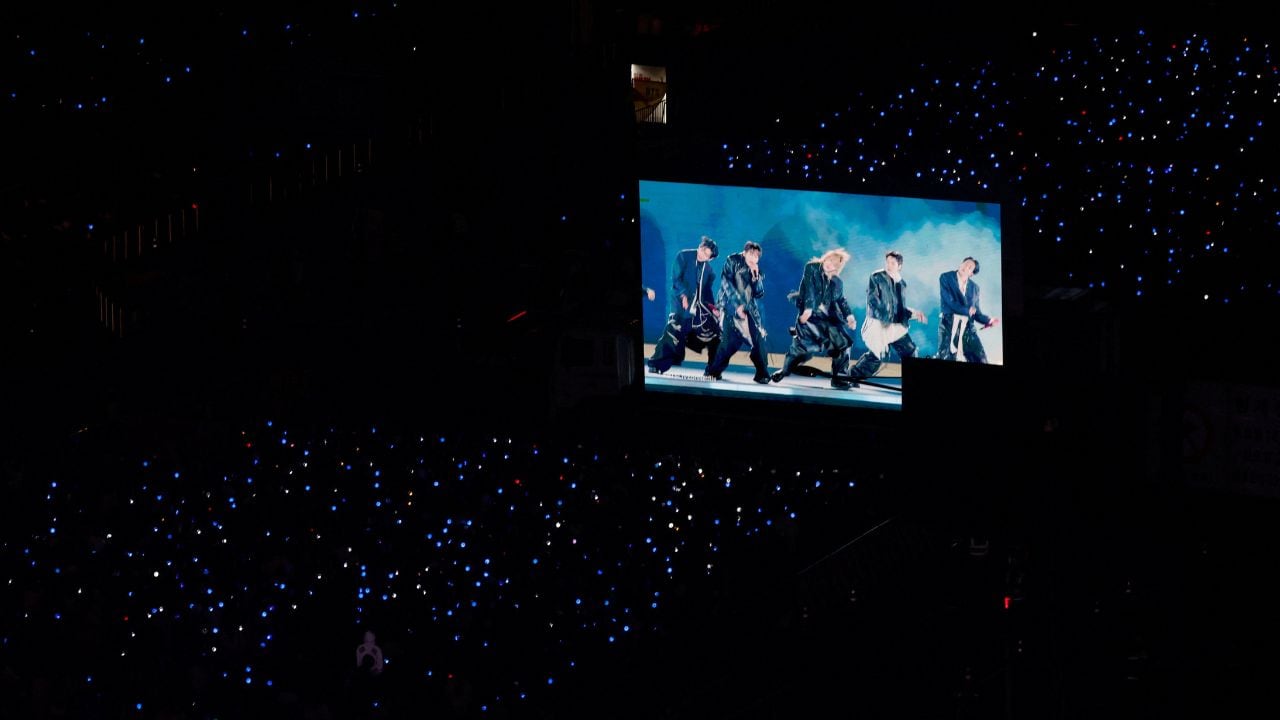
The theater industry is dying of thirst, and AMC thinks it found an oasis in a BTS concert film. It hasn’t. It found a mirage that is actively eroding the value of the silver screen.
Industry cheerleaders are currently salivating over the "Arirang" tour dates. They point to the "record-breaking" presales and the "unparalleled engagement" of the ARMY. They see a savior in a purple hoodie. I see a desperate pivot that fundamentally misunderstands why people go to the movies in the first place. This isn't the rebirth of cinema. It’s the high-definition gentrification of a failing real estate model. Meanwhile, you can find related developments here: The Brutal Truth About BAFTA and the Breakdown of Award Show Governance.
The Myth of the Savior Event
AMC CEO Adam Aron has spent the last three years trying to turn movie theaters into "multi-use entertainment hubs." On paper, it sounds like a stroke of genius. If people aren't showing up for mid-budget dramas, fill the seats with Taylor Swift or BTS. The margins are great. No studio middleman taking a massive cut, direct distribution, and a built-in marketing machine that does the work for free.
But here is the logic gap: You cannot build a sustainable business model on the backs of outliers. To explore the complete picture, check out the detailed article by Vanity Fair.
BTS is not a "content category." They are a global anomaly. When you treat a concert film as the blueprint for the future of AMC, you are betting on lightning striking the same spot every Tuesday at 7:00 PM. I’ve seen exhibition executives blow millions trying to replicate the "concert event" high with B-list stars and niche documentaries, only to realize that the "event" isn't the screen—it’s the cult of personality.
When the "Arirang" tour leaves theaters, the seats will stay empty. Worse, the regular moviegoers—the ones who actually value the quiet, immersive sanctity of film—are being pushed out by a rowdy, lightstick-waving atmosphere that is more stadium than cinema. You aren't "expanding" your audience. You are replacing a loyal, frequent demographic with a volatile, one-time-use fanbase.
The Technical Lie of the Big Screen
The marketing for "Arirang" screams about the "big screen experience." Let’s dismantle that immediately.
Most AMC theaters are still running on aging 2K or 4K digital projectors that haven't been calibrated since the Obama administration. The "immersion" promised by these concert films is often a pixelated mess upscaled to fit a screen it was never intended for.
- Frame Rate Friction: Most concert footage is shot at 29.97 or 60 frames per second. Projecting that in a theater designed for 24fps cinema creates a "soap opera effect" that strips away any sense of artistic grandeur.
- Audio Compression: Unless you are in a dedicated Dolby Cinema or IMAX hall, you are listening to a compressed stereo mix blasted through speakers meant for directional dialogue, not a K-pop bassline.
- The Lightstick Interference: You cannot claim to offer a premium visual experience when the room is filled with thousands of glowing Bluetooth-synced sticks. It destroys the contrast ratio. It kills the blacks. You might as well be watching a phone in a disco.
The "Arirang" tour isn't about the quality of the visual. It’s about the proximity to other fans. That’s a social club, not a cinema. By rebranding theaters as glorified community centers, AMC is admitting that the screen itself is no longer the draw.
The Scarcity Trap
The "limited engagement" window is a psychological trick designed to juice quarterly earnings. It creates a false sense of urgency.
"See it now or miss out forever!"
This works for a week. Maybe two. But look at what happened with previous concert releases once the initial fervor died down. They evaporated. There is zero long-tail value.
In the traditional film model, a movie like Top Gun: Maverick or Dune builds momentum through word-of-mouth and repeat viewings over months. It has "legs." Concert films have "sprints." They are front-loaded. They create a massive spike that looks great on a Monday morning trade report but does nothing to solve the catastrophic "trough" periods in the theatrical calendar.
Relying on BTS to save your Q3 is like using a defibrillator on a patient who needs a new heart. It provides a momentary pulse, but the underlying decay remains.
The Cost of Alienation
Let’s talk about the "Army" in the room.
I’ve sat through these screenings. It is a sensory assault. Fans are encouraged to scream, dance, and record snippets for TikTok. From a community-building standpoint, it’s beautiful. From a theater-management standpoint, it’s a nightmare.
When you train an audience that the theater is a place for vocal participation and phone usage, you break the social contract of the cinema. You are telling the guy who paid $20 to see a quiet indie film in the next auditorium that his experience doesn't matter as much as the loud, profitable group next door.
We are seeing a rise in "theater-rage" incidents and a decline in general decorum. By leaning into the concert model, AMC is accelerating the "Wild West" atmosphere of modern moviegoing. Once you lose the "sacred" silence of the theater, you lose the one thing Netflix can't replicate at home. You are handing your lunch to the streamers on a silver platter.
The Real Numbers Nobody Cites
Everyone loves to talk about the $100 million+ grosses for these events. Nobody talks about the "Per Screen Average" (PSA) over time or the opportunity cost.
When AMC blocks out 10 screens for a BTS event, they are displacing a variety of smaller films that need that space to find an audience. This "blockbuster-only" mentality is creating a monoculture.
Imagine a scenario where 80% of theatrical revenue comes from just five "events" a year. That isn't an industry. That’s a carnival. And carnivals are transient. They pack up and leave. When HYBE (BTS’s management) decides they can make more money by self-hosting a high-bitrate stream on their own "Weverse" platform for $40 a pop, they will cut AMC out of the loop in a heartbeat.
AMC is building their future on land they don't own, using fans they don't control.
Stop Calling It Progress
This isn't an evolution of the medium. It’s a liquidation sale of the cinematic identity.
If you want to save the movie theater, you don't do it by turning it into a stadium. You do it by fixing the projection quality, lowering the price of concessions, and curated programming that justifies the drive.
The "Arirang" tour is a financial band-aid on a gunshot wound. It will look great in the next earnings call. It will make the stock price tick up for a few days. But for anyone who actually cares about the future of film, it’s a warning sign.
The lights are dimming, but not for the reason you think. The theater isn't preparing for a show; it’s fading out.
Stop pretending a boy band is a business strategy. It’s an exit plan.