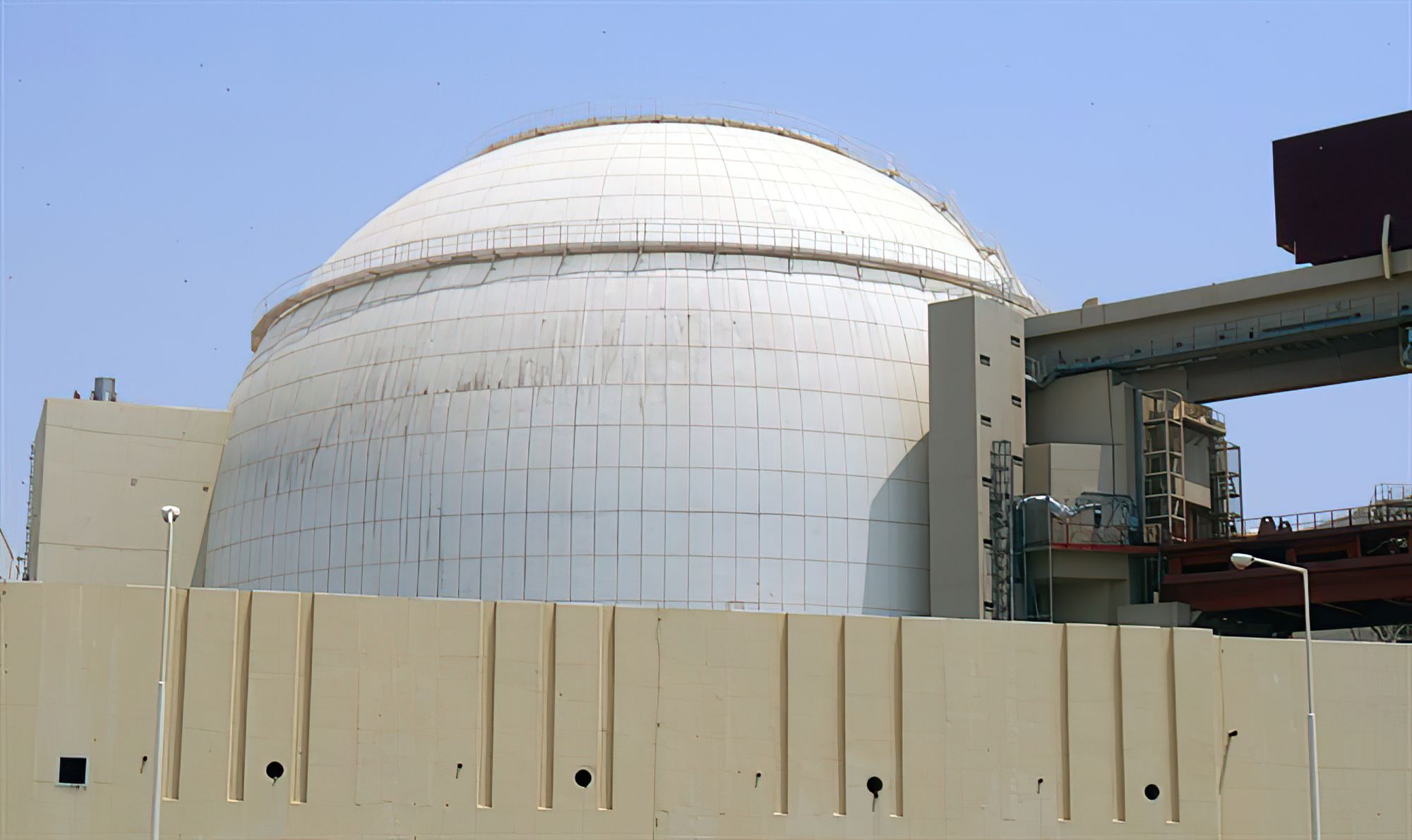
The Myth of the Vulnerable Reactor
The international community loves a good victim narrative. When Iranian Foreign Minister Abbas Araghchi stands before a microphone to denounce "Western hypocrisy" following reports of activity near the Bushehr nuclear plant, the media laps it up. They paint a picture of a fragile regional tinderbox one drone strike away from a meltdown. It is a tired, lazy script.
Araghchi’s outrage isn't just predictable; it’s a calculated distraction. The "hypocrisy" he cites—the West’s condemnation of Russian strikes on Ukrainian energy grids while remaining silent on Israeli or "unknown" operations against Iranian assets—is a textbook case of whataboutism. But the real story isn't the double standard. The real story is that these surgical strikes are the only reason the Middle East hasn't descended into a full-scale conventional war.
We need to stop pretending that Bushehr is a civilian energy project being bullied by bad actors. We also need to stop pretending that targeting it is an act of reckless "nuclear terrorism." In reality, the targeted degradation of Iran's nuclear infrastructure is the most sophisticated form of arms control currently in existence.
Why "Hypocrisy" is a Strategic Asset
Araghchi is right about one thing: there is a double standard. He’s just wrong about why it exists. In the cold world of realpolitik, consistency is for the weak.
Ukraine’s power grid is being dismantled to freeze a civilian population into submission. Iran’s nuclear facilities are being poked and prodded to prevent a regional hegemon from achieving a breakout capacity that would trigger a Saudi-led nuclear arms race. If you can’t see the difference between hitting a coal plant in Kyiv and a centrifuge hall in Natanz (or the shadow of a reactor at Bushehr), you aren't paying attention.
The West ignores these "attacks" because they work. They are the release valves for a pressure cooker. Without these tactical setbacks, the only other option to stop Iranian proliferation would be a massive, boots-on-the-ground invasion or a heavy aerial campaign that would actually kill thousands. Sabotage is the pacifist’s choice, even if the pacifists are too squeamish to admit it.
The Bushehr Shield
Let’s dismantle the "meltdown" fear-mongering. Bushehr is a VVER-1000 pressurized water reactor. It is a tank. Unlike the RBMK reactors of Chernobyl fame, the VVER design has a negative void coefficient. If things go wrong, the physics of the water density naturally slows the reaction down. It doesn't explode; it chokes.
Furthermore, any military strategist worth their salt knows that you don't actually hit the containment dome. You hit the switchyards. You hit the cooling pumps. You hit the supply chain. You turn the multi-billion dollar facility into an expensive paperweight.
I’ve seen analysts sweat over the "catastrophic environmental risk" of these operations. They are fundamentally misunderstanding the objective. The goal isn't to create a plume; it’s to create a delay. Every time a "mysterious" fire breaks out or a transformer blows, the clock resets. Araghchi calls this hypocrisy; I call it a brilliantly executed, low-casualty deterrent.
The Intelligence Failure of Moral Equivalence
The "People Also Ask" sections of the internet are currently flooded with variations of: "Is attacking a nuclear plant a war crime?"
The answer depends entirely on your willingness to be a useful idiot for a regime’s PR department. Under Protocol I of the Geneva Conventions, works and installations containing "dangerous forces" (like dams or nuclear plants) shouldn't be attacked if it causes "severe losses among the civilian population."
But here’s the nuance the headlines miss: the protection vanishes if the facility provides "regular, significant and direct support of military operations." Iran has spent decades blurring the line between its civilian energy program and its military ambitions. By housing sensitive research and providing a diplomatic shield for its more nefarious enrichment sites, Bushehr has become a legitimate strategic target.
If you use a shield to hide a sword, don't be surprised when someone tries to break the shield.
The Cost of the "Clean" Energy Lie
Iran claims Bushehr is essential for its "green energy transition." This is the funniest joke in the Middle East. Iran sits on the world's second-largest gas reserves and fourth-largest oil reserves. The idea that they are building nuclear plants out of a burning desire to lower their carbon footprint is a fantasy.
Bushehr exists for three reasons:
- Legitimacy: To prove they are a modern, high-tech nation.
- Plutonium: The spent fuel can, in theory, be reprocessed, though the current deal with Russia involves returning the rods.
- Blackmail: As long as the plant is active, any threat to the regime can be met with the counter-threat of a "radiological disaster" caused by their own incompetence or a foreign strike.
Araghchi’s screams of "hypocrisy" are just a way to maintain the third point. He wants the world to believe that Iran is a vulnerable victim so that he can continue to build a nuclear program with impunity.
The Staccato of Sabotage
- Cyber: Stuxnet didn't kill anyone. It broke machines.
- Assassination: Targeting scientists is brutal, but it’s more precise than a JDAM.
- Kinetic: Small-scale drone strikes on peripheries send a message without starting a war.
This is the new face of conflict. It’s messy. It’s "hypocritical." It’s also the only thing standing between us and a mushroom cloud over the Persian Gulf.
The Reality Check
We have to stop asking if these strikes are "fair." War isn't a game of tennis. We should be asking if they are effective.
Every time Araghchi complains, it’s a signal that the sabotage worked. He is effectively providing a BDA (Battle Damage Assessment) in real-time. If the West were truly "hypocritical" in the way he suggests, we wouldn't bother with the surgical precision of a drone or a virus. We would have flattened the site a decade ago.
The restraint shown by the West and its allies is actually the most remarkable part of this saga. We are witnessing a slow-motion dismantling of a nuclear threat, carried out with such precision that the target is still able to hold press conferences to complain about it.
Stop Falling for the Script
The next time you see a headline about "Iran denouncing Western aggression," do yourself a favor. Ignore the adjectives. Look at the geography. Look at the technology.
The Bushehr plant isn't a victim of hypocrisy; it is a monument to the failure of traditional diplomacy and the triumph of unconventional warfare. Araghchi’s job is to talk. The "saboteurs'" job is to act.
One keeps the news cycle spinning. The other keeps the world from burning.
If you’re still waiting for a "fair" solution where everyone follows the rules and Iran gets to enrich uranium in peace, you aren't living in the real world. You’re living in a press release. The hypocrisy isn't the problem. The hypocrisy is the solution.
The only thing more dangerous than a nuclear plant under fire is a nuclear plant that is ignored.
Stop mourning the breach of international "norms" that Iran never intended to follow anyway. The status quo isn't being disrupted by these strikes; it’s being preserved by them. Araghchi knows it. The West knows it. It’s time the public admitted it, too.