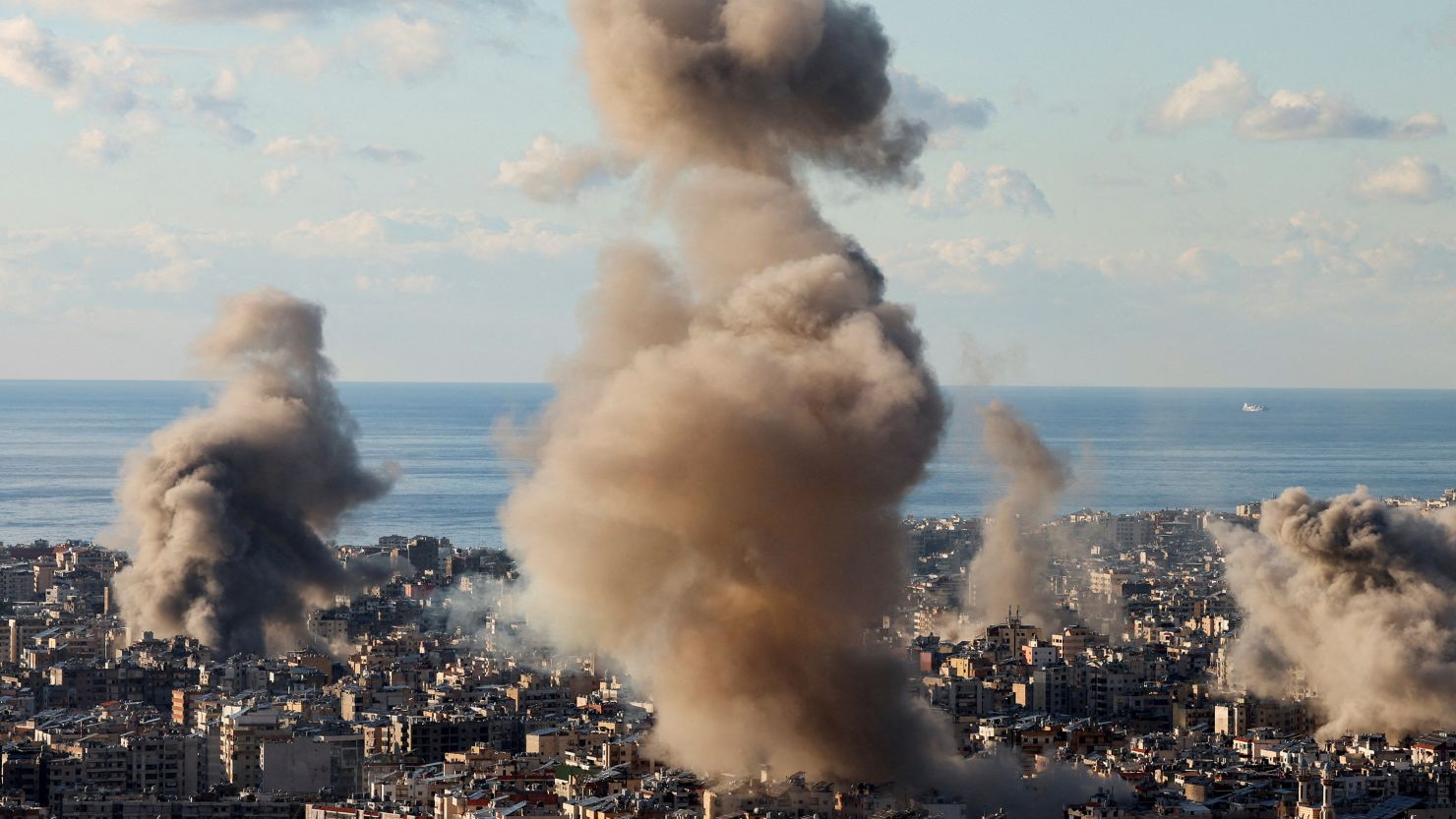
The headlines are bleeding with the same exhausted narrative. "Ceasefire violations reported." "Shelling continues." "Aerial surveillance persists." The mainstream press treats these events like an unforeseen glitch in a perfect system. They frame every mortar round and every drone flyover as a failure of diplomacy.
They are wrong.
In the brutal geography of the Levant, a ceasefire is not a peace treaty. It is a recalibration of violence. To view the current friction as a "breakdown" is to fundamentally misunderstand the architecture of modern proxy warfare. These violations aren't bugs; they are features. They are the kinetic language of negotiation that continues long after the ink on a paper agreement has dried.
The Myth of the Sterile Border
Journalists sitting in comfortable bureaus love the idea of a "Green Line" or a "Blue Line" that functions like a digital light switch—on or off. They assume that once a ceasefire is declared, the guns should fall silent instantly. This is a fantasy born of a refusal to study the history of the Litani River or the tactical realities of the IDF and Hezbollah.
When Israeli artillery shells a position or a drone hums over a southern Lebanese village, the "international community" gasps. But look at the mechanics. In a theater where non-state actors hide assets within civilian infrastructure, a ceasefire without active enforcement is just a window for rearmament. Israel knows this. Hezbollah knows this. The only people who don't seem to know this are the ones writing the op-eds.
Surveillance is the most honest form of engagement. If the IDF stops flying over Lebanon, they aren't "respecting sovereignty"; they are choosing blindness in the face of an existential threat. A ceasefire that demands total atmospheric silence is a ceasefire that invites a larger, more catastrophic explosion later.
Why "Violations" are Actually Stabilization Signals
Counter-intuitive? Perhaps. But let's look at the data of conflict duration. Total silence usually precedes a massive, un-telegraphed escalation. Frequent, low-level friction—the kind we are seeing now—serves as a pressure valve.
- Information Gathering: Surveillance identifies if the adversary is moving long-range precision missiles back into the forbidden zone.
- Boundary Testing: Small-scale shelling tests the "rules of engagement" to see what the new threshold for retaliation is.
- Internal Messaging: Both leaderships must prove to their domestic bases that they haven't "gone soft."
If you stop these "violations" entirely, you create a vacuum of information. In the Middle East, vacuum leads to paranoia. Paranoia leads to preemptive strikes. We should be far more worried when the reports of minor skirmishes stop entirely than when they flicker on the news ticker.
The Failure of UNIFIL and the "Buffer Zone" Farce
Every article on Lebanon eventually points toward UNIFIL (United Nations Interim Force in Lebanon) as the solution. This is the ultimate "lazy consensus." For decades, UNIFIL has acted as a highly paid observer of its own irrelevance.
Resolution 1701 was supposed to ensure that no armed personnel, assets, or weapons other than those of the Lebanese government and UNIFIL were deployed between the Litani and the Blue Line. How did that work out? Hezbollah built a subterranean fortress and an arsenal that rivals most European mid-sized powers in that exact space.
To complain about Israeli "violations" without acknowledging the systemic failure of the "buffer zone" is intellectual dishonesty. Israel is currently performing the enforcement role that the international community promised but never delivered. Is it messy? Yes. Does it violate the technical terms of a ceasefire? Absolutely. Is it the only thing preventing a full-scale regional conflagration? Probably.
The High Cost of Artificial Peace
We have become addicted to the optics of peace rather than the reality of security. We prioritize the absence of noise over the presence of stability.
Imagine a scenario where Israel strictly adheres to every letter of a ceasefire while Hezbollah uses the "quiet" to move 5,000 Radwan commandos back to the fence line. In that scenario, the ceasefire is technically "successful" until the moment it results in 10,000 deaths in a single afternoon.
The current "violations" are the cost of preventing that outcome. They are the friction of a containment strategy.
Stop Asking if the Ceasefire is Holding
The question itself is flawed. It assumes a binary state. Instead, we should be asking: "Is the current level of friction sustainable?"
The "People Also Ask" sections of the internet are filled with queries like "When will the Lebanon war end?" The honest, brutal answer is: it won't. Not in the way you think. It is a permanent management problem, not a solvable math equation.
The media focuses on the "what"—the shells, the drones, the sirens. They ignore the "why." They ignore the fact that in this part of the world, a ceasefire is simply war by other, slightly less loud, means.
If you want to understand the reality on the ground, stop counting the violations. Start looking at the strategic positioning. If the IDF is shelling an empty field, they aren't "breaking the peace." They are marking territory. They are telling the adversary: "We see you, and we can touch you."
This isn't a breakdown of diplomacy. This is diplomacy with teeth.
The international community's obsession with a "clean" ceasefire is not just naive—it's dangerous. It creates a false sense of security that history has repeatedly proven to be a precursor to slaughter. We need to stop pearl-clutching every time a battery fires and start recognizing that in a landscape defined by proxy forces and deep-seated animosity, a "violation" is often the only thing keeping the "peace" from turning into a total war.
Accept the friction. Monitor the surveillance. But stop pretending that a few artillery rounds in the hills of southern Lebanon are the end of the world. They are the sound of a status quo that is, for now, exactly where both sides need it to be.
The silence you're looking for is a graveyard. Don't wish for it.