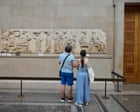
British museums are facing a mid-life crisis. For decades, the UK has patted itself on the back for offering free entry to the world’s most prestigious collections. You could wander into the British Museum or the National Gallery without spending a penny. It was a point of national pride. But the winds are shifting. Ministers are now quietly—and sometimes loudly—discussing whether it’s time to start charging international visitors to see these treasures.
The logic seems simple on paper. The government is strapped for cash. Museums are struggling with crumbling infrastructure and rising energy costs. Why should a billionaire from New York or a tech mogul from Tokyo get to see the Rosetta Stone for free when the local library is closing down? It feels like an easy win for the Treasury.
But it’s a trap.
The Cost of Free Entry Is Higher Than You Think
The current debate centers on a "two-tier" system. This isn't a new concept. If you've ever visited the Louvre in Paris or the Metropolitan Museum of Art in New York, you know the drill. Locals get a break, and tourists pay a premium. In some countries, the price gap is massive.
In the UK, the "free" model was cemented in 2001 under the Labour government. Since then, visitor numbers have skyrocketed. We’re talking about millions of people every year who might not have stepped inside a museum otherwise. The museums argue that this "open door" policy is part of Britain's soft power. It makes London a global cultural capital.
Government officials are looking at the math. They see millions of tourists and think "twenty quid a head." That's a lot of revenue. They point to the fact that many of these institutions already charge £20 or more for special exhibitions. If people pay for a temporary Van Gogh show, won't they pay to see the permanent collection?
Maybe. But there's a psychological barrier when you slap a price tag on a public institution. It changes the relationship between the visitor and the art. It stops being a shared heritage and starts being a transaction.
What the Data Actually Says About Museum Fees
Whenever this topic bubbles up, people cite the "Met Model." A few years ago, the Metropolitan Museum of Art in New York scrapped its "pay what you wish" policy for out-of-state visitors. They moved to a mandatory $30 fee.
Did the world end? No. The Met still gets plenty of visitors. But New York is different. The Met is a private institution that receives some public funding. The UK’s national museums are fundamentally public. They belong to the taxpayer, even if those taxpayers are struggling to keep the lights on.
Let's look at the numbers. Research from organizations like the Association of Leading Visitor Attractions (ALVA) suggests that free entry is a primary driver for tourism in the UK. When you charge for entry, people spend less in the gift shop. They spend less in the cafe. They spend less time in the building.
The "secondary spend" is often where the profit lies. A family of four might walk in for free but spend £60 on lunch and £40 on souvenirs. If you charge them £25 each just to get through the door, they're skipping the cafe. They're definitely skipping the gift shop. In some cases, the net gain for the museum is negligible.
The Operational Nightmare of Proving Who You Are
This is the part ministers rarely talk about. How do you actually implement a two-tier system?
You’d need a way to verify residency. Do you ask every person in a three-hour queue for the Natural History Museum to produce a utility bill? A UK driving license? A passport?
- Longer Queues: Checkpoints at every entrance.
- Increased Staffing: You need more people to handle payments and verify IDs.
- IT Infrastructure: New systems to manage bookings and residency databases.
- The "Cringe" Factor: Nothing says "Welcome to Britain" like a security guard interrogating a tourist about their home address.
It’s a logistical mess. The cost of enforcing the fee could eat up a significant chunk of the revenue it generates. Smaller national museums, which don't get the massive footfall of the Tate Modern, might even lose money on the deal.
A Blow to Soft Power and Diplomacy
Britain isn't exactly winning many popularity contests lately. We’ve had a rough few years on the international stage. Our cultural institutions are some of the last remaining pillars of genuine "Global Britain."
When a student from India or a family from Brazil visits the Science Museum for free, they leave with a positive impression of the UK. They see us as a country that values knowledge and shares it with the world. That’s worth more than a £20 entry fee.
There's also the thorny issue of where these objects came from. The British Museum, in particular, is constantly under fire for its "contested" items. The Parthenon Marbles, the Benin Bronzes—the list goes on. The standard defense for keeping these items in London is that they are "held in trust for humanity" and are "freely accessible to all."
If you start charging people to see the objects we took from their countries, that argument collapses. It looks like we're profiting twice. First from the acquisition, then from the viewing. It’s a diplomatic disaster waiting to happen.
Who Really Pays the Price
The argument for charging tourists often assumes every tourist is a wealthy traveler. That's just not true. Think about the backpacking student. Think about the low-income family visiting from abroad. These are the people who will be priced out.
We often talk about "democratizing art." We want everyone to feel like they belong in these grand spaces. Charging for entry creates a "pay-to-play" culture. It suggests that culture is a luxury product for those who can afford it, rather than a fundamental human right.
Even for locals, the "free for residents" system isn't foolproof. Many people don't carry the right ID. Many people feel intimidated by formal checks. If you make a museum feel like a border crossing, you’ll lose the very people you’re trying to include.
Better Ways to Fill the Gap
The funding crisis is real. Nobody is denying that. But there are smarter ways to raise money than a blunt entry fee.
- The Voluntary Donation Push: Museums could get much better at asking for money. Look at how Smithsonian museums in the US handle it. They make it easy, digital, and prominent without being mandatory.
- Corporate Partnerships: We need to make it more attractive for big business to sponsor galleries. Tax breaks for cultural donations should be a priority.
- Commercial Ventures: Let museums be more entrepreneurial. Expand the high-end dining options. Improve the online retail experience. Host more private events.
- A Tourism Levy: Instead of charging at the museum door, why not a tiny "culture tax" on hotel rooms? A £2 per night fee in London hotels would raise hundreds of millions without creating queues at the National Portrait Gallery.
What Happens if We Flip the Switch
If the government goes through with this, don't expect a sudden golden age for museums. Expect a sharp drop in visitor numbers. Expect a decline in the UK's reputation as a cultural leader.
Culture shouldn't be a line item on a spreadsheet. It’s the soul of the country. Once you put a price on that soul, you can't easily take it back. We should be finding ways to make our museums more accessible, not less.
If you're planning a trip to a UK national museum, go now. Take advantage of the open doors while they still exist. And if you can afford it, drop a fiver in the donation box on your way out. It’s a lot cheaper than the alternative.
If you care about keeping these spaces open, write to your MP. Tell them that culture isn't a commodity. Tell them that the "tourist tax" is a short-sighted fix for a long-term problem. We need a funding model that respects the history of these institutions, not one that treats them like a theme park.
Check the current status of the museums you plan to visit. Most still offer free entry for permanent collections, but booking a timed slot is often mandatory. Don't just turn up and hope for the best. Plan ahead, support the gift shop, and help prove that the free model can still work in 2026.