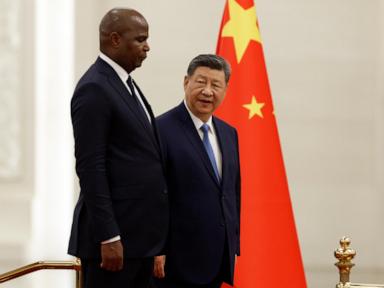
China just made a move that sounds like a massive win for African exporters. As of May 1, 2026, the world's second-largest economy officially scrapped almost all remaining import tariffs for 53 out of 54 African nations. On paper, it’s a masterclass in trade diplomacy. China becomes the first major economy to offer unilateral, 100% duty-free access to a whole continent. But don't start popping the champagne just yet.
If you're wondering why one country is left out in the cold, it's not because of their economy. It's about politics. The lone outlier is Eswatini. Why? Because they still recognize Taiwan. In Beijing's playbook, if you don't play by the "One China" rules, you don't get the zero-tariff perks. It’s that simple.
The Real Deal Behind the Zero Tariff Policy
Before this week, China already had a zero-tariff setup for 33 of Africa's least developed countries (LDCs). This new expansion brings the "big players" into the fold. We're talking about South Africa, Nigeria, Egypt, Kenya, and Morocco. These are the engines of African industry that were previously paying anywhere from 10% to 25% in duties on agricultural goods and processed products.
The shift is a direct response to a hardening global trade environment. With the U.S. ramping up protectionist measures and the EU tightening its borders, China is positioning itself as the ultimate "open" partner for the Global South. It's a savvy way to secure the critical minerals needed for the green transition—think cobalt from the DRC or lithium from Zimbabwe—while appearing like the good guy.
Who stands to gain the most
It's not the small-scale farmer in a landlocked nation who’ll see the immediate benefits. The real winners are the more industrialized economies with the logistics to actually move freight.
- South Africa: Already shipping citrus, wine, and minerals. They just sent 24 tons of apples to Shenzhen under the new rules.
- Kenya: Their avocados and coffee are finally hitting Chinese shelves without the heavy tax drag.
- Ivory Coast and Ghana: Cocoa and rubber exports are about to get a whole lot cheaper for Chinese buyers.
Why This Isn't a Magic Fix for Africa
Let’s get real about the numbers. While zero tariffs sound great, they don't solve the underlying problem: the massive trade deficit. In the first quarter of 2026 alone, Africa's trade deficit with China hit a record $29.1 billion. China sells high-value machinery, EVs, and electronics. Africa mostly sells raw rocks and oil. You can’t balance the scales by just removing a 5% tax on bauxite when you’re importing billions in high-tech solar panels.
Tariffs are rarely the biggest hurdle for African businesses. The real "trade killers" are things like:
- Sanitary Standards: China is incredibly strict about food safety. If your mangoes have a fruit fly, the tariff rate doesn't matter because the shipment isn't getting past the dock.
- Infrastructure: It’s often more expensive to ship a container from Addis Ababa to Djibouti than it is to ship it from Djibouti to Shanghai.
- Power and Manufacturing: You can't export processed goods if your factory loses power six hours a day.
The Dependency Trap
There’s a darker side to this "generosity." By binding African economies closer through these trade perks, China ensures a steady flow of raw materials. In Guinea, roughly 74% of mining exports already go to China. That’s not a diverse trade portfolio; it’s a single-buyer dependency. If the Chinese construction sector slows down, Guinea’s economy catches a cold.
The Eswatini Exclusion and the Taiwan Factor
Eswatini is the last African holdout for Taiwan. By excluding them, Beijing is sending a clear message to the rest of the continent. It’s a carrot-and-stick approach. Most African leaders have already chosen the "carrot" of Chinese investment and market access over the "stick" of being left out.
Honestly, Eswatini’s exclusion is mostly symbolic in terms of total trade volume, but it’s a massive geopolitical statement. It shows that for China, trade policy is always a tool for diplomatic leverage.
What African Businesses Need to Do Now
If you’re an exporter or a policy maker in an African hub, you can't just sit back and wait for the orders to roll in. The competition is going to be fierce.
Focus on value addition. Stop exporting raw cocoa beans; start exporting cocoa butter or processed powder. The zero-tariff policy applies to processed goods too, and that’s where the real money is.
Invest in "Cool Chain" logistics. If you want to sell fruit or perishables to China, you need world-class refrigeration and testing labs. Without them, your goods will rot at the border while South African and Egyptian competitors take your market share.
Use the AfCFTA. The African Continental Free Trade Area is your best defense. If African nations coordinate their industrial policies, they can negotiate with China as a bloc rather than getting picked off one by one in lopsided deals.
The door to the Chinese market is officially wide open. Whether African nations walk through it with a plan or just get pushed through by the weight of Chinese imports is the real question for the next decade.


