A sailor standing on the deck of a massive oil tanker in the Strait of Hormuz isn't thinking about geopolitical chess. He is thinking about the heat. It is a thick, wet heat that clings to the skin like a damp wool blanket. Beneath his boots, millions of barrels of crude oil—the lifeblood of modern civilization—hum quietly in steel holds. To his left lies the rugged coast of Oman. To his right, the jagged, sun-bleached cliffs of Iran. Between them sits a narrow strip of water just twenty-one miles wide.
This is the world’s jugular vein.
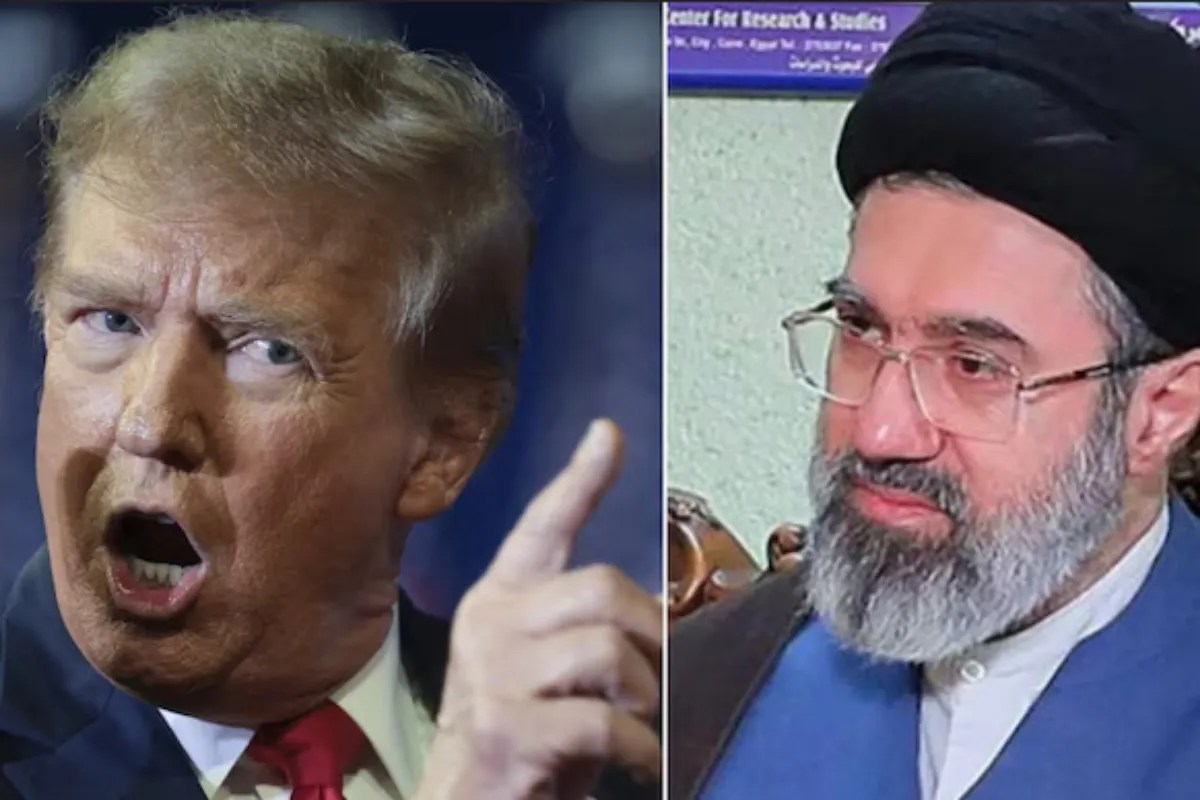
When Donald Trump looked at this narrow passage recently, he didn't see just a shipping lane. He saw a highway robbery in progress. The news broke like a sudden storm: Tehran had begun floating the idea of a "toll tax" for every vessel passing through these waters. It was a move designed to turn a geographic accident into a permanent ATM for the Iranian Revolutionary Guard. Trump’s reaction was characteristically blunt and immediate. He demanded the practice stop before the first invoice could even be printed.
But to understand why this matters to a person buying gas in Ohio or a factory owner in Shenzhen, you have to look past the angry tweets and the official press releases. You have to look at the invisible architecture of global survival.
The Cost of Crossing
Imagine a hypothetical captain named Elias. Elias has spent thirty years at sea. He knows that if you want to get from the Persian Gulf to the open Arabian Sea, you have no choice but to pass through the Strait. It is the only door. One-fifth of the world’s total oil consumption passes through this door every single day.
If Iran successfully imposes a toll, Elias isn't just paying for passage. He is participating in a fundamental shift in how the high seas are governed. For decades, the "Right of Innocent Passage" has been the golden rule of maritime law. It suggests that as long as you aren't being a nuisance or a threat, you can sail through a country's territorial waters without being shaken down for lunch money.
Iran is attempting to rewrite that rule. By claiming they provide "security" and "environmental protection" for the Strait, they are essentially placing a digital meter on the ocean floor.
Trump’s argument is that this isn't about maintenance or safety. It's about leverage. If Tehran can charge a fee, they can also decide who doesn't get to pay—and who doesn't get to pass. Suddenly, the price of a gallon of gasoline isn't determined by supply and demand in a free market; it’s determined by a toll booth operator in a revolutionary capital.
The Invisible Tax on Everything
When a government like Iran’s decides to tax a bottleneck, they aren't just taxing the shipping companies. They are taxing every single person who uses the products inside those ships.
Think about the ripple effect. A $10,000 toll on a tanker sounds like a rounding error for a multi-billion dollar oil giant. But in the world of global logistics, pennies matter. When the cost of shipping goes up, insurance premiums follow. When insurance goes up, the shipping companies pass the bill to the refineries. The refineries pass it to the distributors.
By the time that "toll" reaches your local gas station, it has mutated. It has become a tax on your commute, a tax on the plastic packaging of your groceries, and a tax on the heating of your home. This is the "human element" that dry news reports often miss. Geopolitics is rarely about flags; it is almost always about the contents of your wallet.
Trump’s insistence on "shutting it down immediately" stems from an understanding of this domino effect. In his view, allowing a precedent where a nation can monetize an international choke point is an invitation to chaos. If Iran does it in Hormuz, what stops another nation from doing it in the Malacca Strait or the Suez?
A History of Friction
The tension in these waters isn't new. It’s a decades-long drama played out in gray steel and sea spray. We have seen "Tanker Wars" in the 1980s where ships were hit by mines and missiles. We have seen drones swarming overhead and speedboats buzzing like hornets around massive American destroyers.
But a toll tax is a different kind of weapon. It is a bureaucratic blade. It doesn't require firing a shot; it only requires a ledger and a threat. If a ship refuses to pay, the Iranian navy has a "legal" pretext to board and seize it.
Consider the vulnerability of a crew in that moment. You are thousands of miles from home, sitting on a floating tinderbox, and suddenly you are the center of a global standoff because of a disputed invoice. This is the pressure point Iran is pushing. They are betting that the world would rather pay a small fee than risk a large war.
The Strategic Gamble
Tehran's perspective—stripped of the rhetoric—is one of desperate survival. Years of crushing sanctions have left their economy gasping for air. They see the ships passing by their windows, carrying wealth they cannot touch, and they want a piece of it. They argue that they spend millions patrolling these waters and cleaning up spills, so why shouldn't the users pay for the upkeep?
The problem, as the U.S. sees it, is that the "upkeep" is a mask for extortion.
Trump’s hardline stance is a bet on American dominance. By demanding an immediate end to the talk of tolls, he is signaling that the U.S. is willing to protect the "freedom of navigation" with more than just words. It creates a high-stakes staring contest. If the U.S. flinches, the toll becomes a permanent fixture of global trade. If Iran flinches, they lose one of their last remaining cards to play in the sanctions game.
The Silent Sea
Back on the deck of that tanker, the sun begins to set, turning the Strait of Hormuz into a sheet of hammered gold. For Elias and his crew, the politics are loud, but the water is quiet. They watch the Iranian patrol boats on the horizon, tiny specks of white foam against the dark cliffs.
The ship moves forward. It must. The world is waiting for what’s inside.
The struggle over a few dollars per barrel or a passage fee might seem like a distant argument between powerful men in suits, but the reality is much closer to home. It is found in the nervous glance of a captain looking at his radar. It is found in the fluctuating numbers on a digital screen at a gas pump in a small town.
The Strait of Hormuz is more than a map coordinate. It is a test of who owns the world's common spaces. If the water can be fenced and the path can be taxed, then the ocean is no longer a bridge—it is a wall.
The anchor is up. The engines are churning. The bill is coming due. Whether it is paid in dollars at a toll booth or in blood in a conflict depends entirely on who blinks first in this scorching, narrow corridor of the world.