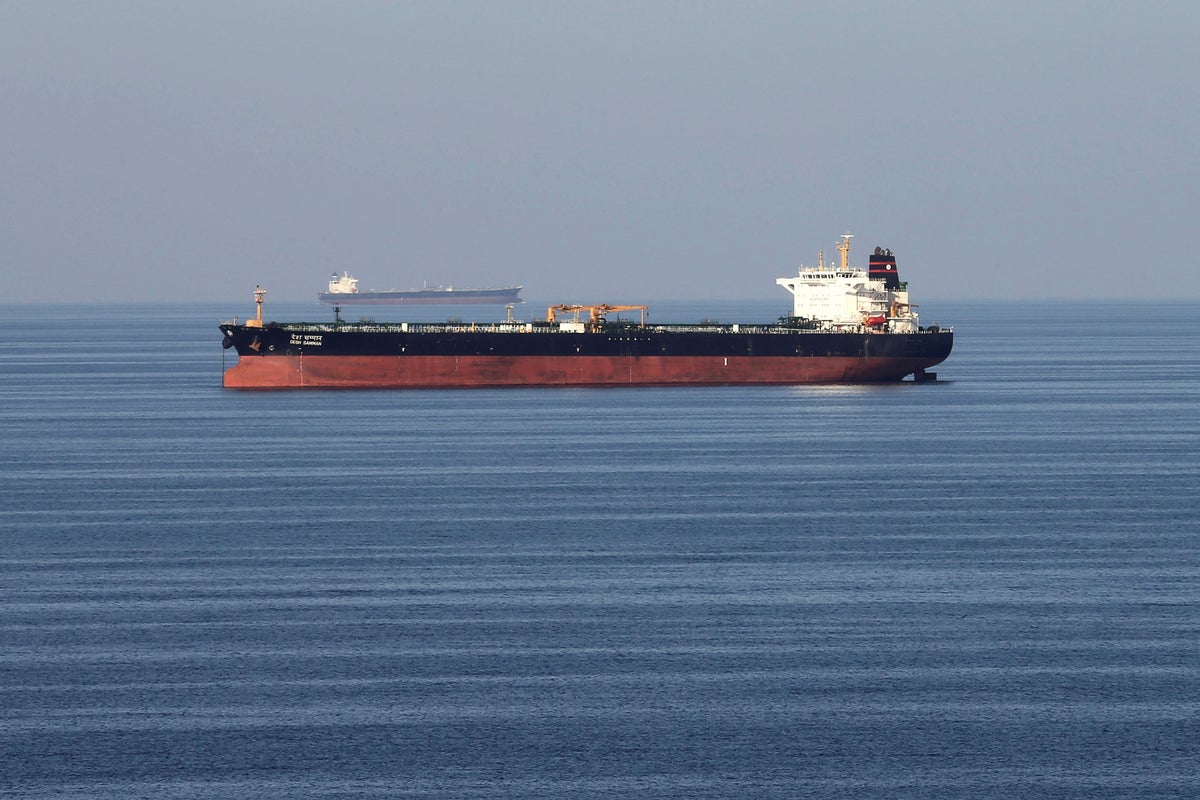
The Strait of Hormuz is a twenty-one-mile-wide geographic bottleneck that dictates the standard of living for the modern world. It is not merely a shipping lane. It is the jugular vein of the global economy. At its narrowest point, the shipping channels used by massive crude carriers are only two miles wide in either direction. Through this tiny gap passes more than one-fifth of the world’s total petroleum consumption every single day. If that flow stops, the global economy does not just slow down; it breaks.
The primary reason this strip of water creates such profound anxiety is the lack of viable alternatives. While pipelines exist across Saudi Arabia and the United Arab Emirates, they lack the capacity to handle even half of the volume currently moving by sea. When Iran threatens to close the strait or targets tankers with limpet mines and drone strikes, they are exercising a form of asymmetric leverage that bypasses traditional military strength. They aren't trying to win a naval war. They are trying to hold the global supply chain hostage to force diplomatic or economic concessions.
The Calculus of Volatility
Market analysts often talk about the "risk premium" on a barrel of oil. This is the extra dollar amount traders tack onto the price based on the likelihood of a supply disruption. In the Strait of Hormuz, that premium is a permanent fixture. But the real danger isn't just a temporary price spike at the pump. The real danger is the systemic shock to the insurance and shipping industries that keeps the world’s fleet afloat.
When a tanker is attacked near the Gulf of Oman, the cost to insure every other vessel in the region skyrockets instantly. We saw this in 2019 and again in more recent skirmishes involving seized vessels. Underwriters at Lloyd’s of London move the region into "listed areas," requiring additional premiums that can run into hundreds of thousands of dollars per voyage. These costs are never absorbed by the shipping companies. They are passed directly to the consumer, hidden within the price of every plastic product, gallon of gas, and shipped head of lettuce.
Iran’s strategy is built on this sensitivity. By maintaining a state of "gray zone" warfare—actions that fall just below the threshold of an all-out military conflict—they keep the West in a state of perpetual reactive stress. They use fast-attack boats, sea mines, and shore-based missile batteries to remind the world that they can flick the switch on global commerce whenever they choose.
The Geography of Vulnerability
The Strait of Hormuz is unique because of its bathymetry and proximity to hostile shores. Unlike the deep Atlantic, the Persian Gulf is relatively shallow. This makes it a playground for diesel-electric submarines, which are notoriously difficult to track in noisy, shallow water. It also makes the deployment of bottom-moored mines incredibly effective.
Most people assume the U.S. Fifth Fleet, based in Bahrain, provides a total security blanket. This is a dangerous oversimplification. While the U.S. Navy is the undisputed heavyweight of the seas, protecting a two-mile-wide channel against hundreds of small, explosive-laden boats or low-flying suicide drones is a logistical nightmare. It only takes one sunken VLCC (Very Large Crude Carrier) in the wrong spot to create a physical and psychological barrier that halts traffic for weeks.
The Failure of the Pipeline Solution
For decades, energy planners have suggested that bypassing the strait is the answer. Saudi Arabia operates the East-West Pipeline (Petroline), which can move about 5 million barrels per day to the Red Sea. The Abu Dhabi Crude Oil Pipeline can move another 1.5 million. On paper, this sounds like a safety net.
In reality, these pipes are insufficient. Total flows through the Strait of Hormuz average over 20 million barrels per day. The math doesn't work. Even if every bypass pipeline functioned at 100% capacity, more than 13 million barrels would still be trapped behind the chokepoint. Furthermore, these pipelines are stationary targets. They are vulnerable to the same drone and missile technology that threatens the ships at sea. Relying on them as a "fix" is like trying to drain a swimming pool with a cocktail straw while someone is pouring a bucket of water in every five minutes.
The Asian Dependency Factor
The impact of a Hormuz closure would not be felt equally across the globe. While the United States has moved toward energy independence through fracking and shale oil, it is still tied to global pricing. If the price of Brent Crude jumps to $150 a barrel because of a skirmish in the Gulf, American consumers will pay that price regardless of where their domestic oil is produced.
However, the real crisis would be in Asia. China, India, Japan, and South Korea are the primary destinations for the oil flowing out of the Persian Gulf. More than 70% of the crude passing through the strait is headed for Asian refineries.
- China: Despite its massive strategic reserves, a prolonged disruption would cripple its manufacturing sector.
- India: With minimal domestic production, India is almost entirely reliant on Middle Eastern stability to keep its economy functional.
- Japan: Lacking any significant natural resources, Japan’s entire industrial infrastructure is a just-in-time delivery system fueled by the Strait of Hormuz.
This creates a complex geopolitical standoff. If Iran closes the strait, they aren't just poking the "Great Satan" in Washington. They are threatening the economic survival of their largest customers in Beijing. This is why the situation rarely escalates to a total blockade. It is a game of chicken played with high-stakes economic suicide on the line.
Beyond Oil: The LNG Crisis
While oil gets the headlines, the Strait of Hormuz is increasingly becoming the center of the global natural gas market. Qatar is one of the world’s largest exporters of Liquefied Natural Gas (LNG), and every single one of its shipments must pass through the strait.
As Europe attempts to diversify away from Russian piped gas, it has become heavily dependent on Qatari LNG. A disruption in the strait now means that a heating crisis in Berlin or a factory shutdown in Poland could be triggered by a naval incident five thousand miles away. Unlike oil, which can be stored in large quantities in various locations, the global LNG supply chain is much tighter. There is very little "spare" gas floating around. If the tankers stop moving, the lights go out.
The Technology of Interdiction
We have entered an era where cheap technology can defeat expensive platforms. A billion-dollar destroyer is a marvel of engineering, but it can be overwhelmed by a "swarm" of drones costing $20,000 each. This is the reality of modern maritime security in the Gulf.
Iran has spent decades perfecting the art of the swarm. Their Revolutionary Guard Corps (IRGC) Navy operates hundreds of small, high-speed craft equipped with anti-ship missiles, torpedoes, or simply packed with explosives for kamikaze missions. In the confined spaces of the Strait of Hormuz, the tactical advantage shifts toward the smaller, more numerous force.
The defense against this requires constant vigilance and an immense expenditure of resources. Every time a drone is launched, a multi-million dollar interceptor missile is fired to stop it. This is an unsustainable economic equation for the defending forces. It is the definition of a "war of attrition" before a single shot of a traditional war has even been fired.
The Psychological War on the Water
The ultimate goal of any Iranian interference in the strait is the creation of uncertainty. Markets hate uncertainty more than they hate bad news. When a ship is seized, the message isn't for the ship's owner; it’s for the world’s energy traders.
This psychological warfare extends to the crews of these ships. Finding sailors willing to transit a "hot" zone becomes increasingly difficult as tensions rise. If the merchant mariners who actually do the work decide the risk isn't worth the paycheck, the entire global trade network collapses from the bottom up. We often talk about geopolitics as if it’s a game of chess played with wooden pieces, forgetting that it’s actually played with people and ships that can burn.
The current strategy of "maximum pressure" and counter-pressure has left the Strait of Hormuz in a state of permanent hair-trigger tension. There is no easy diplomatic fix because the strait itself is the only real leverage Iran possesses against global economic sanctions. As long as that power imbalance exists, the strait will remain the world's most dangerous parking lot.
The world’s reliance on this single point of failure is a choice made decades ago, driven by the lure of cheap, accessible energy. We are now seeing the true cost of that dependency. It isn't just the price of the oil; it's the cost of the permanent military presence, the surging insurance rates, and the constant threat of a global depression triggered by a single well-placed mine.
Check the current position of the global tanker fleet. Look at the clusters of dots waiting to enter the Gulf. Each of those dots represents billions of dollars and the energy needs of entire cities. They are all sitting in the shadow of a coastline that has every incentive to turn the lights off.