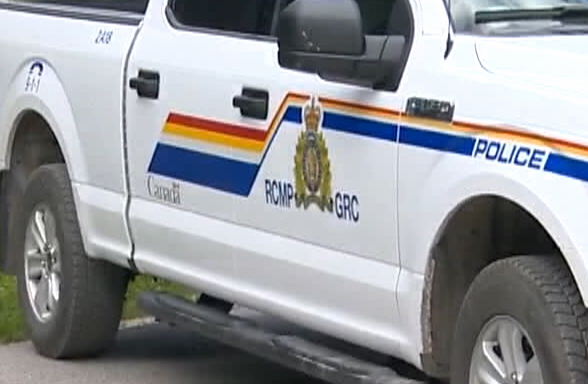
The fatal collision on Highway 1 near Brooks, Alberta, functions as a high-velocity case study in the failure of kinetic energy management within rural transit infrastructure. When a passenger vehicle and a semi-truck interact, the resulting delta-v (change in velocity) is almost exclusively absorbed by the smaller mass, creating a survivability gap that current safety standards struggle to bridge. This specific incident—resulting in the death of a woman and the critical injury of a child—reveals the mechanical and systemic vulnerabilities inherent in high-speed, mixed-use transport arteries.
The Physics of Mass Asymmetry
The fundamental cause of fatality in such rural highway incidents is the extreme disparity in momentum. A standard semi-truck, even partially loaded, maintains a mass often exceeding 35,000 kilograms. A passenger vehicle averages roughly 1,500 to 2,000 kilograms. In a collision event, the conservation of momentum dictates that the passenger vehicle experiences an acceleration magnitude inversely proportional to its mass. This creates three distinct mechanical trauma points: Meanwhile, you can find similar developments here: Institutional Governance and the Mechanics of Executive Removal in Higher Education.
- Structural Intrusions: The displacement of the vehicle’s "safety cage" into the occupant space.
- Internal Deceleration: The impact of internal organs against the skeletal structure as the body stops faster than the vehicle’s crumple zones can mitigate.
- Underride Risk: If the passenger vehicle strikes the rear or side of the truck, the lack of effective underride guards leads to the shearing of the vehicle's pillars, bypassing the primary engine-block crumple zones.
The Royal Canadian Mounted Police (RCMP) investigation focuses on the point of impact and initial trajectory, but the biological outcome is determined strictly by the $KE = \frac{1}{2}mv^2$ equation. Even a marginal increase in velocity at the time of impact exponentially increases the energy the vehicle frame must dissipate.
The Critical Care Pipeline: From Extraction to Aeromedical Evacuation
The decision to "airlift" a pediatric patient via STARS (Shock Trauma Air Rescue Service) is not a logistical choice but a clinical necessity driven by the "Golden Hour" principle. In rural Alberta, the distance between a collision site and a Level 1 Trauma Centre—typically located in Calgary or Edmonton—creates a temporal deficit that ground ambulances cannot overcome. To explore the full picture, check out the detailed analysis by NPR.
The triage process at a high-speed collision site follows a rigid hierarchy of intervention:
- Extrication Difficulty: High-velocity impacts often deform steel frames to the point where hydraulic rescue tools (Jaws of Life) are required. Every minute spent on extrication is a minute of unmanaged internal hemorrhaging.
- Pediatric Physiology: Children possess higher vascular elasticity but lower overall blood volume. This means they can compensate for shock longer than adults before suffering a catastrophic, sudden systemic collapse.
- The Aeromedical Advantage: A helicopter serves as a flying intensive care unit. The value-add is not merely the airspeed (roughly 250 km/h) but the presence of critical care nurses and paramedics who can perform advanced airway management and blood transfusions in transit.
Rural Infrastructure and Environmental Variables
The stretch of Highway 1 near Brooks is characterized by high-volume freight traffic and long-range visibility, which paradoxically contributes to "velocitization"—a psychological state where drivers lose the perception of high speeds. This cognitive drift reduces reaction times when a lead vehicle brakes or an intersection maneuver occurs.
Environmental data for the Brooks region often points to wind-induced visibility issues and black ice, yet even in clear conditions, the infrastructure design plays a role. The transition from divided highway to intersections or merging lanes creates "conflict points." A conflict point is any geographic location where two or more paths of travel cross, merge, or diverge. In rural Alberta, these points are often at-grade, meaning vehicles must cross lanes of high-speed traffic to turn, creating a high-risk profile for side-impact or "T-bone" collisions.
The Socio-Economic Cost of Transit Failure
Beyond the immediate human tragedy, these collisions exert a quantifiable strain on provincial resources. The cost function of a fatal rural highway accident includes:
- Emergency Service Deployment: The simultaneous dispatch of RCMP, local Fire Services, Ground EMS, and STARS.
- Infrastructure Downtime: Closing a major artery like Highway 1 for several hours disrupts the supply chain, as this corridor is a primary link for trans-Canada freight.
- Long-term Healthcare Load: The survival of a critically injured child involves years of rehabilitative care, neuro-psychological support, and potential long-term disability assistance.
These variables suggest that "accidents" are actually predictable outcomes of a high-energy system where human error meets unforgiving physics.
Strategic Mitigation and Infrastructure Hardening
To decrease the frequency of these high-fatality events, the strategy must shift from behavioral correction (policing) to systemic engineering. The most effective interventions are those that remove the possibility of high-mass interaction:
- Grade Separation: Replacing at-grade intersections with interchanges or overpasses to eliminate crossing-traffic conflict points.
- Median Hardening: Installing high-tension cable barriers to prevent crossover collisions, which are the most lethal type of highway interaction.
- Automated Freight Platooning: Implementing V2V (Vehicle-to-Vehicle) communication in commercial trucking to standardize braking responses and following distances, reducing the likelihood of rear-end chain reactions.
The RCMP's ongoing investigation will likely cite "contributing factors" such as speed or distraction. However, the structural reality remains that Highway 1 near Brooks functions as a high-energy environment where the margin for error is non-existent.
Municipal and provincial planning must prioritize the segregation of heavy freight from light passenger traffic. In the absence of separate corridors, the implementation of "smart" intersections—using thermal sensors to alert high-speed traffic of a vehicle waiting to cross—is the necessary interim step to prevent the kinetic energy of a 40-ton truck from being transferred into a family vehicle.