The sirens in Tel Aviv don't just scream; they vibrate in your marrow. It is a sound that strips away the veneer of a modern, high-tech metropolis and leaves only the raw instinct of a cornered animal. For decades, the narrative of Israel has been one of steel, silicon, and an almost supernatural resilience. We were told—and we believed—that the shield was impenetrable. But lately, the air feels different. The silence that follows the explosions is heavier, thick with a realization that no one wants to say out loud.
The shield is fraying.
To understand the current anxiety gripping the Middle East, you have to look past the military briefings and the polished press releases. You have to look at the math of exhaustion. Israel is a nation built on the premise of the "Qualitative Military Edge." It is the idea that being smarter and more technologically advanced can offset being vastly outnumbered. For a long time, it worked. The Iron Dome became a global symbol of this defiance, a robotic guardian that snatched death out of the sky with surgical precision.
But technology is not a god; it is a resource. And resources can be bled dry.
The Mathematics of a Breaking Point
Consider the sheer physical toll of a multi-front conflict that never sleeps. When a drone or a rocket enters Israeli airspace, the response is near-instantaneous. But the cost of that response is asymmetrical in a way that would make any CFO wake up in a cold sweat. A single interceptor missile costs roughly $50,000 to $100,000. The projectile it is killing? Sometimes as little as $500. It is a war of attrition where the defender spends a fortune to stop a pittance.
Eventually, the ledger stops balancing.
Recent reports and strategic shifts suggest that the internal "plumbing" of the Israeli defense machine is under unprecedented strain. The decision by the United States to deploy the THAAD (Terminal High Altitude Area Defense) system—along with the American boots required to operate it—is not a mere gesture of friendship. It is an emergency transfusion. It is the clearest admission yet that the domestic capacity to intercept long-range ballistic threats has reached a critical threshold.
When a superpower has to send its own soldiers to man the batteries on your soil, the "self-reliant" mythos begins to crumble. It is like a master marathon runner suddenly needing an oxygen tank just to finish the mile.
The Human Shadow in the War Room
Imagine a lead engineer at a defense firm in Haifa. Let’s call him David. David hasn’t slept more than four hours a night since October. His task isn't just to build more interceptors; it’s to figure out how to make them faster than the enemy can manufacture chaos. He watches the telemetry data on his screen and sees the sheer volume of incoming threats increasing. It’s no longer just about rockets; it’s about swarms. Low-cost, slow-moving drones that hug the terrain, mocking the billion-dollar radars designed to catch high-flying jets.
David knows what the public is only starting to sense: you cannot build a wall high enough to stop a flood that never ends.
The psychological weight of this realization is the "invisible stake" in this conflict. If the Iron Dome misses, the physical damage is quantifiable in bricks and mortar. But if the belief in the Iron Dome fails, the social contract of the state begins to dissolve. People live in Tel Aviv and Haifa because they believe they are safe. If that safety is revealed to be a fragile gift from a distant patron in Washington, the very foundation of the national identity shifts from "sovereign power" to "protected client."
The Trump Factor and the End of Certainty
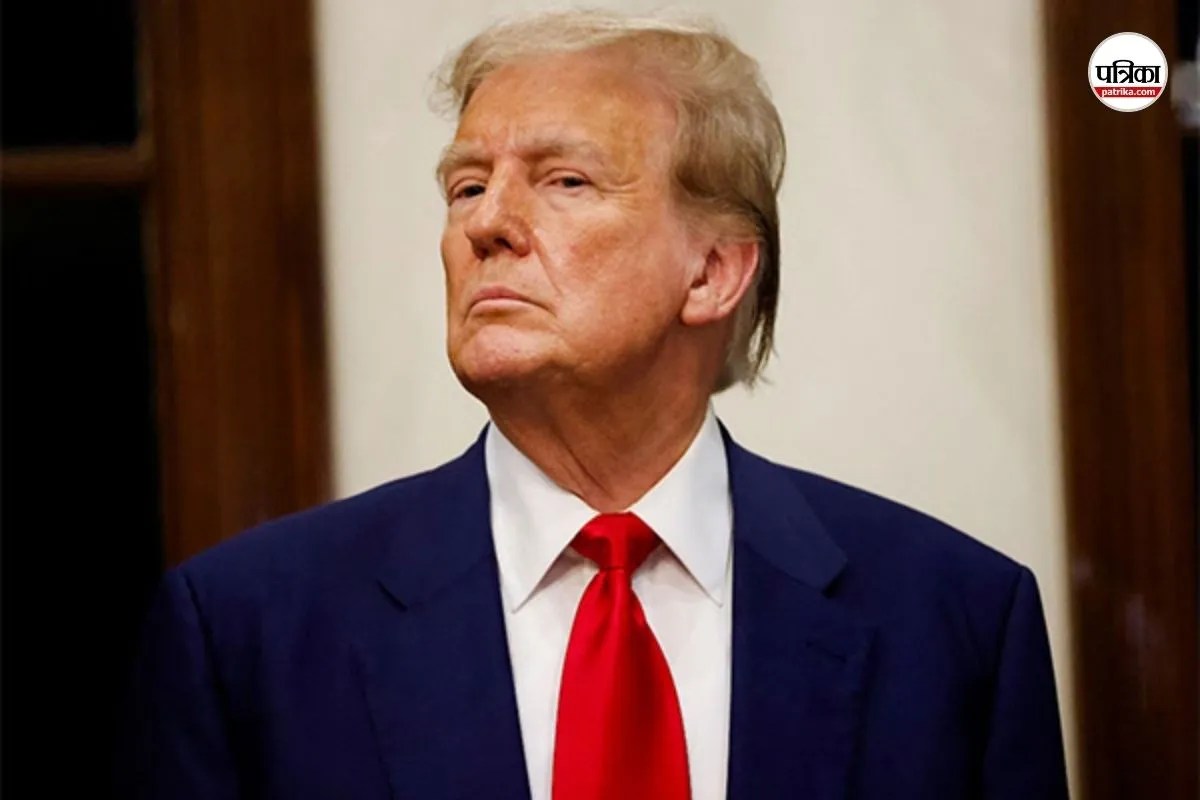
The geopolitical landscape shifted violently when Donald Trump’s previous policies and potential future return began to cast a long shadow over the region. The Abraham Accords were touted as a bridge to a new era, a way for Israel to integrate into the neighborhood through trade and mutual suspicion of Iran. But bridges are only useful if the ground on both sides is stable.
The "deal-maker" approach to Middle Eastern politics often ignored the ancient, simmering resentments that don't care about trade routes or real estate. By signaling a "Middle East First" or an isolationist "America First" stance, the US created a paradox. It emboldened Israel to take bolder risks while simultaneously making the safety net beneath those risks feel thinner.
Now, the reality has set in. The "Deal of the Century" didn't buy peace; it bought a temporary diversion. And while the politicians were shaking hands, the regional adversaries were studying the cracks in the armor. They realized that you don't have to defeat the Israeli Defense Forces in a traditional tank battle. You just have to make the cost of living—the cost of staying safe—higher than the population can afford to pay.
The Hidden Cost of the Shield
We often talk about war in terms of territory gained or lost. We rarely talk about the soul of the people living under the umbrella.
Living under a missile defense system creates a strange, detached kind of trauma. You hear the boom, you see the puff of smoke in the blue sky, and you go back to your coffee. You outsource your survival to an algorithm. But when the algorithm starts to lag, or when the news reports that the "big brother" in America has to send more batteries because your own are empty, that detached trauma turns into a very grounded panic.
The THAAD deployment is a massive piece of hardware. It’s sophisticated, powerful, and lethal. But its presence on Israeli soil is also a loud, metallic clank of a closing door. It says that the era of Israel fighting its battles entirely alone is over. The dependence is no longer just financial or diplomatic; it is operational.
Think about the logistical nightmare of maintaining this posture. The supply chains for these interceptors are not infinite. The rare earth minerals, the high-grade explosives, the specialized chips—all of it is subject to the same global shortages and bottlenecks that affect your smartphone or your car. You cannot "software update" your way out of a shortage of physical missiles.
The Myth of the Invincible State
There is a certain arrogance that comes with high-tech success. It’s the belief that for every problem, there is a technical solution. A better sensor. A faster processor. A more lethal laser.
But war is a human endeavor. It is driven by will, by grievance, and by the willingness to endure pain. While Israel was perfecting the interceptor, its enemies were perfecting the art of the "cheap kill." They learned that if you fire enough metal into the air, the defender will eventually run out of money, time, or nerves.
The current crisis isn't just about Iran or Hezbollah or Gaza. It is about the realization that the "Start-up Nation" cannot innovate its way out of a geography that is increasingly hostile. The reliance on the US for basic air defense capability is the ultimate "tell." It shows that the internal resources are not just strained—they are depleted.
The Sound of the Next Siren
When the next alert sounds, the people will still run to the shelters. They will still look up at the sky, hoping to see that familiar white streak of an interceptor meeting its target. But they will also be looking for the American flag on the side of the launch vehicle.
This shift changes the gravity of the region. It makes every Israeli military decision a domestic American political issue. It means that the survival of the state is now inextricably linked to the whims of a polarized electorate thousands of miles away.
The shield is still there, for now. It is made of the best technology humanity has ever devised. But it is no longer a shield of gold or steel. It is a shield of debt, of political favors, and of borrowed time.
The most dangerous moment for any empire or any state isn't when its enemies become strong. It’s when its own people realize that the walls they built to keep the world out have actually become a cage that keeps them dependent on the mercy of others.
The sirens are still wailing. And the math doesn't lie.
The sky is full of smoke, but the real fire is in the ledgers and the shipping crates being unloaded at the docks under the cover of night. Israel isn't just fighting for its borders anymore; it is fighting the terrifying possibility that its greatest strength—its technological isolation—was always an illusion.
In the end, you can’t automate security. You can only borrow it. And the bill is coming due.



