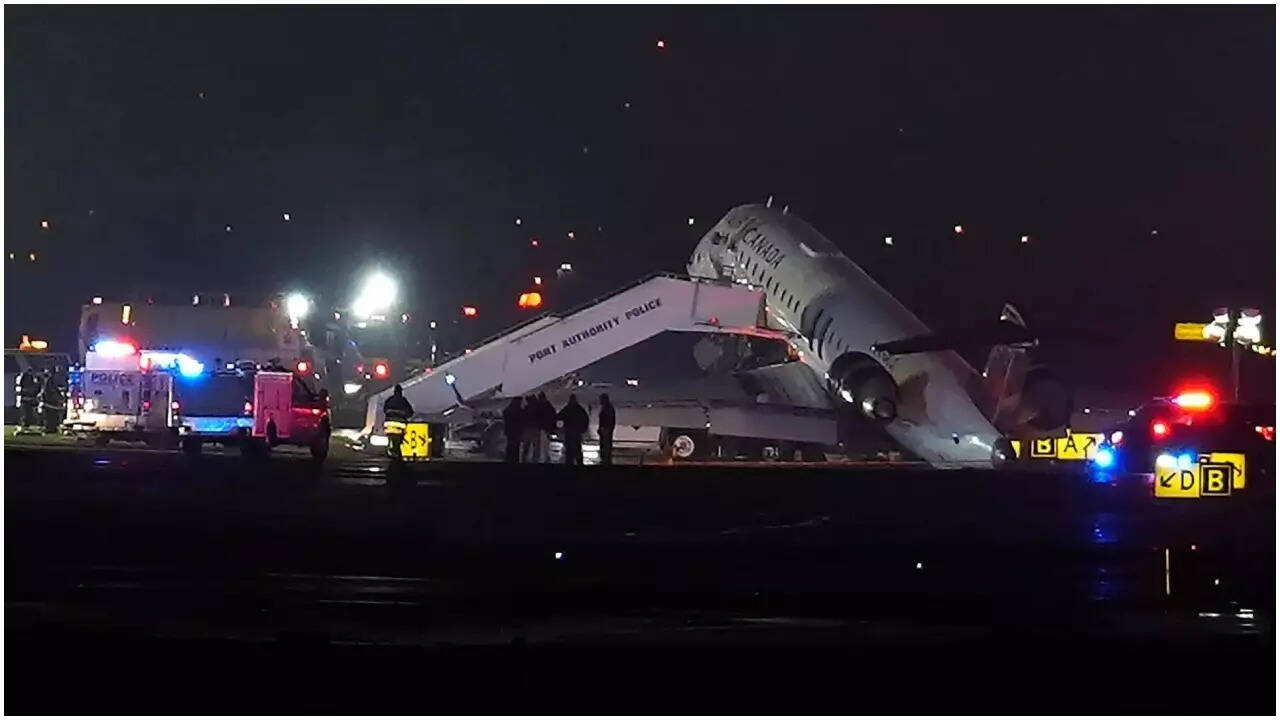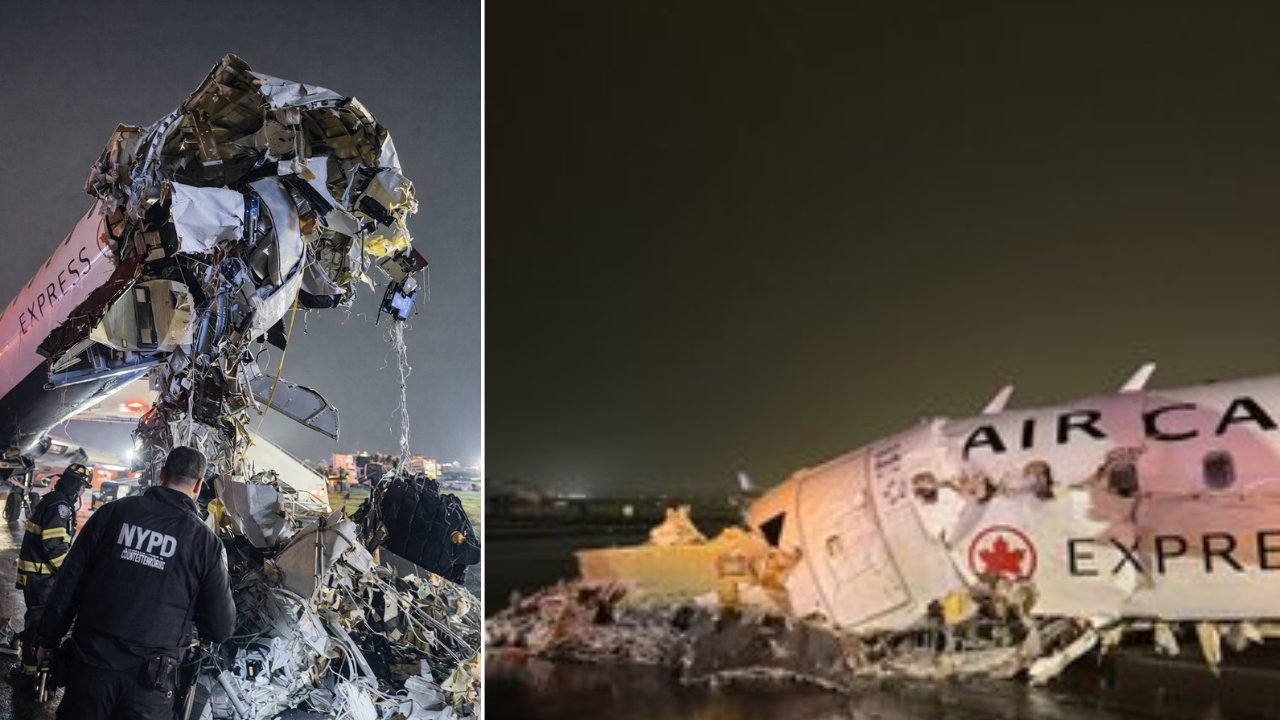
The destruction of an aircraft during a Controlled Flight Into Terrain (CFIT) event is rarely the result of a single mechanical failure; it is the culmination of a "Swiss Cheese" model of sequential oversight where human-centric fail-safes collapse simultaneously. When cockpit audio captures a final, desperate plea like "Stop, stop, stop!", it signifies the terminal point of a collapsed hierarchy. To understand why two experienced pilots fail to recognize an impending collision until the final seconds, one must analyze the three distinct failure vectors: spatial disorientation, the breakdown of Cockpit Resource Management (CRM), and the physiological lag between auditory realization and mechanical correction.
The Taxonomy of CFIT Mechanical vs. Cognitive Failures
Controlled Flight Into Terrain occurs when an airworthy aircraft, under the functional control of the crew, is flown into the ground, water, or an obstacle. The Air Canada incident involving a Beechcraft 1900D highlights a specific subset of CFIT where the aircraft was not suffering from catastrophic engine failure. Instead, the failure was one of Situational Awareness (SA).
Situational Awareness in aviation is tiered into three levels:
- Perception: Noticing the data points (altimeter readings, airspeed, visual cues).
- Comprehension: Understanding what those data points mean in relation to each other.
- Projection: Forecasting where the aircraft will be in the next 30 to 60 seconds based on current data.
In the final moments of this flight, the crew moved from Level 1 to Level 2 only seconds before impact. The "Stop" command indicates a sudden, violent shift into Level 2 comprehension, but it occurred too late to initiate the Level 3 projection required to execute a terrain avoidance maneuver.
The Hierarchy Gap: Power Dynamics and CRM Erosion
Cockpit Resource Management was designed to flatten the steep authority gradient between a Captain and a First Officer. When a junior pilot observes a deviation from flight parameters but hesitates to override the senior pilot, the safety margin of the dual-pilot system evaporates.
The audio evidence suggests a Communication Latency. In high-stress environments, human speech becomes the bottleneck. A command like "Stop" is an emergency override, but it lacks the directional specificity required for an immediate corrective vector. In a functional CRM environment, the verbalization would ideally occur much earlier in the descent profile, utilizing standardized callouts like "Sinking" or "Terrain" which trigger pre-rehearsed muscle memory responses.
The breakdown here can be mapped through the Trans-Authority Gradient:
- Excessive Gradient: The First Officer is too intimidated to speak up until the danger is undeniable.
- Reverse Gradient: The Captain abdicates decision-making to a less experienced co-pilot.
- Flat Gradient: Both pilots are equally confused, leading to a "frozen" cockpit where no one takes decisive action.
The exclamation captured on the recorder indicates that the observer (likely the co-pilot) recognized the hazard, but the operator (the pilot flying) was either suffering from Cognitive Tunneling—focusing entirely on one instrument or task—or was spatially disoriented.
Spatial Disorientation and the "Black Hole" Effect
During night approaches or landings in inclement weather, pilots are susceptible to the "Black Hole" illusion. This occurs when an approach is made over water or dark, unlit terrain toward a brightly lit runway. Without peripheral visual cues to provide a sense of distance and height, the brain perceives the aircraft to be higher than it actually is.
The physics of the descent profile are governed by the Glide Path Angle. A standard approach is roughly 3°. If spatial disorientation causes the pilot to deviate to 4° or 5°, the rate of descent increases exponentially. The human vestibular system (the inner ear) is notoriously unreliable at detecting gradual changes in pitch or descent. If the aircraft’s nose drops slowly enough, the pilot’s body feels as though it is still in level flight. This is "The Lean," a physiological error where the pilot’s "seat of the pants" feel contradicts the flight instruments.
When the co-pilot finally shouted to stop, the aircraft had likely entered a zone where the Rate of Closure exceeded the aircraft’s performance capabilities. A Beechcraft 1900D requires a specific amount of time to transition from a descent to a climb—a factor of engine spool time and aerodynamic lift generation.
The Cost of Information Processing Lag
The human brain requires approximately 1.5 to 2.0 seconds to perceive a visual or auditory stimulus and translate it into a physical movement. This is the Perception-Reaction Time (PRT).
In the context of the Air Canada crash:
- T-Minus 4 Seconds: The co-pilot perceives the ground is too close.
- T-Minus 3 Seconds: The brain processes the fear response and formulates the "Stop" command.
- T-Minus 2 Seconds: The pilot flying hears the command and must shift focus from his current task to the external environment or the altimeter.
- T-Minus 1 Second: The pilot pulls back on the yoke.
By the time the mechanical components of the aircraft—the elevators and engines—responded to the pilot's input, the altitude buffer had already been exhausted. This delay is the Structural Lag. Even if the pilot had perfect reflexes, the inertia of a multi-ton aircraft moving at 140+ knots makes an instantaneous change in trajectory physically impossible.
Environmental and Technical Compounding Factors
While the human element is the primary driver of the "Stop" command, environmental variables dictate the severity of the error. The presence of low-level clouds or fog creates a Visual Obscuration that prevents the "Big Picture" from being seen.
Modern aircraft are equipped with a Terrain Awareness and Warning System (TAWS) or a Ground Proximity Warning System (GPWS). These systems use radar altimeters and GPS databases to provide "Pull Up" commands. The absence of these warnings in the audio—or the crew's failure to heed them—suggests one of two things:
- The system was inhibited or suffered a database error.
- The crew was suffering from Alert Fatigue, where repetitive or nuisance warnings are mentally filtered out until the visual reality overrides the cognitive bias.
Strategic Divergence: Redefining Pilot Training
The industry standard for preventing these tragedies must shift from "Technical Proficiency" to "Psychological Resilience." Training pilots to fly the plane is easy; training them to challenge a superior or recognize their own sensory illusions in real-time is the greater challenge.
The most effective intervention is the Hard Floor Policy. Airlines must implement rigid, non-negotiable altitude gates. If a specific altitude is reached and the runway environment is not clearly visible or the aircraft is not in a "stabilized" configuration, an immediate "Go Around" must be mandatory. This removes the "Judgment Call" from the cockpit and replaces it with a binary operational rule.
To mitigate the specific failure seen in the Air Canada crash, operators should prioritize:
- Automation Parity: Ensuring that the First Officer has the same level of comfort with the autopilot and manual overrides as the Captain, reducing the hesitation to intervene.
- Startle Factor Training: Using flight simulators to specifically trigger the "Stop" scenario, training pilots to bypass verbalization and move straight to the recovery maneuver when certain thresholds are crossed.
- Data-Driven Debriefs: Using Flight Data Monitoring (FDM) to identify pilots who consistently fly "low" approaches before an accident occurs, allowing for proactive retraining.
The final audio from the cockpit is a data point, but the solution lies in the structural reorganization of how crews perceive and react to environmental threats. The goal is not just to hear the warning, but to ensure the "Stop" happens before the word is ever spoken.