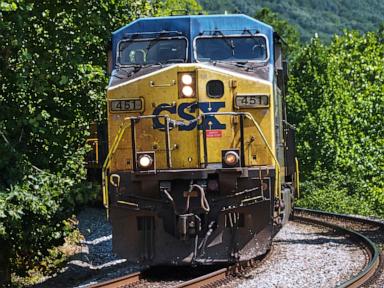
CSX Transportation just posted a 25% surge in quarterly profit, a figure that on the surface suggests a rail industry in its prime. This windfall stems from a dual-pronged strategy of aggressive cost-cutting and a significant uptick in shipping volume. By slashing operational overhead and squeezing more utility out of every locomotive and labor hour, the Jacksonville-based carrier has turned its balance sheet into a fortress. However, beneath the polished earnings report lies a volatile reality. This growth is not merely a product of better management; it is the result of a high-risk operational model that prioritizes immediate shareholder returns over the long-term resilience of the American supply chain.
The Engineering of a Windfall
The headline number is intoxicating for Wall Street. Achieving a 25% profit jump in a mature, capital-intensive industry like freight rail requires more than just luck. It requires a ruthless devotion to the operating ratio—a metric that tracks expenses as a percentage of revenue. For CSX, lowering this ratio has become the singular mission.
They did this by leaning into Precision Scheduled Railroading (PSR). While the industry likes to frame PSR as a sophisticated logistical evolution, it is essentially a brutal exercise in streamlining. It involves running fewer, longer trains on a fixed schedule rather than waiting for wagons to fill up. By doing so, CSX reduced its need for locomotives and, more importantly, reduced its headcount. When you move more freight with fewer people and less equipment, the math works in your favor almost instantly.
But math on a spreadsheet does not always translate to health on the tracks. The surge in profit is partially a rebound effect. As global supply chains stabilized following years of erratic disruption, the sheer volume of "stuff"—chemicals, coal, and automotive parts—found its way back to the rails. CSX was positioned to catch this wave, but they did so by running their assets at near-maximum capacity.
The Human Cost of the Operating Ratio
You cannot talk about rail profits without talking about the people who move the steel. The 25% profit jump was built on the backs of a workforce that has been trimmed to the bone. During the periods of "expense cutting" cited in the earnings reports, the industry saw massive layoffs. CSX was no exception.
The strategy is simple. You ask the remaining workers to do more. You implement stricter attendance policies. You reduce the "slack" in the system. From a purely financial perspective, labor is a variable cost to be minimized. From an investigative perspective, this lean staffing creates a brittle environment. When a single derailment occurs or a winter storm hits the Midwest, there are no reserve crews to call in. The system grinds to a halt because the "efficiency" of the profit margin has removed the safety net of human redundancy.
The "efficiency" described in the quarterly report is often just a euphemism for deferred investment in human capital. While shareholders enjoy the dividends, the engineers and conductors are facing burnout levels that threaten the very service reliability CSX claims to be improving.
More Goods or Just More Risk
The report highlights a significant increase in the hauling of "more goods." While industrial production and intermodal traffic have indeed risen, we must look at the mix of what is being moved. CSX has seen a resurgence in coal shipments, driven by international demand and fluctuating energy prices.
Coal is a high-margin commodity for railroads. It is heavy, it stays in one place, and it doesn't require the delicate handling of consumer electronics. However, relying on coal for a profit spike is a gamble on a sunset industry. As the global economy pivots toward different energy sources, the "25% jump" starts to look less like a sustainable trajectory and more like a final harvest.
Furthermore, the "more goods" narrative ignores the shippers' perspective. Ask a manufacturer in the Rust Belt about rail service, and you will hear stories of missed windows and "embargoes"—a tactic where railroads refuse to accept new freight because their yards are too congested. CSX is profitable because it is picky. By focusing on high-volume, high-margin routes and neglecting the "first-mile, last-mile" service for smaller shippers, they inflate their margins at the expense of broader economic connectivity.
The Infrastructure Paradox
To cut expenses, a railroad must limit what it spends on its tracks and bridges. CSX maintains that it is investing billions in capital expenditures, but a deeper look at the numbers shows a focus on technology that replaces labor rather than infrastructure that expands capacity.
They are betting heavily on automated track inspections and "trip optimizer" software that controls train speeds to save fuel. This is smart business, but it is defensive business. It is designed to protect the current margin, not to double the size of the network. If the United States truly wants to move more freight off the highways and onto the more fuel-efficient rails, the current CSX model is an obstacle. Their current profit structure depends on the network staying exactly the size it is now, or perhaps even shrinking to exclude less profitable branch lines.
The Regulatory Shadow
Washington is watching these profit margins with increasing skepticism. The Surface Transportation Board (STB) has become more vocal about the "service crisis" that often accompanies these record earnings. There is a growing sentiment that the Class I railroads, including CSX, have become too efficient for their own good—and for the good of the country.
If the profit jump is seen as being extracted from shippers through captive pricing and poor service, the threat of "reciprocal switching" becomes real. This regulatory move would force railroads to allow competitors to use their tracks to reach certain customers. It is the one thing CSX fears most, as it would introduce actual price competition into a market that currently functions as a series of regional monopolies.
The 25% increase in profit might actually be the catalyst for the very regulations that will eventually cap those profits. By pushing the boundaries of lean operations, CSX has invited a level of scrutiny that could redefine the industry's legal landscape.
Managing the Narrative
In the world of corporate communications, a 25% profit increase is a shield. It deflects questions about safety, it silences critics of labor practices, and it keeps the stock price buoyant. Management points to these numbers as proof that their version of PSR is working.
But for the veteran analyst, these numbers are a warning light. When a company in a low-growth, foundational industry suddenly spikes its earnings by a quarter, it usually means it has stopped fed-batching for the future and has started eating its own tail. You can only cut expenses for so long before you are cutting into the muscle of the operation.
The current strategy is a masterclass in short-term financial engineering. CSX has successfully convinced the market that they have cracked the code of railroading. They have stripped away the "waste," synchronized the schedules, and maximized the tonnage. They are, on paper, the perfect corporate machine.
The fragility of this machine is only visible when things go wrong. A precision schedule has no room for error. A lean workforce has no room for sickness. A high-margin commodity mix has no room for market shifts. CSX is currently sprinting on a tightrope, and while the view from the 25% mark is spectacular, the wind is picking up.
The railroad is no longer just a service provider; it has become a financial instrument. The goods being hauled are merely the collateral for a massive play in the equity markets. As long as the trains keep moving and the expenses stay suppressed, the music continues. But the physical reality of railroading—the friction of steel on steel, the fatigue of the workers, and the aging of the ties—will eventually demand its due, and no amount of clever accounting will be able to defer that cost forever.
Stop looking at the 25% as a sign of health. Start looking at it as the cost of a system pushed to its absolute limit.