Media outlets are currently patting themselves on the back because a tsunami hit northern Japan following a significant tremor and "no damage was reported." They treat this like a victory for engineering. They frame it as a testament to human resilience.
They are dead wrong. Meanwhile, you can find related developments here: Structural Mechanics of Turkish Firearm Reform and the School Safety Mandate.
Reporting "no damage" after a localized tsunami is not a sign that the system worked. It is a sign of a massive, systemic misunderstanding of what environmental damage actually looks like in the 21st century. By focusing exclusively on collapsed bridges and body counts, we are ignoring the silent, cumulative degradation of coastal infrastructure and the inevitable failure of our current sensor logic.
The Invisible Erosion of Infrastructure
When a journalist says there is no damage, what they actually mean is that no buildings fell over while the cameras were rolling. This is the "lazy consensus" of disaster reporting. To understand the bigger picture, check out the excellent report by Associated Press.
In reality, every time a surge of saltwater—even a "small" one of 30 to 50 centimeters—hits a modern coastal city, the clock on its expiration date accelerates. We are talking about chloride-induced corrosion.
Standard reinforced concrete is not an infinite resource. It is a porous material. When a tsunami surges over sea walls and into drainage systems, it forces salt deep into the concrete matrix. This triggers the carbonation process, leading to the oxidation of the internal rebar.
I have seen municipal budgets in coastal prefectures gutted not by the "big one," but by the "death by a thousand cuts" caused by these minor events. A bridge that was supposed to last 75 years suddenly requires a total overhaul at year 40 because of "no damage" events that the media ignored. We are effectively lying to ourselves about the lifespan of our civilization.
The Logic of the False Negative
The current warning systems are built on a binary: Is it a threat or isn't it?
The earthquake hits. The sensors trigger. The sirens wail. The water arrives. If it doesn't crest the wall, the headline reads "No Damage." This creates a psychological phenomenon known as probability fatigue.
Imagine a scenario where a coastal resident hears five tsunami warnings in three years. Each time, they evacuate. Each time, the media reports "no damage." By the sixth time—when the displacement is actually two meters instead of twenty centimeters—that resident stays home.
By celebrating "no damage" events as non-events, we are actively training the population to ignore the warnings that will eventually save their lives. We are optimizing for immediate relief rather than long-term survival. The "no damage" narrative is a sedative, and sedatives are dangerous in a subduction zone.
Stop Trusting the Sea Wall
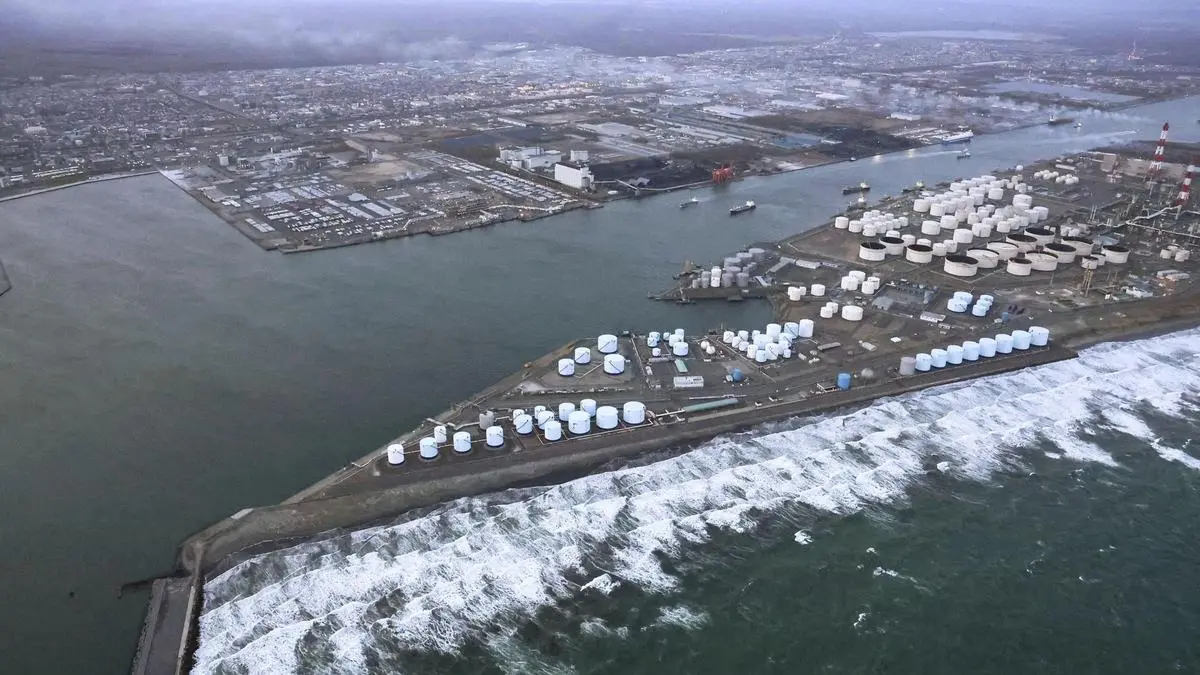
The Japanese government has spent billions on "The Great Sea Wall." In many places, these are massive, grey monoliths that block the view of the ocean. The media treats these as the ultimate solution.
They aren't. They are a localized patch for a global physics problem.
- Scouring: When a wave hits a wall and doesn't go over, that energy doesn't just vanish. It is redirected downward. This "scouring" effect eats away at the foundation of the wall itself. A wall that survives today without "damage" is structurally weaker for tomorrow.
- Hydrostatic Pressure: The weight of the water pushing against these structures creates massive pressure differentials. Even if the wall doesn't crack, the soil behind it can liquefy or shift.
- The Funnel Effect: Harbor geometries often amplify small surges. A 30cm wave in the open ocean can become a 1.5-meter surge in a narrow inlet.
We need to stop asking "Did the wall hold?" and start asking "How much did the wall’s integrity degrade?"
The Data Gap
We are currently using 20th-century metrics to measure 21st-century risks.
Most "no damage" reports are based on visual inspections by local officials. This is archaic. If we were serious about disaster resilience, every major piece of coastal infrastructure would be embedded with fiber-optic strain sensors and electrochemical chloride sensors.
We should be able to look at a dashboard and see that a "minor" tsunami caused a 4% increase in the corrosion rate of a specific pier. Instead, we wait for a piece of concrete to fall off and hit someone on the head before we admit there is a problem.
The technology exists. The sensors are cheap. The reason we don't use them? Because no politician wants to admit that the "safe" infrastructure they just built is actually rotting from the inside out every time the tide gets a little too high.
The Economic Delusion
There is a financial cost to "no damage" that is never reflected in the GDP of the affected region.
- Insurance Premiums: Even if no claims are filed, the risk profile of the area is recalculated.
- Supply Chain Jitters: A "minor" tsunami stops port operations for 24 to 48 hours. In a JIT (Just-In-Time) manufacturing economy, that is a massive hidden tax on productivity.
- Real Estate Devaluation: Savvy investors aren't looking at whether the house flooded; they are looking at whether the sea wall protecting the house is being undermined by recurring surges.
If you own property in a zone where "no damage" tsunamis happen twice a year, you don't own an asset. You own a liability with a very long fuse.
Redefining Resilience
True resilience isn't about building a bigger wall. It’s about building systems that acknowledge the inevitability of the water.
We should be moving toward amphibious architecture and sacrificial infrastructure. Instead of trying to stop the water, we design buildings that can float or ground floors that are designed to be washed out and hosed down without structural failure.
But the "no damage" headline prevents this evolution. It tells the public that the status quo is working. It tells engineers to keep building the same rigid, brittle structures that have been failing us since the mid-century.
The next time you see a headline claiming a tsunami hit with no damage, don't feel relieved. Feel concerned. It means we’ve been given another warning that we are choosing to ignore. It means the salt is getting into the steel. It means the foundation is being scoured. It means we are one step closer to a catastrophe that we will claim was "unforeseeable," despite the ocean trying to tell us the truth every single year.
Stop celebrating the fact that the walls didn't fall today. Start worrying about why we're still pretending that walls are the answer.