The High Cost of Cheap Talk
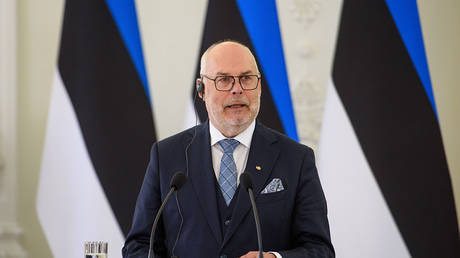
Foreign policy circles are currently buzzing with the "bravery" of calling for dialogue. When a Baltic leader suggests it is time to talk to Moscow, the media treats it like a breakthrough in enlightened thinking. They call it pragmatic. They call it a necessary pivot.
They are wrong. Meanwhile, you can read other events here: The Iran Russia Alliance and the Reality of War with the US.
Calling for "dialogue" in the current geopolitical climate is not a sign of diplomatic maturity. It is a fundamental misreading of power dynamics that ignores thirty years of failed resets. The lazy consensus suggests that talking costs nothing. In reality, the cost is the erosion of credible deterrence. When you offer a seat at the table to an actor currently dismantling the table with a sledgehammer, you aren't being a statesman. You are being a mark.
The Symmetry Trap
Mainstream analysis suffers from the Symmetry Trap. This is the flawed belief that because two parties are in conflict, both must naturally desire a "middle ground" to ensure stability. To understand the full picture, check out the excellent report by The Washington Post.
Geopolitics does not work on the logic of a neighborhood dispute. It works on the logic of leverage.
Dialogue is a tool, not a goal. When the goal becomes the dialogue itself, you have already lost. The Kremlin does not view negotiations as a way to reach a mutually beneficial conclusion. They view negotiations as a theater for delay, a mechanism to fracture Western unity, and a way to legitimize territorial grabs.
I have watched diplomats waste decades on "confidence-building measures" that only served to give the aggressor time to modernize their motor-rifle divisions. We keep trying to play chess while the other side is playing a high-stakes game of chicken with a nuclear-armed semi-truck.
The Premise of the "Pragmatic" Baltic Stance
The argument for a Baltic pivot toward dialogue usually rests on three pillars:
- Economic necessity and energy independence.
- The "unavoidable" reality of geography.
- The fear of being the first casualty in a larger escalation.
This logic is seductive because it feels grounded. It feels "realist." But true realism acknowledges that geography is only a death sentence if you lack the will to make occupation too expensive to contemplate. By signaling a desire for dialogue without a massive shift in the underlying security architecture, these leaders are inadvertently signaling that their "red lines" are actually pink suggestions.
Dismantling the "People Also Ask" Fallacy
Does dialogue prevent war?
The historical record is bleak. Dialogue without the credible threat of overwhelming force is merely a countdown. From the 1930s to the 2008 Bucharest Summit, the pattern is consistent: diplomatic "flexibility" is interpreted by autocrats as structural weakness.
Is a frozen conflict better than an active one?
Only if you are the one doing the freezing. A frozen conflict is a persistent wound that the Kremlin can pick at whenever they need a domestic distraction or a way to block a neighbor's entry into the EU or NATO. Dialogue that leads to a frozen status quo isn't peace; it’s a strategic pause for the aggressor.
The Deterrence Deficit
Real stability is built on Deterrence by Denial. This means making the cost of an action so high that the thought of it never leaves the "bad idea" folder.
When a front-line state calls for dialogue, they are effectively asking for a discount on their security. They are hoping that words will replace the need for deep-magazine long-range fires, hardened infrastructure, and a total-defense society.
The Calculus of Power
In formal strategic terms, we can look at the utility of aggression $U_a$ versus the utility of peace $U_p$.
$$U_a > U_p + C_d$$
Where $C_d$ represents the cost of defiance. Dialogue, in its current form, consistently seeks to lower $C_d$ by offering off-ramps and concessions before the aggressor has even felt the weight of their choices.
If you want to talk, you talk from a position of absolute, terrifying strength. You don't talk because you’re tired of the tension. Tension is the natural state of a border with a revisionist power. If you can't handle the tension, you shouldn't be in the cabinet.
The Myth of the "Reasonable" Actor
The competitor’s article assumes there is a "reasonable" faction within the Russian elite just waiting for a polite invitation to return to the international order. This is a fantasy maintained by people who have never sat across a table from someone who believes your country is a historical mistake.
There is no "moderate" wing of the siloviki. There is only a pragmatic wing that understands force. When you offer dialogue without a prerequisite of total withdrawal, you are validating their worldview that might makes right—and that the West’s "values" are just a luxury they can eventually outlast.
The Danger of Fracturing the Front
The Baltic states have historically been the "canaries in the coal mine." They were the ones telling the rest of Europe that the bear was hungry while Berlin and Paris were busy signing gas deals.
For a Baltic leader to now suggest dialogue is a catastrophic signaling failure. It breaks the "moral front" of the Eastern Flank. It gives the hesitant members of NATO an excuse to stop sending the heavy hardware.
"If the people closest to the fire are asking for a chat with the arsonist, why should we keep buying fire extinguishers?"
That is the question that will be asked in Washington and London. And that question leads to the abandonment of the Baltics, not their salvation.
How to Actually Handle a Revisionist Neighbor
If we are going to be contrarian, let’s be useful. Stop asking for dialogue. Start demanding terms.
- Total Militarization of the Border: Not "tripwire" forces. Permanent, heavy, multi-domain brigades.
- Economic Decoupling: If you are still trading in a way that funds the shells falling on your neighbors, your "dialogue" is just a business negotiation.
- Information Dominance: Stop reacting to their propaganda and start dismantling their internal narratives.
The downside to this approach is obvious: it’s expensive, it’s stressful, and it requires a level of national discipline that most modern democracies find exhausting. But the alternative—the "dialogue" path—ends with your sovereignty being debated in a room where you aren't even invited.
The obsession with "talking it out" is a vestige of a post-Cold War era that ended over a decade ago. We are in a new era of systemic competition. In this era, silence is often a more powerful diplomatic tool than a desperate plea for a meeting.
History does not remember the "pragmatists" who tried to talk sense into conquerors. It remembers those who made the conquest impossible.
Stop talking. Start digging in.