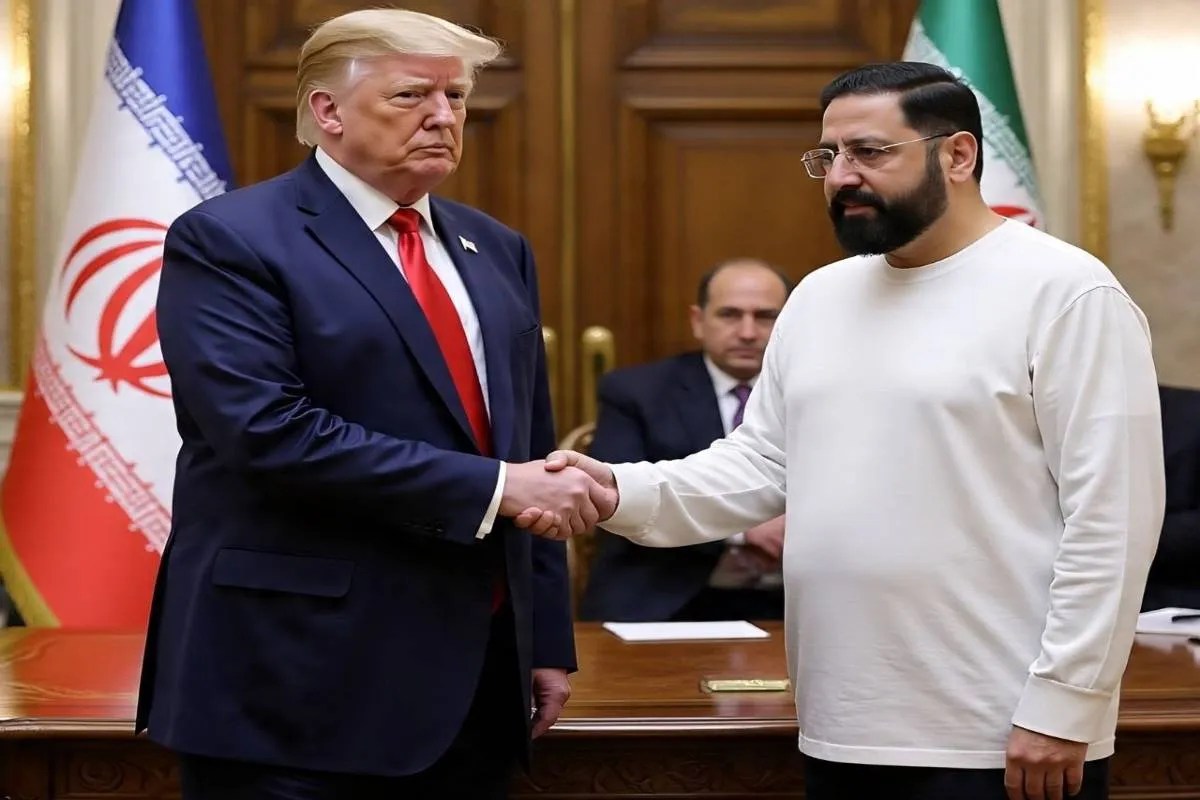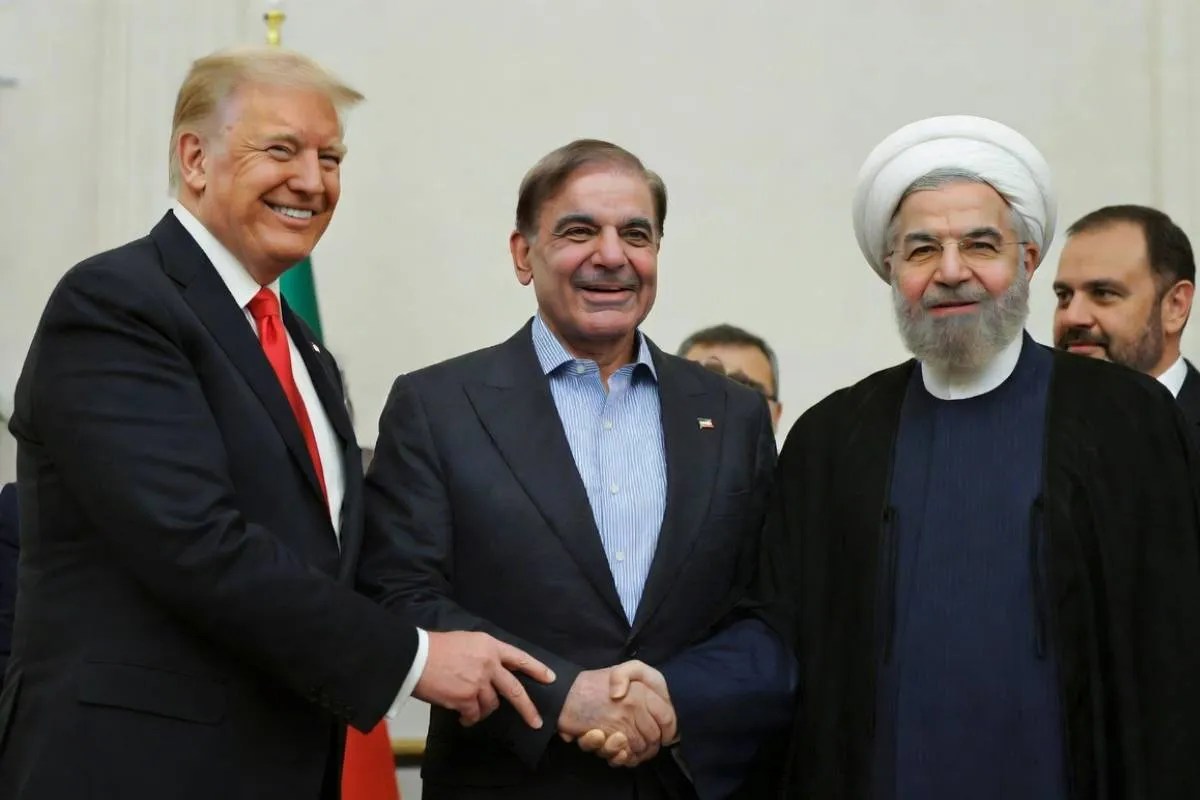
Donald Trump is currently signaling that his "maximum pressure" strategy has finally cracked the Iranian regime, claiming Tehran is ready to abandon its nuclear ambitions in exchange for sanctions relief. This narrative suggests a swift diplomatic victory is on the horizon, one that would theoretically stabilize the Middle East and prevent a direct conflagration between Israel and Iran. However, the reality on the ground in Tehran and the complex mechanics of nuclear proliferation suggest that any "deal" currently being discussed is less a definitive surrender and more a tactical retreat by a regime fighting for its economic survival.
The core of the current tension lies in a fundamental disagreement over what constitutes a "denuclearized" Iran. While Trump frames the situation as a binary choice—Iran gives up the bomb or faces total collapse—the Iranian leadership views their nuclear program as their only remaining leverage against an existential threat. They have watched the fates of Muammar Gaddafi and Saddam Hussein, leaders who abandoned their unconventional weapons programs only to be ousted by Western-backed forces. To expect Iran to simply hand over its enrichment capabilities because of a few months of intensified sanctions ignores forty years of revolutionary ideology and survivalist instinct.
The Mechanics of the Iranian Pivot
Tehran's sudden willingness to talk isn't born of a change of heart. It is the result of a calculated risk assessment. The Iranian economy is currently suffering from 40% inflation and a currency that has lost significant value against the dollar. The "Grey Zone" tactics—using proxies like Hezbollah and the Houthis to harass Western interests—are becoming increasingly expensive and risky as Israel continues to dismantle the leadership structures of those very groups.
By signaling a willingness to negotiate on nuclear terms, Iran is attempting to buy time. They need a "breathing room" period where oil exports can resume at scale. This isn't a secret. The Iranian leadership has been explicit in their internal briefings that diplomacy is a tool of the revolution, not an end to it.
Why Sanctions Often Fail to Reach the Core
We have seen this cycle before. Sanctions are heavy, blunt instruments. They devastate the middle class and the poor, but the Islamic Revolutionary Guard Corps (IRGC) often thrives in these environments. The IRGC controls the black markets. They manage the smuggling routes. When a country is isolated, the entities capable of bypassing that isolation become the most powerful players in the room.
If a new deal is struck that focuses solely on uranium enrichment levels without addressing the IRGC’s grip on the internal economy, the result will be a richer, more entrenched military elite. The "deal" might look good on a press release in Washington, but in the streets of Isfahan and Shiraz, it will look like the revitalization of the very forces the West seeks to contain.
The Israel Factor and the Shadow War
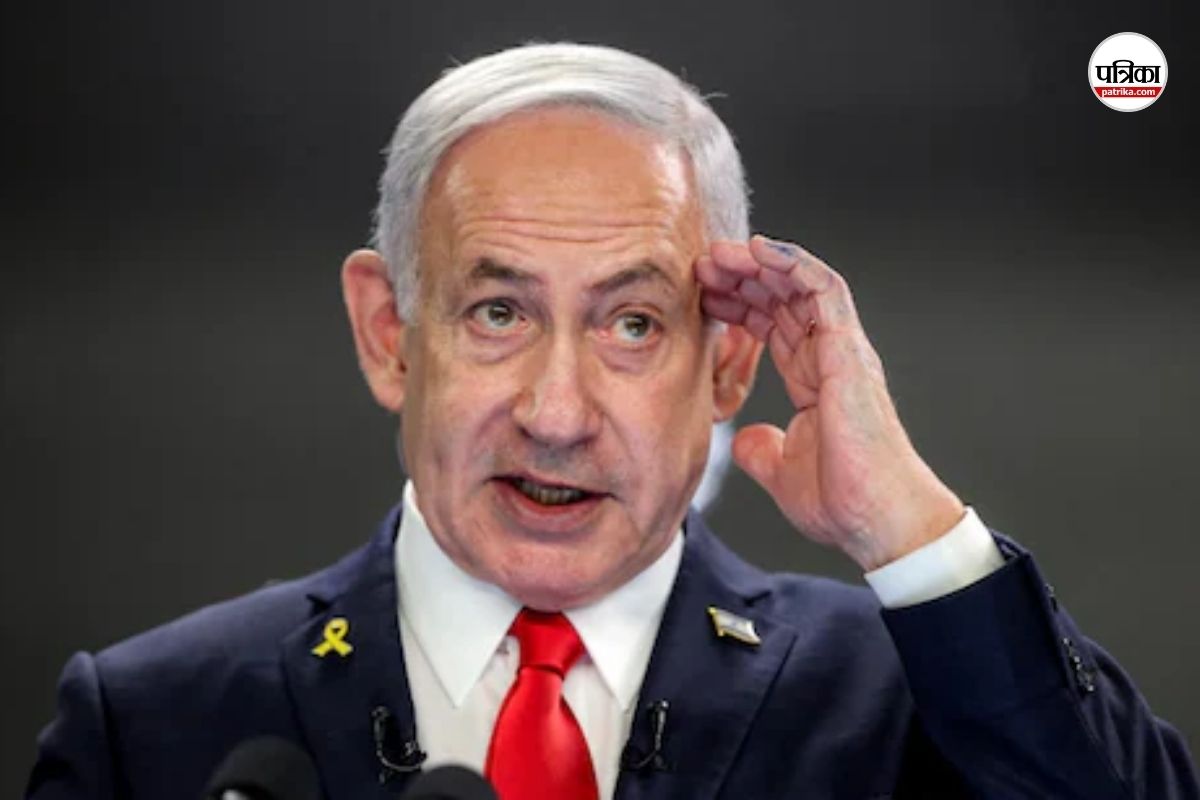
Benjamin Netanyahu has made it clear that Israel will not be bound by any agreement between Washington and Tehran that leaves Iran with "breakout capacity." This creates a massive disconnect in the current diplomatic push. While the U.S. might be satisfied with a return to the 3.67% enrichment limits of the 2015 era, Israel views the entire infrastructure—the centrifuges at Fordow and the research facilities at Natanz—as a permanent threat that must be physically dismantled, not just monitored by the IAEA.
The shadow war is already escalating. Cyberattacks on Iranian infrastructure, the assassination of nuclear scientists, and the "mysterious" explosions at military depots are all part of a deliberate Israeli strategy to ensure that even if a deal is signed, the program remains hobbled. Trump’s claim that Iran has "accepted terms" ignores the fact that Israel is essentially a third party with a veto in the form of a F-35 squadron.
The Enrichment Math
To understand the stakes, one must look at the technical reality of uranium enrichment. The jump from 20% to 90% (weapons-grade) is significantly shorter in terms of "work" than the jump from 0% to 20%.
| Enrichment Level | Status | Utility |
|---|---|---|
| 3.67% | Civil Power | Standard nuclear energy production. |
| 20% | Medical/Research | Isotope production, much closer to weaponization. |
| 60% | Threshold | No credible civilian use; purely a political threat. |
| 90% | Weapons Grade | The point of no return. |
Iran has already demonstrated the ability to enrich to 60%. They have the knowledge. You cannot sanction away knowledge. Even if they pour concrete into their reactors tomorrow, the blueprints, the specialized engineering talent, and the theoretical physics required to build a warhead remain. This is why a "permanent" solution is so elusive.
The Washington Disconnect
Inside the Beltway, the debate is often framed through the lens of electoral politics. For Trump, a "Grand Bargain" with Iran would be the ultimate proof that his transactional style of foreign policy works better than the multilateralism of the Biden-Harris or Obama administrations. It would be his "Nixon in China" moment.
But foreign policy is rarely that tidy. The Iranian negotiators are some of the most sophisticated in the world. They have spent decades playing the U.S., Russia, and China against each other. Their strategy is often to offer a significant concession on a high-profile but non-essential issue to protect a more vital, hidden interest. For example, they might agree to limit the number of active centrifuges while continuing advanced research on ballistic missile delivery systems—the very "suitcases" that would carry a nuclear payload.
The Problem with Short-Term Thinking
Western democracies operate on four-year cycles. The Iranian autocracy operates on a timeline of decades. This is the fundamental asymmetry of the negotiations. Tehran knows that any deal signed with a U.S. President can be torn up by the next one. This was their experience in 2018, and it has colored every interaction since.
Because they don't trust the longevity of American commitments, they will never fully dismantle their program. They will merely hibernate it. They will move sensitive equipment to deeper underground bunkers and wait for the political winds in Washington to shift again.
Redefining the Win
If we want to be honest about what a "better" deal looks like, we have to stop talking about just the nuclear program. A real solution must address the "missile-ization" of the Middle East. Iran has the largest and most diverse ballistic missile arsenal in the region. These missiles are the delivery mechanism for the nuclear threat, but they are also a conventional threat to every U.S. base and every oil field in the Persian Gulf.
A hard-hitting investigative look at the supply chains for these missiles reveals a network of front companies stretching from Southeast Asia to Eastern Europe. If the U.S. is serious about a "hard" deal, it needs to start by strangling these supply chains, not just blocking the sale of Iranian oil.
The Role of Regional Actors
Saudi Arabia and the UAE are no longer silent partners in this drama. They are actively seeking their own security guarantees. If Iran is allowed to remain a threshold nuclear state, the Gulf monarchies will inevitably seek their own nuclear capabilities, likely with help from Pakistan or China.
We are not just talking about an Iran-Israel conflict; we are talking about a nuclearized Middle East where the margin for error is zero. This is the "brutal truth" that the current headlines often skip over in favor of a quick political win.
The Intelligence Gap
One of the most dangerous aspects of the current situation is the potential for an intelligence failure. During the lead-up to the Iraq War, the consensus was that weapons existed where they didn't. With Iran, the risk is the opposite: assuming we know the full extent of their program when significant portions may have been moved to "black sites" that are off-limits to international inspectors.
The IAEA has complained for years about reduced access and the "blind spots" created by the removal of monitoring cameras. Any new deal that relies on the "honor system" or limited inspections is a recipe for disaster. We are currently flying blind over large swaths of the Iranian defense industrial complex.
The Economic Reality Check
For Iran to truly walk away from its nuclear ambitions, the economic incentive would have to be astronomical. We are talking about the complete reintegration of Iran into the global financial system, the unfreezing of hundreds of billions of dollars, and the end of all secondary sanctions.
Is the U.S. Congress ready to allow Iran to become an economic powerhouse in the region? Unlikely. Without that massive "carrot," Iran has no reason to give up its only "stick." The current posturing is a dance of desperation on one side and political ambition on the other.
A Hard Line in the Sand
The claim that Iran has "accepted terms" is a premature victory lap. What has actually happened is that the two sides have agreed on a framework for further discussion, which in diplomatic terms is the equivalent of agreeing to meet for coffee.
The real test will be the first "snap-back" inspection. If Iran refuses to open a specific site to inspectors within 24 hours, we will know that nothing has actually changed. The history of Iranian diplomacy is a history of stalling. They stall while they enrich; they stall while they build; they stall while they wait for the West to lose interest or change leaders.
The only way to break this cycle is to move beyond the "nuclear-only" focus. We must address the IRGC’s regional aggression and their internal repression. A deal that ignores the people of Iran—who have been protesting for "Woman, Life, Freedom"—is a deal that is built on sand. It empowers the oppressors in the hope that they will be slightly less dangerous to the outside world.
Demand a verification protocol that includes any site, any time, with no exceptions. If the negotiators in Washington cannot secure that, then there is no deal—there is only a temporary truce in a war that is far from over.