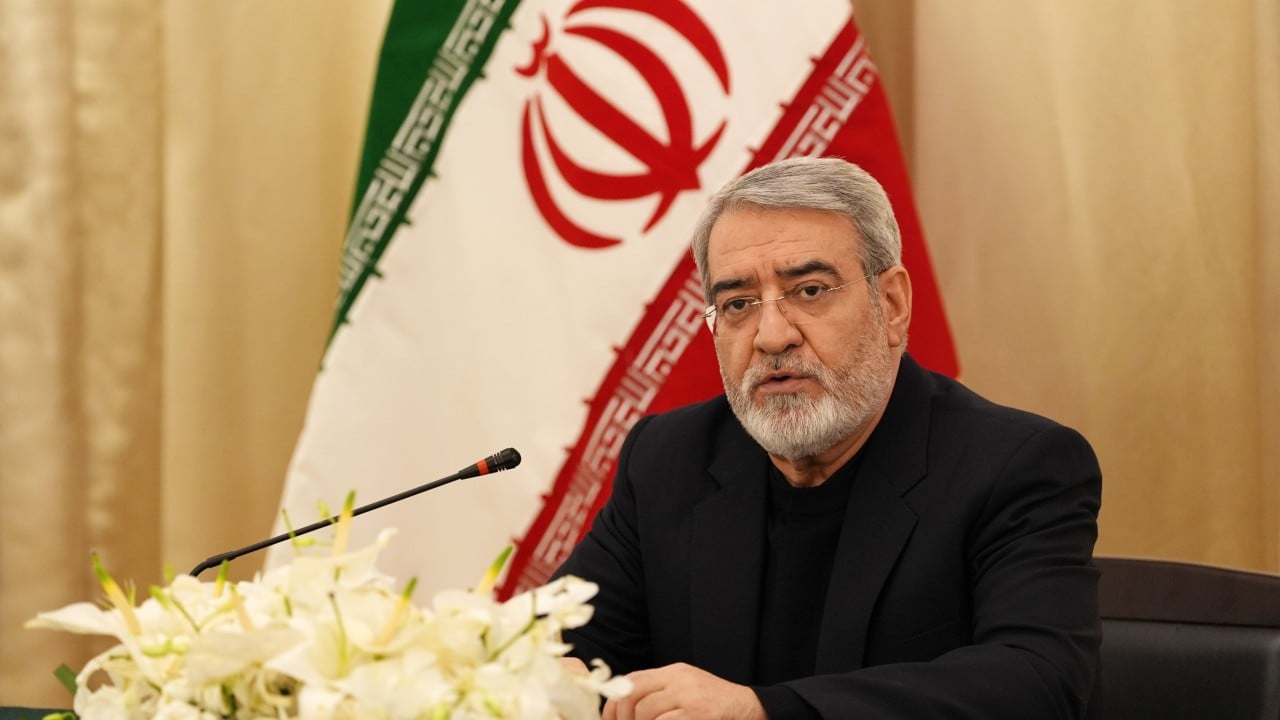
Mohammad Keshavarz-Zadeh sits in a room in Beijing, but his mind is likely tracing the ancient dust of the Silk Road. As Iran's ambassador to China, he isn't just a diplomat; he is a weaver. He is stitching together two ends of a continent while a third party, thousands of miles away in Washington, tries to pull the thread loose.
The narrative coming out of the West is often one of leverage. We are told that if the United States applies enough pressure, if the sanctions bite deep enough, and if the diplomatic cold shoulder is chilly enough, Beijing will eventually see Iran as a liability. The logic is simple: China needs the American market more than it needs Iranian oil. It’s a math problem.
But geopolitics is rarely about math. It is about memory.
A Marriage of Necessity and Memory
To understand why the American effort to drive a wedge between Tehran and Beijing is failing, you have to look past the spreadsheets. You have to look at the history of being sidelined. Both nations share a fundamental, visceral resentment of a world order they feel was built without their consent.
When Keshavarz-Zadeh speaks about the "unshakeable" nature of this bond, he isn't just using diplomatic fluff. He is referencing a 25-year Comprehensive Strategic Partnership. This isn't a casual date; it’s a marriage contract.
Imagine a shopkeeper in Tehran named Hassan. For decades, Hassan’s shelves were filled with European tools and German machinery. Then, the sanctions hit. The German parts stopped coming. The bank accounts froze. Hassan didn't just close up shop and go home to wait for Washington to change its mind. He turned East. Today, his shop is full of Chinese components. They might not have the same prestige as the Bavarian ones, but they arrive on time, and the payment clears.
For Hassan, and for the millions like him, the "pivot to the East" isn't a political theory. It is survival. Once those supply chains are baked in, they are incredibly difficult to unseat. The U.S. thinks it is threatening a choice. Iran and China feel they are securing an alternative.
The Oil Paradox
The primary weapon in the U.S. arsenal is the dollar. By controlling the rails on which global finance runs, Washington can effectively "disappear" a country from the international market. Or so the theory goes.
China, however, has become a master of the workaround. They are the world’s largest oil importer. Iran sits on some of the world’s largest reserves. It is a puzzle where the pieces were literally made for each other. While the U.S. monitors official tankers and tracks satellite pings, a "shadow fleet" of vessels moves Iranian crude into Chinese ports under various flags and names.
The ambassador knows what the West often ignores: China’s appetite for energy is existential. They cannot fuel their massive industrial engine on American promises of "stability." They fuel it with Iranian carbon. This trade doesn't just happen because it's cheap; it happens because it is outside the reach of the SWIFT banking system. It is a private conversation held in a crowded room, conducted in whispers that the U.S. cannot overhear.
The Tech Shield
Then there is the matter of the "Great Firewall" and the silicon that powers it. As the U.S. moves to restrict China’s access to high-end chips and AI technology, Beijing sees Iran not just as an oil pump, but as a laboratory and a loyal customer.
If the West pulls away its technology, China moves in to build the 5G towers, the surveillance grids, and the digital infrastructure of the Middle East. This creates a "technological lock-in." Once a nation’s security apparatus and telecommunications are built on Chinese hardware, switching back to Western standards isn't just expensive—it's a gut-renovating nightmare.
Keshavarz-Zadeh watches this shift with the quiet confidence of a man who knows he is holding a winning hand. He understands that for Beijing, Iran is the ultimate strategic bulkhead. If Iran falls or flips to the West, China loses its most reliable terrestrial gateway to Eurasia. They lose their "unsinkable aircraft carrier" in the Persian Gulf.
The Psychology of the Underdog
There is a specific kind of bond that forms between two people who are both being yelled at by the same person in a room.
The U.S. strategy often relies on the idea that China will eventually act in its "rational self-interest" and side with the bigger economy. This ignores the pride of the Middle Kingdom and the resilience of the Persian soul. When Washington lectures Beijing on human rights or trade or Taiwan, it reinforces the Chinese belief that the West is an intrusive, fading hegemon.
When that same hegemon tells China who it can and cannot buy oil from, it stops being a matter of trade and starts being a matter of sovereignty.
Consider the hypothetical choice facing a Chinese strategist. On one hand, you have the U.S.—a partner that is wealthy but increasingly volatile, prone to changing its entire foreign policy every four years, and currently obsessed with "containing" your growth. On the other hand, you have Iran—a partner that is desperate, loyal by necessity, and located in the most strategic spot on the map.
Who do you trust?
Trust isn't the right word. In this world, you bet on the person whose survival depends on yours.
The Inevitability of the East
The ambassador’s core argument is that the U.S. is playing a game of checkers while the rest of the world has moved on to a massive, multi-player game of Go. In checkers, you try to jump over your opponent and remove their pieces from the board. In Go, you simply surround them. You occupy the empty spaces until your opponent realizes they have no room left to move.
The U.S. can sanction a company. It can freeze a bank account. It can cancel a visa. But it cannot sanction the geography that links Tehran to Beijing. It cannot freeze the 2,000 years of history that defined the Silk Road long before a single brick was laid in Washington D.C.
We are witnessing the slow, grinding birth of a parallel world. It is a world with its own banks, its own internet, its own energy markets, and its own definition of "stability."
The ambassador isn't worried about the U.S. turning Beijing against Tehran because he knows that Beijing isn't looking for a master; it’s looking for a perimeter. And Iran is the cornerstone of that wall.
The threads are already pulled tight. The rug is nearly finished. No matter how hard the West tugs at the loose ends, the pattern is already set in the silk. The center of gravity has shifted, and the West is still staring at a map that no longer reflects the terrain.
Deep in the heart of the Forbidden City, the lights stay on late into the night. They aren't looking for a way out of their deal with Iran. They are looking for a way to make the rest of the world irrelevant.