The heat in Kinshasa does not merely sit on you; it breathes. It is a thick, humid weight that smells of charcoal smoke, river water, and the electric anticipation of millions. On the morning the white plane touched down, a woman named Marie-Claire stood near the edge of a dirt road in the Ndolo district. She had been there since three in the morning. Her feet ached. Her throat was parched. But in her hands, she clutched a small, laminated photo of a man she had never met, but who represented the only force she believed could speak for her silence.
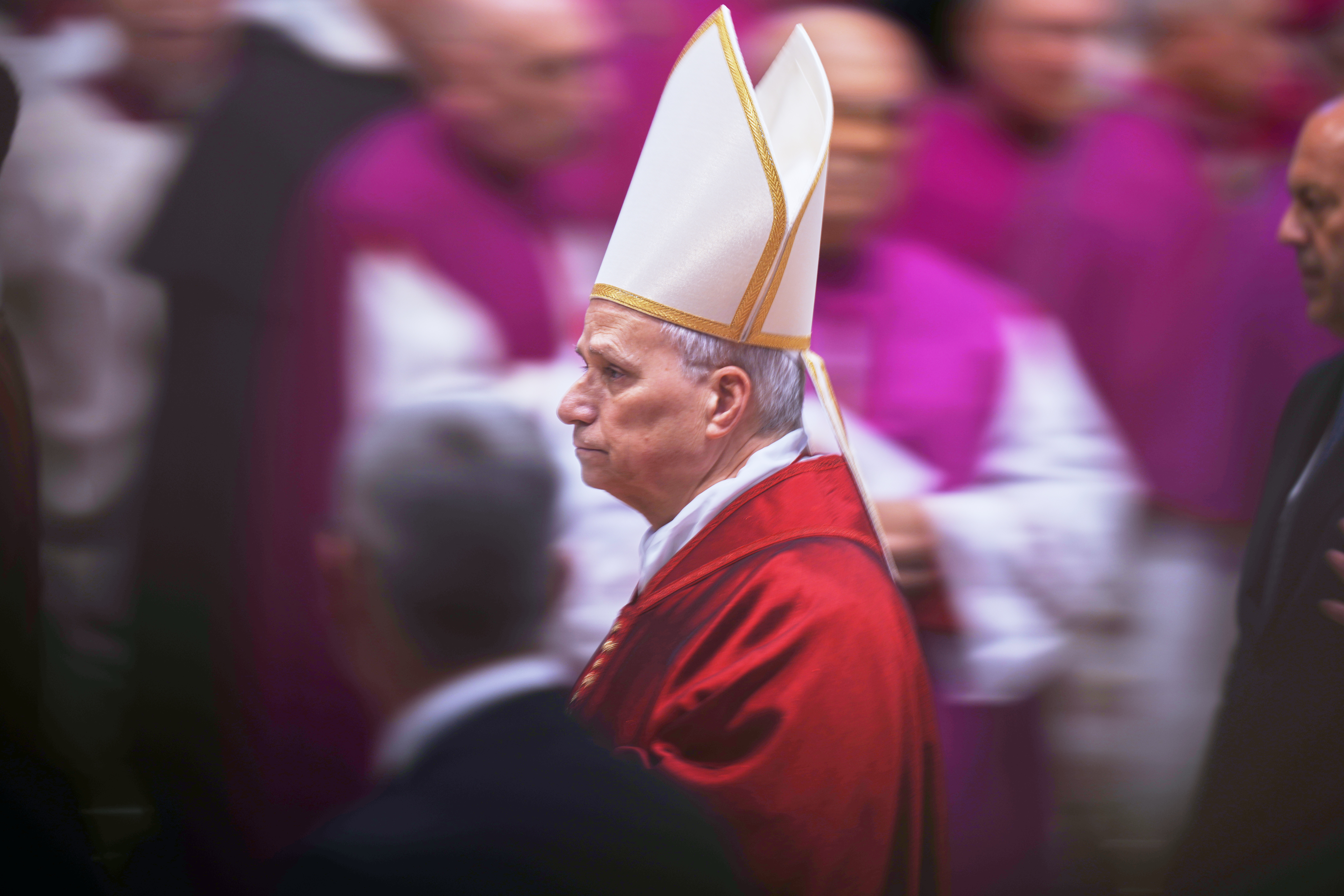
When we talk about a papal visit to Africa, we often get lost in the logistics. We count the countries. We measure the flight hours. We look at the "glance" of the itinerary and see a schedule of speeches and diplomatic handshakes. This is a mistake. To see this journey through the eyes of the Vatican press pool is to miss the heartbeat. To understand why Pope Leo XIV boarded that plane, you have to look at the dust on Marie-Claire’s shoes.
The Weight of the Congo
The Democratic Republic of Congo is a land of staggering paradoxes. It is arguably the richest patch of earth on the planet in terms of mineral wealth—the cobalt in your phone, the copper in your car—and yet its people remain among the most economically besieged. Leo XIV did not arrive as a tourist. He arrived as a witness to a "forgotten genocide," a term he used to describe the relentless exploitation and conflict in the country’s eastern regions.
Consider the optics of the Mass at Ndolo Airport. Over a million people gathered. One million. It is a number so large it becomes abstract until you see the swaying of the crowd, a literal sea of humanity stretching toward the horizon. In that moment, the Pope wasn't just a religious leader; he was a shield. His presence turned the world’s eyes toward a conflict that the 24-hour news cycle usually ignores. When he spoke against "economic colonialism," he wasn't just reading a script. He was calling out the very systems that keep people like Marie-Claire standing in the dust while the wealth beneath her feet is shipped to glass towers in London and San Francisco.
The stakes are invisible but absolute. If the Church can bridge the gap between tribal identity and national unity, it does what the government has failed to do for decades.
South Sudan and the Walk of Three
The journey didn't end in the humid sprawl of Kinshasa. The flight path turned toward Juba, South Sudan. Here, the narrative shifted from economic exploitation to the raw, bleeding edge of civil war. But the story in Juba wasn't just about Leo XIV. It was about a trio of leaders—the Pope, the Archbishop of Canterbury, and the Moderator of the Church of Scotland.
This was an "Ecumenical Pilgrimage of Peace."
Imagine three elderly men, representing different branches of a fractured faith, walking side by side into a city scarred by years of ethnic violence. It is a metaphor made flesh. South Sudan is a young nation, born in 2011 with the hopes of a continent, only to be swallowed by a power struggle between its own liberators.
I remember talking to a young man named Gatluak in a displacement camp outside Juba. He didn't care about the theology of the Filioque or the nuances of Anglican-Catholic relations. He cared that these men had come together. "If they can walk together," he told me, "perhaps our generals can sit together."
The power of this visit was not in the documents signed. It was in the silence. When Leo XIV stood before the leaders of South Sudan, he didn't offer platitudes. He reminded them of a moment years prior when he had knelt and kissed their feet, begging for peace. That act of radical humility is the ghost that haunted the halls of the presidential palace during this trip. It is a heavy thing to have a Pope kiss your shoes and then have to look him in the eye while your soldiers continue to burn villages.
The Geography of Hope
Moving from the Congo to South Sudan is more than a change in climate. It is a transition from the macro-problem of global greed to the micro-tragedy of local betrayal.
In the Congo, the Pope was a lion, roaring at the world to stop "choking Africa."
In South Sudan, he was a shepherd, whispering to the weary to stop killing their brothers.
Why does this matter to someone who isn't Catholic? Why should the secular world care about a 2,000-year-old institution moving its headquarters, emotionally if not physically, to the Global South?
The answer lies in the shift of gravity. The future of the Christian faith—and by extension, a massive portion of the world’s social and educational infrastructure—is no longer in the cathedrals of Europe. It is in the tin-roofed churches of Lagos, Nairobi, and Kinshasa. When the Pope visits Africa, he isn't visiting the periphery. He is visiting the center.
The Invisible Stakes
There is a risk in these trips. The risk is that the "human-centric narrative" becomes nothing more than a photo op. We see the colorful vestments, we hear the drumming, and we feel a fleeting sense of warmth before switching the channel.
The real work happens when the plane leaves.
In the wake of the visit, the invisible stakes begin to materialize. In the Congo, local parishes are often the only organizations providing healthcare and schooling where the state has retreated. The Pope’s visit provides these local priests and nuns with a "moral capital" that acts as a physical barrier against militias. It is harder to disappear a community leader when the head of their global organization just put them in the international spotlight.
In South Sudan, the stakes are measured in the cessation of gunfire. The peace deal is fragile, held together by string and prayer. The presence of the three religious leaders was a high-stakes gamble. If violence erupted while they were there, the failure would be catastrophic. Because it didn't, a window of political space opened—a few inches of breathing room for negotiators to move.
Beyond the Altar
Statistics tell us that Africa will be home to one-fourth of the world's population by 2050. It is a continent of the young. While the West grapples with aging populations and secularization, the African continent is exploding with a vibrant, demanding, and often frustrated youth.
Leo XIV’s trip was an acknowledgement of this reality. He didn't go to Africa to teach; he went to listen to the "cry of the earth and the cry of the poor." This wasn't a dry glance at a map. It was a confrontation with the future.
The plane eventually took off from Juba, leaving behind the red dust and the lingering scent of incense. The journalists filed their reports, listing the cities and the speech titles. But back in the Ndolo district, Marie-Claire still has that laminated photo. For her, the world didn't just glance at her country. For a few days, the world was her country.
The importance of the trip isn't found in the Vatican's archives. It’s found in the way a mother in Kinshasa stands a little taller today, believing that her life, and the life of her children, is worth the attention of the heavens and the earth alike.
The dust remains. But the air feels different.