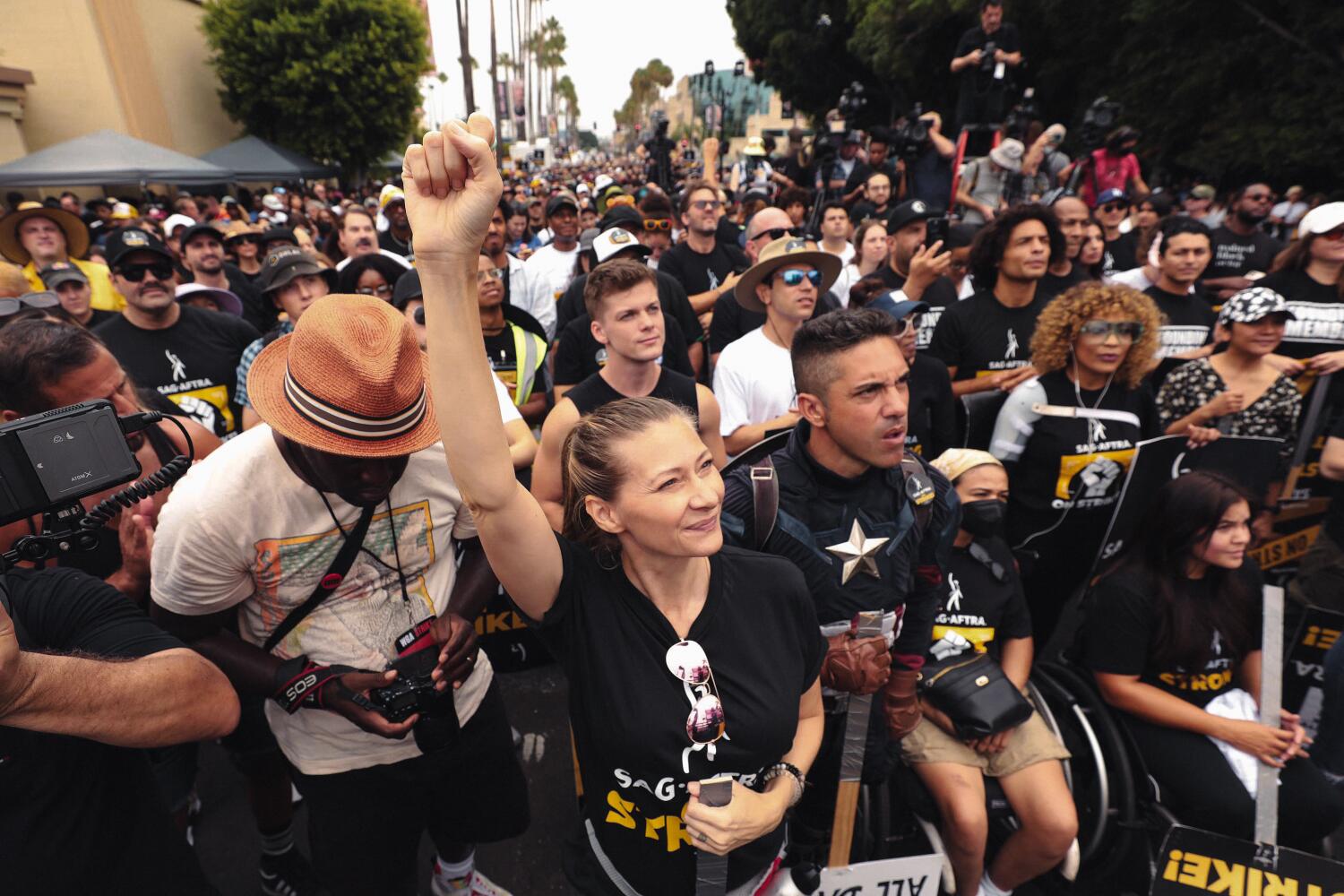
The entertainment industry is currently navigating a structural transition from human-centric production to a hybrid model where generative AI functions as a primary cost-mitigation tool. Hollywood’s upcoming contract negotiations will not merely address wage increases; they will define the legal boundaries of digital identity and the ownership of latent creative value. The central conflict lies in the decoupling of "likeness" and "performance" from the physical presence of the performer, creating a fundamental threat to the traditional labor-for-equity exchange.
The Tri-Pillar Risk Framework
To understand the friction in these negotiations, we must categorize the impact of AI into three distinct operational risks.
- Identity Dilution and Unauthorized Training:
Studios view existing archives—decades of footage, voice recordings, and scripts—as high-value datasets for training proprietary Large Language Models (LLMs) and diffusion models. Labor unions view this as the unauthorized harvesting of human intellect to build a replacement for that same intellect. - The Marginal Cost of Iteration:
Traditionally, reshoots or script revisions required significant capital expenditure (travel, craft services, hourly wages). AI reduces the marginal cost of these iterations toward zero. This creates an incentive for "prompt-based" directing, where a human actor’s performance is modified post-hoc without their involvement or additional compensation. - The Compression of Specialized Roles:
Entry-level and mid-tier roles—background actors, junior writers, and storyboard artists—are the most vulnerable. These roles serve as the industry’s training ground. If AI automates these functions, the talent pipeline collapses, creating a long-term shortage of "human" masters who can oversee the AI systems.
The Valuation of Digital Twins and Biometric Rights
A critical bottleneck in current negotiations is the definition of a "Digital Twin." In a clinical sense, this is a photorealistic, 3D-rigged asset generated from a performer's biometric data. The debate centers on two specific vectors:
Passive vs. Active Digital Assets
An "Active Asset" is one used to perform new actions or speak new lines not originally recorded by the actor. A "Passive Asset" is used for minor touch-ups or background placement. Unions are pushing for a "Double-Opt-In" mechanism. The first opt-in grants permission to scan the actor; the second, more expensive opt-in grants the right to use that scan for specific, pre-defined scenes.
The Residual Decay Problem
The traditional residual model is predicated on the idea that an actor’s performance is a fixed asset that earns money over time. When a studio uses a Digital Twin, the "performance" becomes infinitely malleable. This necessitates a shift from usage-based residuals to licensing-based fees. If a studio saves $500,000 on travel and insurance by using a digital double, the labor strategy suggests the actor should capture a "Substitution Premium" representing a percentage of those saved costs.
Algorithmic Screenwriting and the Minimum Room Requirement
In the writers' room, the threat is not the complete replacement of the writer, but the reduction of the "Human-to-Output" ratio. We are seeing a move toward the "Human-in-the-loop" (HITL) model, where a studio provides an AI-generated beat sheet and hires a writer only for the final polish.
This introduces a Quality-Cost Paradox:
- AI Efficiency: Reduces the time required for a first draft by 60-80%.
- Creative Entropy: Repeated AI-on-AI training leads to derivative content, lowering the long-term value of the IP.
To counter this, negotiators are focusing on "Minimum Staffing Requirements." By mandating a specific number of human writers regardless of AI assistance, unions are attempting to decouple compensation from "hours worked" and re-attach it to "IP creation value."
The Metadata War: Ownership of the Prompt
A significant legal gray area exists regarding who owns the "prompt" and the subsequent "output." If a director uses an AI tool to generate a character design based on a specific actor’s likeness, the resulting asset is a hybrid.
Current intellectual property law in several jurisdictions, including the US, maintains that AI-generated content cannot be copyrighted without significant human intervention. This creates a strategic vulnerability for studios. If they rely too heavily on AI to bypass labor costs, they risk losing the ability to protect their content from piracy or unauthorized commercial use. Labor unions can use this as leverage: "Acknowledge our human contribution, or lose your copyright protections."
Structural Resistance and the Insurance Bottleneck
While the technical capability to replace human labor exists, the logistical implementation faces an overlooked hurdle: The Insurance Industry.
Completion bonds and production insurance are calculated based on predictable risks. AI models, particularly those that are "black box" in nature, introduce "Hallucination Risk." If an AI-generated visual effects sequence causes a production delay or creates a legal liability (e.g., accidental inclusion of a copyrighted trademark in the background), the insurance premiums could skyrocket.
Until there is a standard for "Auditable AI" in film production, human-led workflows remain the safer bet for large-scale investments. Labor leaders who understand this can negotiate from a position of "Risk Mitigation," framing human labor not as an expense, but as a form of "Production Insurance."
Strategic Trajectory: The Shift to Hybrid Compensation
The resolution of these negotiations will likely result in a new "Hybrid Compensation Tier." We can project the following structural changes:
- The Biometric Licensing Fee: A new line item in every contract that specifically covers the rights to train a model on a performer's data for the duration of a single production.
- Prompt Transparency Clauses: A requirement for studios to disclose when AI-generated materials are provided to writers or actors as a baseline for their work.
- The "Human-Audit" Credit: A certification in the credits of a film indicating the percentage of human-led creative work, similar to a "Fair Trade" label, aimed at a consumer base that may develop an "AI-Free" preference.
The objective for talent is to ensure that the AI is treated as a highly sophisticated paintbrush, rather than the artist. This requires a transition from defending "time spent working" to defending "the right to the data that makes the work possible."
The final strategic play for labor organizations is the creation of a "Data Trust." By pooling their biometric and creative data into a union-controlled repository, they can dictate the terms on which studios "rent" the human essence required to make AI-generated content palatable to a global audience. This shifts the power dynamic from reactive striking to proactive licensing, turning the very technology meant to displace them into their primary source of recurring revenue.