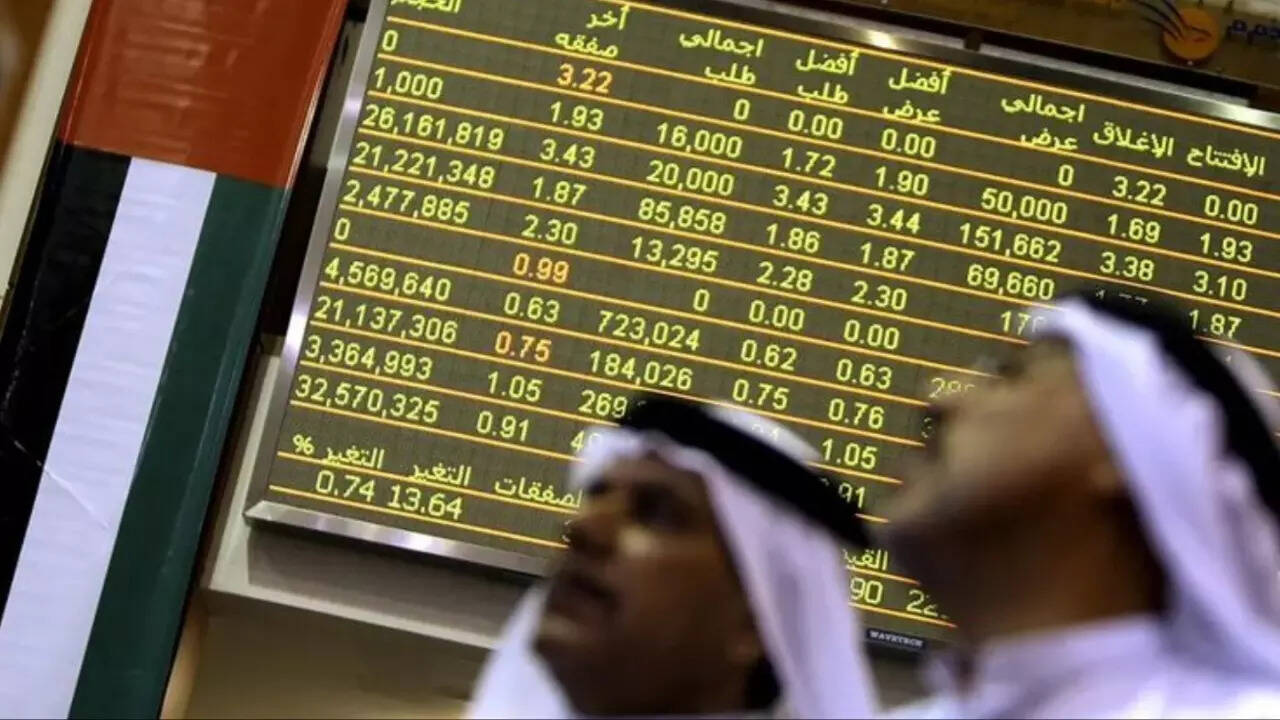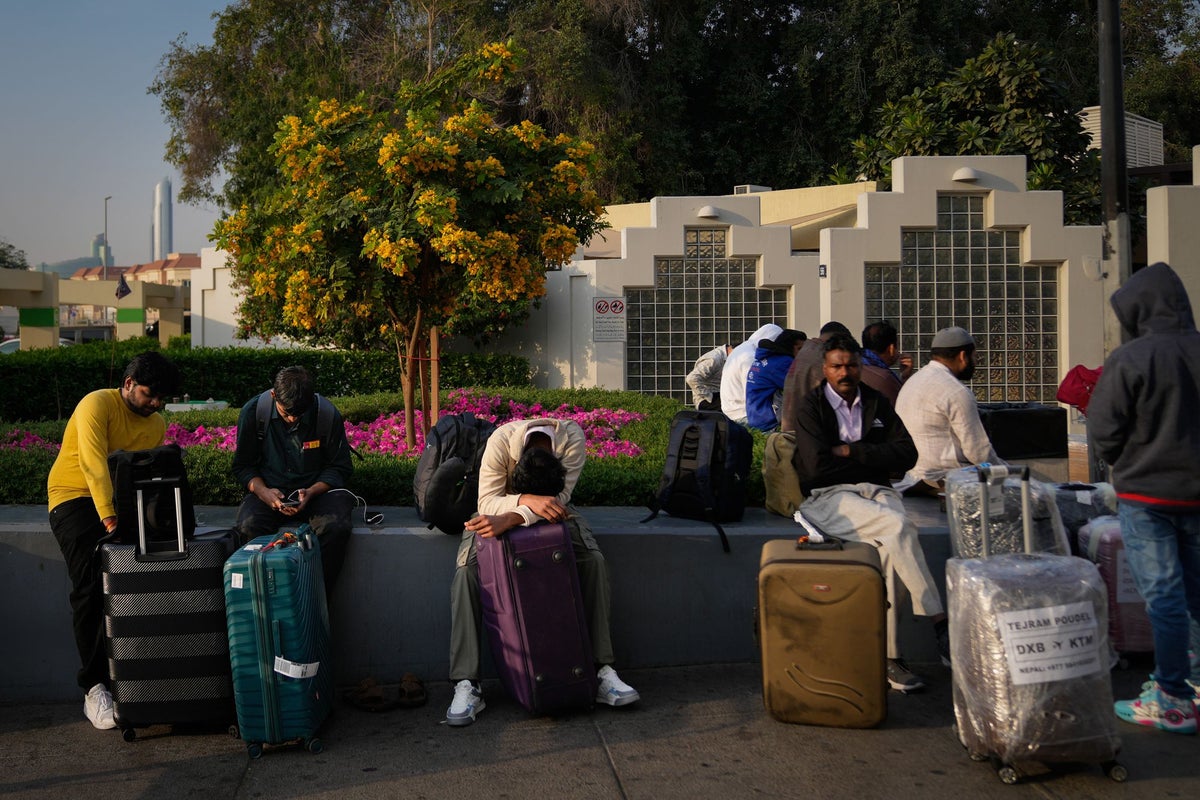
Dubai has long marketed itself as a gilded bubble where the laws of regional gravity do not apply. For decades, the emirate’s survival depended on a silent pact: it would provide a playground for global capital, and in exchange, the simmering fires of the Middle East would stop at its borders. That pact is dead. When Iranian-backed weaponry breached the perimeter of the United Arab Emirates, it didn't just rattle the windows of skyscrapers; it dismantled the primary product the UAE sells to the world: perceived invulnerability.
The recent strikes represent more than a localized military skirmish. They are a fundamental shift in the risk profile of a city-state that holds $700 billion in assets under management and serves as the logistics hub for 2.5 billion people. Investors who once viewed Dubai as a permanent "safe haven" are now forced to calculate the cost of a geography they spent years pretending to ignore. If the sky is no longer closed, the business model of the desert miracle begins to leak.
The Fragility of the Gilded Perimeter
Dubai’s rise was predicated on being the "Switzerland of the Middle East." While neighboring nations grappled with coups, civil wars, and economic sanctions, the UAE maintained a stance of aggressive neutrality combined with massive defense spending. But neutrality only works if your neighbors respect it, or if your shields are impenetrable.
The reality of modern asymmetrical warfare is that no shield is absolute. The projectiles reaching UAE soil aren't just threats to human life; they are precision-guided strikes against a brand. When a drone or a cruise missile targets an oil facility or a transport hub in a country that brands itself on "seamlessness," the economic ripple effects are immediate.
- Insurance Premiums: Shipping and aviation insurance rates in the Gulf have historically been sensitive to regional tension. A direct strike on UAE territory moves these assets from a "low-risk" to a "war-risk" category.
- Capital Flight: Dubai thrives on being the bank of the region. If the "safe" vault is under fire, the money moves to Singapore, London, or New York.
- The Expat Exodus: Roughly 90% of Dubai’s population is foreign. They are there for the tax-free salaries and the safety. If the safety vanishes, the high-income workforce evaluates their exit strategies.
The UAE’s air defense systems, including the US-made Patriot and the THAAD (Terminal High Altitude Area Defense), are among the most sophisticated on earth. Yet, the physics of a saturation attack—where dozens of cheap drones are used to overwhelm expensive interceptors—means that some will always get through. For a city built on the aesthetics of perfection, "mostly safe" is a failing grade.
The Geopolitical Chessboard and the Iranian Factor
The motivation behind these strikes is rarely about the UAE itself and almost always about the broader leverage Iran seeks against the West and its regional rivals. By targeting Dubai or Abu Dhabi, Tehran sends a message that the cost of Western-backed sanctions will be felt by every Western ally in the vicinity.
It is a strategy of calculated pain. Iran knows that it cannot win a conventional war against the UAE and its allies. It doesn't need to. It only needs to make the UAE’s "oasis" status look like a mirage. When the imagery of fire over the Burj Khalifa or the Palm Jumeirah hits global news cycles, the psychological victory is won.
This puts the UAE in a brutal bind. If they retaliate with force, they escalate a conflict that could permanently damage their tourism and real estate sectors. If they do nothing, they appear weak and invite further aggression. The current path—a mix of quiet diplomacy with Tehran and intensified lobbying for US military guarantees—is a tightrope walk over an active volcano.
The Real Estate Bubble Meets Hard Reality
Dubai’s real estate market is the engine of its domestic economy. It is a market fueled by the narrative of perpetual growth and safety. Unlike New York or London, where property values are grounded in centuries of institutional stability, Dubai’s property values are tied to its status as a sanctuary.
We are seeing a shift in how institutional investors view "The World" or "Dubai Marina." In the past, the risk was purely economic—oversupply and fluctuating oil prices. Today, the risk is kinetic. Developers are now being asked about "hardened" infrastructure and "business continuity" in the face of regional volatility. These are not questions anyone wanted to ask in a city that sells luxury and leisure.
The irony is that the more the UAE tries to position itself as a global mediator, the more it becomes a target for those who want to disrupt the status quo. You cannot be the world's trade hub and a neutral bystander simultaneously. Connectivity is a vulnerability.
The Logistics Nightmare
DP World and Emirates Airline are the two pillars of the Emirati global presence. They are also massive, static targets. The Jebel Ali Port is one of the busiest in the world. A single successful strike there doesn't just stop traffic in Dubai; it breaks global supply chains.
The UAE has spent billions diversifying away from oil, focusing on "soft" industries like tech, finance, and tourism. But these industries are far more sensitive to the perception of instability than oil. You can pump oil in a war zone; it’s much harder to host a global tech conference or a luxury shopping festival when air raid sirens are a possibility.
The Failure of Regional Security Alliances
For years, the Gulf Cooperation Council (GCC) was seen as a unified front. That unity has been tested and often found wanting. The UAE has increasingly struck out on its own, pursuing a foreign policy that is often at odds with Saudi Arabia or Qatar. This fragmentation makes the region easier to pick apart.
The US commitment to the region is also under scrutiny. While Washington talks about "ironclad" support, the actual appetite for another Middle Eastern conflict is at an all-time low. The UAE is realizing that they are, in many ways, on their own. This realization led to the Abraham Accords and the normalization of relations with Israel—a move intended to create a new security architecture but one that also painted a larger bullseye on the UAE for Iranian proxies.
The New Cost of Doing Business
Moving forward, the "Dubai Premium" will include a "Risk Tax."
Companies looking to set up regional headquarters will now demand higher hazard pay for executives and more robust insurance coverage for assets. The easy growth of the early 2000s is over. The new era is defined by resilience, not just radiance.
The UAE leadership is aware of this. They are doubling down on "Smart City" technologies that include massive surveillance and advanced early-warning systems. They are trying to out-engineer the threat. But technology can only do so much against a neighbor who views your prosperity as a weapon used against them.
The era of Dubai as a consequence-free zone has ended. The city must now learn to live in the world as it actually exists, rather than the one it constructed out of glass and ambition. For the global elite who treat the emirate as a tax-free playground, the bill has finally arrived, and it isn't denominated in Dirhams. It is denominated in security.
The question is no longer whether the bubble will burst, but how much of the foundation will remain when the smoke clears. If Dubai cannot reclaim its status as an untouchable sanctuary, it will be forced to compete on the same level as every other regional capital, stripped of its most valuable asset: the myth of the safe oasis.
Watch the skies. The next decade of Gulf history won't be written in boardrooms, but in the effectiveness of the radar sweeps over the Persian Gulf. In a world where a $500 drone can threaten a $100 billion city, the old rules of power are irrelevant. The UAE must now decide if it wants to be a fortress or a mall, because it can no longer afford to be both.