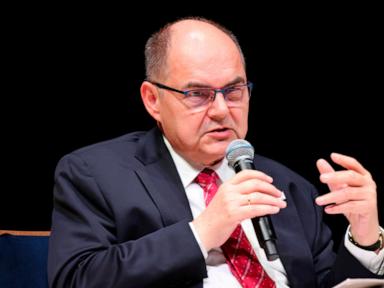
Christian Schmidt is preparing to vacate the Office of the High Representative (OHR) in Bosnia and Herzegovina. After years of escalating friction with Bosnian Serb leadership and a series of controversial legislative interventions, the German diplomat is signaling the end of a tenure that redefined the reach of international oversight in the Balkans. His departure marks a critical juncture for a nation that remains a complex puzzle of ethnic quotas and separatist rhetoric. The move is not merely a personnel change; it is a concession to the reality that the current model of international supervision is hitting a wall of diminishing returns.
The High Representative Problem
The OHR was never meant to be a permanent fixture of Bosnian governance. Established by the 1895 Dayton Peace Agreement, the office holds the "Bonn Powers," which allow the High Representative to sack elected officials and impose laws by decree. It is a massive amount of power for an unelected foreign official. Schmidt used these powers more aggressively than many of his predecessors, particularly regarding election law reforms and state property disputes. In other developments, take a look at: The Invisible Shadow in the Room.
While Schmidt’s supporters argue these moves were necessary to break political deadlocks, his critics see them as an overreach that undermines the very democracy the international community claims to support. The central tension lies in the fact that every time the OHR steps in to fix a problem, it reinforces the dependency of local politicians on external intervention. They don't have to compromise if they can just wait for a decree.
Milorad Dodik and the Rhetoric of Secession
No figure has defined Schmidt’s term more than Milorad Dodik, the President of Republika Srpska. Dodik has spent years testing the boundaries of the Dayton Agreement, frequently threatening to withdraw the Serb-run entity from national institutions like the army and the judiciary. For Dodik, Schmidt was an easy target. He refused to recognize Schmidt’s legitimacy, arguing that his appointment lacked the formal blessing of the UN Security Council—a stance supported by Russia and China. NPR has analyzed this critical issue in great detail.
The conflict became personal and legal. Schmidt oversaw changes to the criminal code that made it a crime to ignore the OHR’s decisions, a move that directly led to legal proceedings against Dodik. This created a high-stakes game of chicken. If Dodik is convicted, the potential for civil unrest or a formal move toward secession increases. If he is acquitted or the case languishes, the OHR’s authority is effectively dead. By stepping down, Schmidt may be attempting to lower the temperature, though the underlying fire remains unextinguished.
The Russian Factor and Global Shifts
Bosnia is no longer just a regional concern; it is a chessboard for larger geopolitical struggles. Moscow has found in the Bosnian Serbs a willing partner to distract and frustrate Western interests in Europe. By backing Dodik’s defiance, Russia ensures that the European Union and NATO remain bogged down in Balkan stabilization efforts.
The international community is also fragmented. While the United States has remained a firm supporter of the OHR, several European nations have shown fatigue. They want to see Bosnia move toward EU membership, a process that is fundamentally at odds with having a foreign "governor" who can override parliament. The push and pull between the need for stability and the desire for local sovereignty has left the country in a state of arrested development.
A Legacy of Contradictions
Schmidt’s tenure will be remembered for its technical complexity and its political volatility. He attempted to fix the "functionality" of the Federation, the entity shared by Bosniaks and Croats, by changing the rules of the game on election night in 2022. It was a bold move that successfully broke a multi-year stalemate in government formation, but it left a bitter taste for many who felt the timing was undemocratic.
The "why" behind his departure is a mixture of exhaustion and strategy. The OHR is becoming a lightning rod that attracts more lightning than it can ground. There is a growing sense in Berlin and Washington that a new face—or perhaps a new approach—is required to navigate the next phase of Bosnia’s integration into Western structures.
The Property Dispute Trap
One of the most significant unresolved issues Schmidt leaves behind is the status of state-owned property. This sounds like a dry bureaucratic matter, but it is the foundation of the current crisis. Republika Srpska claims ownership of public land, forests, and rivers within its borders. The central government in Sarajevo, backed by the Constitutional Court and the OHR, insists that the state is the primary owner.
Without a resolution, investment in the country is paralyzed. No company wants to build a factory or a hydroelectric plant on land that might be stripped away by a court ruling three years later. Schmidt attempted to form a working group to solve this, but without political buy-in from the Serb leadership, the process stalled. His successor will inherit a legal minefield where every step is a potential explosion.
What Happens When the Guard Changes
The transition will be fraught with risk. If the international community fails to appoint a successor with equal or greater resolve, Dodik and other nationalist leaders will likely interpret the vacancy as a green light for further autonomy. Conversely, a new High Representative who doubling down on Schmidt’s tactics may find themselves just as isolated.
The real test is whether the European Union can take the lead. For years, the OHR has been the "bad cop," while the EU delegation in Sarajevo played the "good cop," offering the carrot of membership. If the OHR fades into the background, the EU will have to prove that its carrots are enticing enough to force reform without the threat of the Bonn Powers' stick.
The Shrinking Middle Ground
In Bosnia, the political center has all but disappeared. Young people are leaving the country in record numbers, not because they hate their neighbors, but because they are tired of a system that rewards ethnic loyalty over professional competence. The brain drain is a more significant threat to the country's survival than any political speech or border dispute.
Schmidt’s departure is a signal that the era of international tutelage is entering its twilight. The international community is running out of patience, and the local leaders are running out of excuses. The vacuum left by a departing High Representative will be filled either by a newfound sense of local responsibility or by the same old forces of fragmentation that the office was designed to prevent.
Bosnia stands at a crossroads where the old maps no longer work and the new ones haven't been drawn. The departure of a single diplomat won't fix the structural rot, but it forces a conversation that everyone has been trying to avoid for thirty years. The question is no longer what the High Representative will do, but what the citizens of Bosnia will do when the safety net is finally pulled away.