When you picture Impressionism, you probably see a sun-drenched field, thick dollops of oil paint, and a blurry sense of light. You think of massive canvases hanging in heavy gold frames. Honestly, you're missing half the picture.
The radical painters who shattered the rules of 19th-century art didn't just spend their time standing behind wooden easels in the French countryside. They were obsessed with ink. They got their hands dirty with grease, acid, and heavy metal plates.
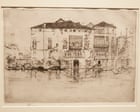
A massive exhibition at the Holburne Museum in Bath, running from 23 May to 13 September 2026, finally corrects the narrative. Titled Beyond Impressionism: Printmaking from Manet to Picasso, this show brings together works from heavyweights like Édouard Manet, Vincent van Gogh, Paul Cézanne, and Henri de Toulouse-Lautrec. It proves that the printshop, not just the open field, was where modern art truly figured out how to be modern.
The Secret Revolution Under the Printing Press
For centuries, printmaking was the unglamorous workhorse of the art industry. It wasn't viewed as high art. Instead, it was basically the 19th-century version of a Xerox machine. If a wealthy patron wanted a copy of a famous oil painting to hang in their dining room, a commercial printmaker would painstakingly etch a replica onto a metal plate and run off copies. It was mechanical reproduction, nothing more.
Around the 1850s, a group of rebellious French painters decided to hijack the medium. They looked back at masters like Rembrandt and Goya, who treated the etching needle like a pen, and realized printmaking could be incredibly expressive.
By 1862, Édouard Manet and his contemporaries formed the Société des Aquafortistes (the Society of Etchers). Their goal was simple: convince the stuffy art elite that a print was just as valuable, personal, and prestigious as an oil painting or a raw charcoal drawing. They stopped trying to make prints look clean and mechanical. They wanted you to see the scratches, the pooling ink, and the human hand behind the roller.
How Manet and Picasso Used Ink to Fight the Academy
Manet was one of the earliest champions of this ink revival, and the Bath exhibition puts his experiments front and center. You get to see his 1865 small-plate etching of Olympia. The original oil painting caused a massive scandal in Paris because it depicted a nude courtesan staring directly, coldly, at the viewer. By translating this composition into an etching, Manet stripped away the lush color and relied entirely on harsh, biting black lines. It made the subject feel even more raw, confrontational, and deeply modern.
The show also includes his stunning 1872 delicate portrait of artist Berthe Morisot. Look closely at how Manet handled the etching needle here. It isn't precise or careful. It's fluid, almost like he was sketching onto the plate in a frantic hurry.
Decades later, Pablo Picasso picked up right where these early rebels left off. The exhibition features his 1905 work Tête de Femme, demonstrating how the lessons of the early impressionist printmakers paved the direct path toward Cubism. Picasso didn't treat printmaking as a side hobby; he used the physical resistance of the metal plate to rethink how human faces could be broken down into lines and angles.
Paris Nightlife and the Commercial Hustle
We like to think of these historic artists as pure, detached geniuses who only cared about high philosophy. That's a myth. They had to pay rent, and printmaking was their ticket into the pockets of the rising middle class.
The exhibition highlights the commercial ecosystem that made modern art viable. Brilliant printers, publishers, and art dealers like Félix Bracquemond and Ambroise Vollard realized there was a massive market for affordable art. They pushed painters to try color lithography, a technique that used greasy crayons on limestone blocks to create vibrant, layered color prints.
Nobody weaponized this commercial application quite like Henri de Toulouse-Lautrec. He took printmaking straight to the streets of Paris. The Holburne show displays his legendary promotional images of Parisian nightlife, including his 1896 Irish and American Bar, Rue Royale and his iconic 1891 poster for the Moulin Rouge – La Goulue.
Toulouse-Lautrec didn't care if his art hung in a pristine gallery or got pasted onto a rainy brick wall to advertise a cabaret show. He used flat, bold areas of color and exaggerated silhouettes—tricks heavily lifted from Japanese woodblock printers—to capture the chaotic energy of the metropolis. It was disposable commercial art, yet it fundamentally changed how people viewed graphic design.
Intimate Domesticity and the Japanese Wave
While Toulouse-Lautrec was capturing the loud, blurry nightlife of the city, other artists used the exact same printmaking tools to look inward. The exhibition masterfully balances the urban chaos with scenes of quiet, domestic, and rural life.
You'll see Vincent van Gogh's rare 1883 print Gardener by an apple tree, a gritty, textured look at manual labor that feels deeply personal. Nearby, Paul Cézanne’s 1873 etching Entrée de ferme, rue Rémy, Auvers shows how the artist used dense, cross-hatched lines to figure out the geometric structures of buildings long before he became famous for his landscape paintings.
One of the most arresting pieces in the show is Berthe Morisot’s 1889 etching of herself drawing alongside her daughter. Female Impressionists faced massive societal barriers; they weren't allowed to frequent the late-night Parisian bars or wander the streets alone like Toulouse-Lautrec or Manet. Morisot turned that restriction into a superpower, using the intimate, portable nature of the etching plate to record the private, interior lives of women with a level of psychological honesty that her male peers couldn't touch.
This entire artistic leap wasn't happening in a European vacuum, either. The exhibition makes a point to include work by Utagawa Hiroshige, such as his 1833-34 masterpiece Spring Rain at Tsuchiyama. When Japan opened trade with the West in the mid-19th century, cheap woodblock prints flooded into Paris. Artists like Camille Pissarro and James McNeill Whistler bought them by the handful. They copied the radical cropping, the lack of traditional perspective, and the bold use of negative space. If you want to understand why Impressionist prints look so shockingly modern, you have to trace the lines directly back to these Japanese masters.
Stop Skipping the Works on Paper
When you visit an art museum, it's easy to breeze past the small frames holding black-and-white prints so you can get to the massive, glowing oil paintings. Don't make that mistake here.
The paintings we all know and love didn't happen in a vacuum. The rapid-fire line work of Impressionism and the bold shapes of Post-Impressionism were forged in the messy, ink-stained reality of the printshop. Beyond Impressionism at the Holburne Museum gives you a rare chance to see the exact moments these iconic artists dropped their guard, picked up an etching needle, and completely rewrote the rules of visual culture.
If you are planning to go, the exhibition is included in the general admission ticket price, and the museum is open daily from 10:00 to 17:00. Skip the crowded London blockbusters for once. Head down Great Pulteney Street in Bath, walk into the Holburne, and spend some time looking at the raw, ink-stained DNA of modern art.


