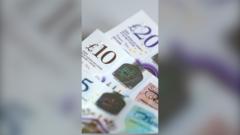
The woman at the register didn't even look at the bill. She slid the twenty-dollar note into the drawer with a mechanical flick of the wrist, her eyes already drifting to the next person in line. I stood there for a second, looking at the crinkled paper in my own hand—a ten-dollar bill featuring a man whose name most school children forget by the fifth grade. We carry these ghosts in our pockets every day. We trade them for coffee, for gas, for rent. Yet, we have reached a strange point in human history where the faces on our currency have become entirely invisible.
They are placeholders for value, nothing more.
For centuries, putting a leader's face on money was the ultimate act of branding. It was a way to tell the world who won the war, who founded the bank, and who held the power. But a silent shift is happening in central banks from Oslo to Canberra. The politicians are fading. The generals are being retired. In their place, a different kind of icon is emerging.
The Problem with Human Heroes
History is messy. That is the simple, uncomfortable truth facing every mint and treasury department on the planet. When you print a human being on a banknote, you aren't just printing a face; you are printing their entire, complicated, and often problematic legacy.
Consider the modern dilemma. A figure hailed as a liberator in 1920 might be viewed as a tyrant by 2026. As our cultural values evolve, our currency becomes a battlefield. We spend years debating which historical figure is "pure" enough to represent a nation, only to find a hidden diary or a forgotten speech that complicates everything.
Money is supposed to be a tool of unity. It is the one thing everyone in a society agrees has value. When the symbols on that money become divisive, the currency itself starts to feel heavy. It loses its neutrality.
The Neutrality of the Wild
I remember holding a New Zealand five-dollar note for the first time. It didn’t feature a monarch or a prime minister on its primary face. Instead, it showcased the hoiho—the yellow-eyed penguin.
There is a profound psychological relief in looking at an animal. A penguin has never started a war. A snow leopard has never signed a discriminatory law. A kingfisher doesn't have a political affiliation. By moving toward the natural world, nations are finding a way to represent their identity without the baggage of human ego.
This isn't just about avoiding controversy, though. It’s about a deeper, more visceral connection. We are a lonely species. As we huddle in our concrete cities, staring at digital screens, the sight of a creature that shares our land—but not our neuroses—stirs something ancient in us. It reminds us of the ground beneath the pavement.
The Hidden Psychology of Trust
You might think that removing "Great Men" from currency would make it feel less authoritative. The opposite is proving true. In regions where political stability is a ghost story, putting a local predator or a beloved bird on the bill creates a sense of permanence that no politician can match.
Think about the South African Rand. Since the mid-90s, the "Big Five" wildlife—the rhino, elephant, lion, leopard, and buffalo—have anchored the nation's economy. These animals don't belong to a single tribe or a specific political party. They belong to the land itself. When a citizen holds that money, they aren't looking at a reminder of who is currently in charge of the government. They are looking at a reminder of what will still be there long after the current government is gone.
This shift reflects a broader change in how we perceive power. We are moving away from the "Great Man" theory of history—the idea that the world is shaped solely by the wills of a few individuals—and toward an understanding of systems, environments, and collective survival.
The Practicality of a Wing
There is a technical side to this story that rarely makes it into the headlines. Animals are, quite frankly, better for security.
Engraving the fine, chaotic detail of a bird’s feathers or the complex texture of a fish’s scales is a nightmare for counterfeiters. Human faces have a certain predictability to them. But the organic, asymmetrical patterns of the natural world offer a level of complexity that digital scanners struggle to replicate perfectly.
When a banknote designer sits down to draft a new series, they aren't just looking for something pretty. They are looking for "high-frequency information." The iridescent wing of a butterfly provides more unique data points than the cheekbone of a 19th-century poet.
Why the Change is Relentless
We are living through the Sixth Mass Extinction. This isn't a secret; it’s the background noise of our lives. By placing endangered species on our money, governments are doing something more than just choosing a neutral image. They are creating a daily, tactile reminder of what we are losing.
It is a subtle form of grief.
Imagine paying for your groceries with a bill featuring a species that may not exist by the time your children are grown. The money becomes a tiny, paper monument. It forces a moment of reflection in the middle of a mundane transaction. You cannot "cancel" a whale. You cannot find "problematic tweets" from a sea turtle. You can only acknowledge its beauty and its fragility.
The Shift in the Pocket
Critics argue that we are losing our history. They say that by removing the founders and the thinkers, we are bleaching our national identities into something bland and "safe."
But look closer at the new notes. Look at the Australian bills where the birds seem to take flight when you tilt the plastic. Look at the Norwegian notes where the sea and the wind are the primary protagonists. These aren't bland. They are soaring.
We aren't forgetting our history; we are finally outgrowing the need to worship the individuals who wrote it. We are realizing that a nation is not defined by the one person who sat in the biggest chair, but by the ecosystem that sustains everyone.
Yesterday, I found an old coin in the back of my sofa. It featured a stern man with a high collar and a judgmental glare. I realized I didn't know who he was, what he stood for, or why he was deemed worthy of being stamped into metal. He was a stranger.
Then I looked at a new bill from a recent trip abroad. It had a simple, elegant fox on the back, its tail curling around the edge of the paper. I didn't need a history book to understand that fox. I didn't need to check its voting record. I just felt a small, sharp pang of recognition for a fellow traveler on this planet.
The kings are leaving the building. The wild is moving back in. And for the first time in a long time, the money in our pockets feels like it might actually be worth something more than the number printed in the corner.
We are finally trading the ghosts of our past for the living pulse of our present.