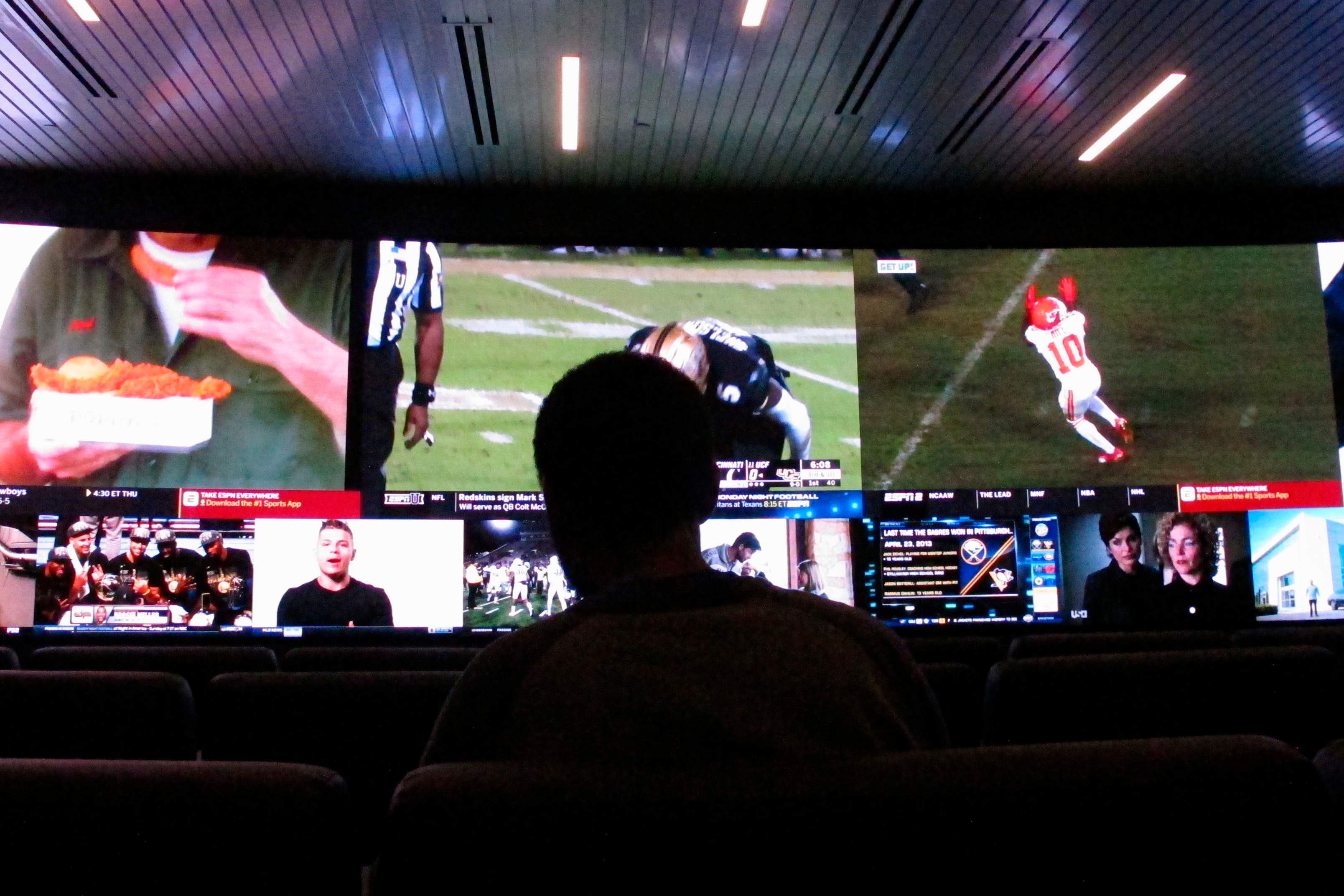
The convergence of high-frequency trading mechanics and mobile gaming loops has transformed sports betting from a localized vice into a pervasive digital infrastructure. While public discourse focuses on the moral implications of underage gambling, an analytical breakdown reveals a more systemic issue: the targeted exploitation of adolescent neurobiology through frictionless financial interfaces. Teenagers are not simply "choosing" to bet; they are being integrated into an ecosystem designed to bypass executive function.
The Architecture of Frictionless Exposure
Traditional barriers to entry for gambling—physical presence, cash transactions, and human vetting—have been replaced by a "frictionless stack." This stack relies on three specific technical layers that obfuscate the reality of financial loss.
- The Digital Proxy Layer: By using in-game currencies, "skins," or digital wallets, platforms create a psychological buffer between the user and their capital. In an adolescent brain, where the prefrontal cortex is still developing, the conversion of $50 USD into "5,000 Credits" disrupts the ability to calculate risk-to-reward ratios accurately.
- The Algorithmic Feedback Loop: Recommendation engines do not just suggest games; they optimize for "Time-on-Device" (ToD). For a teenager, this results in a constant stream of micro-incentives—free bets, boosted odds, and "near-miss" notifications—that trigger dopamine spikes comparable to those found in substance abuse.
- The Social Validation Engine: Betting has been repositioned as a social currency. Integration with platforms like Discord and TikTok allows wins to be broadcasted instantly, while losses are internalized in private. This creates a skewed data set for the observer, leading to a "survivorship bias" where the adolescent perceives gambling as a viable career path or social necessity.
The Cognitive Cost Function
The adolescent brain is uniquely susceptible to the "Variable Ratio Reinforcement Schedule." This is a behavioral pattern where rewards are delivered unpredictably. Because the adolescent brain has a higher density of dopaminergic receptors in the striatum compared to adults, the "high" of a win is magnified, while the "pain" of a loss is attenuated by the expectation of a future correction.
The cost function of this engagement is not merely financial. It is a cognitive tax that degrades three specific areas:
- Intertemporal Choice: The ability to value future rewards over immediate gratification. Excessive betting trains the brain to prioritize the "now," effectively shortening the individual’s economic horizon.
- Probability Literacy: Most betting interfaces use "American Odds" (+150, -200) or "Fractional Odds," which are intentionally less intuitive than decimal probabilities. This obfuscation prevents the user from seeing the "overround"—the profit margin the bookmaker builds into the odds.
- Loss Aversion Sensitivity: While adults typically feel the pain of a loss more than the joy of a win, digital betting platforms use "loss-disguised-as-win" mechanics (e.g., betting $10 and winning $2 back) to reset the user’s psychological baseline.
The Predatory Convergence of Gaming and Betting
The distinction between "gaming" (skill-based) and "gambling" (chance-based) has reached a point of total structural collapse. This is most evident in the rise of Loot Boxes and Social Casinos.
Loot Box Mechanics as a Gateway
Loot boxes utilize the same "random number generator" (RNG) logic as slot machines. When a teenager spends money for a randomized chance at a virtual item, they are practicing the fundamental mechanics of gambling without the legal designation. This lowers the "behavioral threshold" for transitioning to regulated sports betting apps the moment they reach—or spoof—the age of majority.
The Rise of the "Micro-Wager"
Technological scaling has made "micro-waging" viable for operators. Instead of needing a $20 minimum bet to cover transaction costs, lightning-fast payment rails allow for $0.50 bets on specific events within a game (e.g., "will the next pitch be a strike?"). This high-frequency cadence mirrors the loop of a mobile game, removing the contemplative pauses that previously allowed a bettor to reconsider their strategy.
Structural Failures in Regulatory Frameworks
Current age-verification protocols are reactive rather than preventative. The reliance on "Self-Certification" and "KYC" (Know Your Customer) checks often occurs only at the point of withdrawal, not the point of deposit. This creates a "Liquidity Trap" where an underage user can easily put money into a system but must resort to increasingly risky or fraudulent methods to extract it, further entrenching them in the ecosystem.
Furthermore, the "Whac-A-Mole" nature of offshore betting sites means that as soon as a domestic jurisdiction tightens its digital borders, an unregulated alternative—often accepting cryptocurrency—fills the void. These unregulated platforms lack even the most basic "Responsible Gaming" triggers, such as cooling-off periods or deposit limits.
Quantitative Red Flags for Intervention
To move beyond vague "warnings," we must look at the specific behavioral markers that indicate an adolescent has moved from casual engagement to a high-risk trajectory.
- Velocity of Deposits: A shift from monthly or weekly deposits to multiple daily transactions suggests the user is "chasing losses."
- Session Duration Skew: When the time spent on a betting app begins to mirror the duration of a full-time job, the psychological transition from "entertainment" to "compulsion" is likely complete.
- The Diversification of Risk: Moving from betting on known teams/sports to betting on obscure, 24/7 international leagues indicates a need for the "action" itself rather than an interest in the underlying sport.
Strategic Realignment of Digital Hygiene
The solution is not a return to prohibition, which has historically failed in the digital realm. Instead, the focus must shift toward "Friction Injection" and "Algorithmic Transparency."
The most effective intervention is the decoupling of the payment layer from the engagement layer. If banks and fintech apps implemented mandatory 48-hour "cooling-off" periods for all transfers to known gambling entities, the impulsive nature of adolescent betting would be physically constrained by the technology itself.
Additionally, we must advocate for "True Odds Transparency." Regulators should mandate that every bet displayed on a screen must also show the "Expected Value" ($EV$) in a standardized format.
$$EV = (Probability\ of\ Winning \times Amount\ Won) - (Probability\ of\ Losing \times Amount\ Lost)$$
By forcing the platform to display that a $10 bet has an $EV$ of -$0.80, the "magic" of the gamble is replaced by the reality of a mathematical tax.
The final strategic move involves a shift in digital literacy. We must move away from telling teenagers that gambling is "bad" and start showing them how the math is literally "rigged" against them. When the adolescent ego realizes they are the "product" being harvested by a superior algorithm, the social currency of the "big win" loses its luster. The objective is to transition the user from an exploited participant to a cynical observer of the system’s mechanics.