The viability of Saudi Arabia’s economic transformation depends on a fundamental equation: the rate of domestic structural reform must exceed the rate of regional geopolitical degradation. While the "Dubai Model"—a strategy of creating a safe-haven service and tourism hub within a volatile geography—is the aspirational benchmark for Riyadh, the scale of Saudi ambition introduces variables that Dubai never faced. The current conflict in the Middle East does not merely threaten tourism numbers; it recalibrates the weighted average cost of capital (WACC) for every Neom-scale project and alters the primary risk premium for Foreign Direct Investment (FDI).
The Strategic Decoupling Fallacy
The assumption that Saudi Arabia can insulate its massive infrastructure bets from regional kinetic warfare rests on a fallacy of strategic decoupling. Unlike Dubai, which functions as a nimble city-state, Saudi Arabia is a regional hegemon with a geographic footprint that makes neutrality impossible. The "Vision 2030" plan requires approximately $3 trillion in investment by the end of the decade. For this to succeed, the Kingdom requires an environment where "Geopolitical Risk" is a constant background noise rather than an active variable in a discounted cash flow (DCF) analysis.
The escalation of regional hostilities affects the Saudi balance sheet through three primary transmission mechanisms:
- The Insurance and Logistics Tax: Any perceived threat to Red Sea shipping lanes or airspace increases the cost of importing the massive quantities of specialized materials required for "The Line" and other giga-projects. When maritime insurance premiums spike, the literal cost of construction rises, inflating the already strained Public Investment Fund (PIF) outlays.
- The FDI Hesitation Loop: While the PIF can bridge initial funding gaps, the long-term sustainability of the Saudi model requires external capital. Institutional investors do not fear volatility; they fear "unquantifiable tail risk." A regional war transforms Saudi Arabia from a "high-growth emerging market" back into a "geopolitical flashpoint" in the eyes of Western and Asian pension funds.
- The Talent Retention Deficit: Building a "New Dubai" requires the mass migration of global white-collar talent. High-net-worth individuals and specialized engineers prioritize physical security. If the perception of safety in Riyadh or Jeddah erodes, the cost of attracting this human capital increases via "hardship pay" premiums, further eroding project margins.
The Fiscal Breakeven Constraint
The Saudi state remains tethered to an oil-dependent fiscal breakeven price, currently estimated between $80 and $85 per barrel. While conflict often drives oil prices higher—theoretically benefiting the treasury—this is a double-edged sword. Sustained high oil prices globally can accelerate the energy transition in the West and China, potentially shrinking the long-term window for Saudi Arabia to monetize its hydrocarbon reserves to fund its diversification.
The internal logic of Vision 2030 is to front-load capital expenditures while oil demand remains robust. If regional war forces the Kingdom to divert billions into increased defense spending or domestic subsidies to maintain social stability during a period of high inflation, the capital available for non-oil industrialization shrinks. This creates a Capital Allocation Trap: the state must choose between defending its borders/influence and building the futuristic cities intended to replace oil revenue.
The Neom Sensitivity Analysis
Neom is the centerpiece of the Saudi plan, but it is also the most vulnerable to regional instability due to its location. Situated near the Gulf of Aqaba, Neom’s proximity to Israel, Jordan, and Egypt makes it a geographic focal point for regional tensions.
The project's success is predicated on becoming a global logistics hub. Logic dictates that a logistics hub cannot exist at the edge of a conflict zone. We can quantify the risk to Neom through the Project Viability Threshold:
- Connectivity: If the Red Sea is deemed a "high-risk" zone by international shipping conglomerates for a period exceeding 24 months, the projected ROI for Neom’s port facilities drops by an estimated 30-40%.
- Tourism Elasticity: Luxury tourism is highly sensitive to security perceptions. Unlike religious tourism (Hajj and Umrah), which is inelastic and driven by faith, the "lifestyle" tourism Saudi Arabia seeks to capture is discretionary. A single kinetic event within 500 miles of a resort can suppress occupancy rates for an entire season.
Comparing the Dubai Benchmark
Dubai succeeded because it offered a "neutral platform" during two decades of regional upheaval. It positioned itself as the place where the region’s capital goes to hide. Saudi Arabia, by contrast, is attempting to be the region’s engine.
The Dubai model benefited from a specific historical window (2000–2020) where globalization was the undisputed trend. Saudi Arabia is attempting its transformation during a period of de-globalization and "friend-shoring." This means the Kingdom cannot simply build infrastructure and expect the world to come; it must actively negotiate its way into global supply chains while managing its role as a leader in the Islamic world and the Arab league.
The Structural Bottlenecks of Diversification
The competitor's narrative often focuses on the "will" of the Crown Prince. A more rigorous analysis looks at the Structural Bottlenecks:
- Absorptive Capacity: The Saudi economy has a finite limit on how much capital it can deploy effectively within a specific timeframe without triggering massive internal inflation.
- The Labor Mismatch: Despite efforts at "Saudization," the private sector remains heavily dependent on foreign labor. A regional war disrupts the supply chains of human capital, particularly from South Asia and Southeast Asia, who may see the region as increasingly unstable.
- Monetary Policy Convergence: The Saudi Riyal’s peg to the US Dollar limits the Kingdom’s ability to use independent monetary policy to combat the shocks of war-induced inflation. If the US Fed maintains high rates while the Saudi economy needs stimulus to counter a regional slowdown, the internal friction could lead to capital flight.
The Pivot to the East as a Hedge
To mitigate the risk of Western capital retreating during Middle Eastern conflicts, Riyadh has accelerated its "Look East" strategy. By deepening ties with China and the BRICS+ bloc, the Kingdom is attempting to create a diversified pool of political and economic stakeholders.
This move is a calculated hedge against the "Western Sanctions Risk" and the "Western PR Risk." Chinese state-owned enterprises (SOEs) have a different risk tolerance than European private equity firms. They are often willing to operate in higher-risk environments in exchange for long-term energy security and strategic partnerships. However, this shift creates its own set of complications, particularly regarding the Kingdom’s security relationship with the United States.
The Strategic Recommendation
The Saudi leadership must transition from a "Growth at All Costs" mindset to a "Resiliency-Adjusted Growth" model. To preserve the Vision 2030 objectives amidst regional warfare, the following tactical shifts are necessary:
- Prioritize Modular Development: Rather than attempting to complete all 170km of "The Line" or the entirety of the Red Sea Project simultaneously, the Kingdom should pivot to "Phase-Gating." Capital should be deployed only when specific regional stability benchmarks are met.
- Establish a Sovereign Risk Insurance Fund: To court skittish FDI, the PIF could underwrite a specialized insurance vehicle that guarantees a baseline ROI for foreign partners against specific geopolitical "force majeure" events.
- Accelerate Domestic Manufacturing Sovereignty: The current reliance on imported tech and materials for giga-projects is a strategic weakness. Diversification must move beyond "services and tourism" into "hard industrial independence" to shorten supply lines that are currently vulnerable to regional disruption.
- Redefine the Regional Hegemon Role: Saudi Arabia may need to shift from an assertive foreign policy to a "Stabilizer" role. The economic cost of regional leadership (wars, proxy conflicts) is now in direct competition with the economic cost of domestic survival.
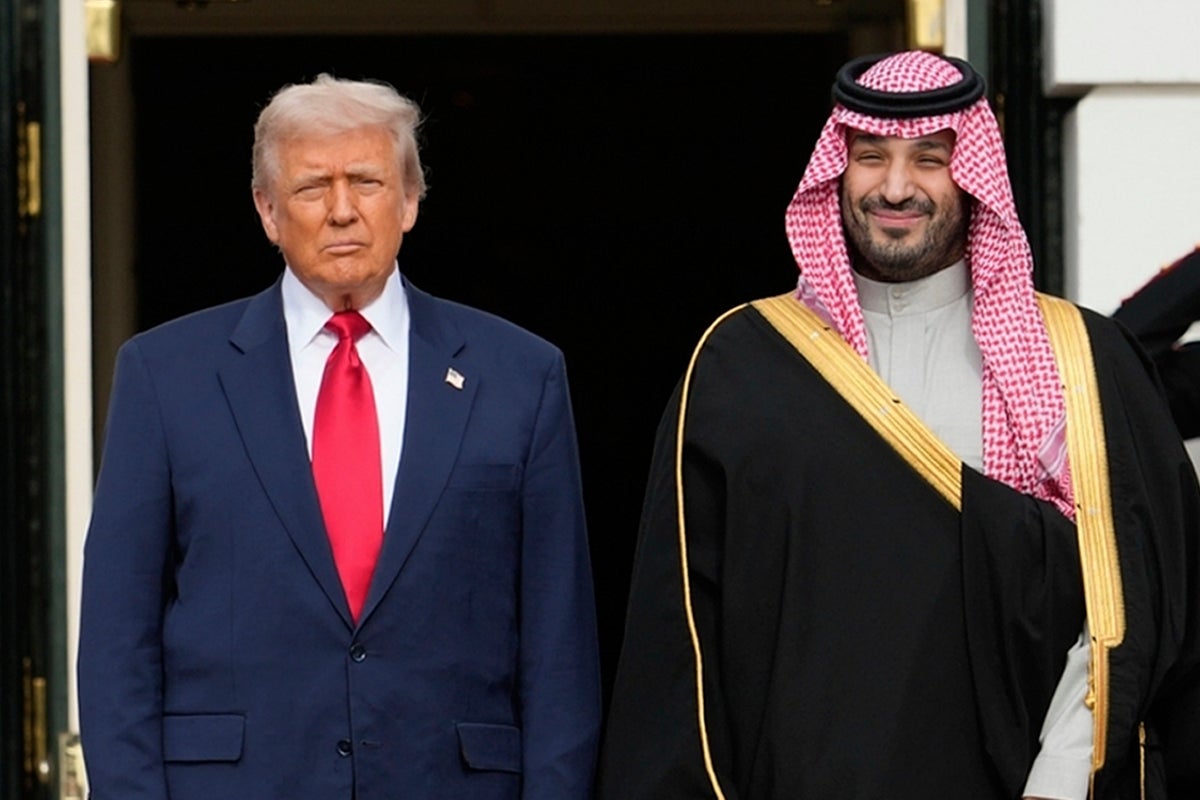
The "New Dubai" will not be built by sheer financial force if the surrounding region is in flames. The ultimate success of Mohammed Bin Salman’s plan hinges on whether Riyadh can become the mediator of Middle Eastern peace, not because of a change in ideology, but because of a hard-coded economic necessity. The Kingdom is no longer just an oil exporter; it is a massive, multi-decade "Long" position on regional stability. In any portfolio, when the risk profile changes, the strategy must change with it. The only way to save Vision 2030 is to make the cost of regional war higher for its neighbors than the value of the peace required to build it.