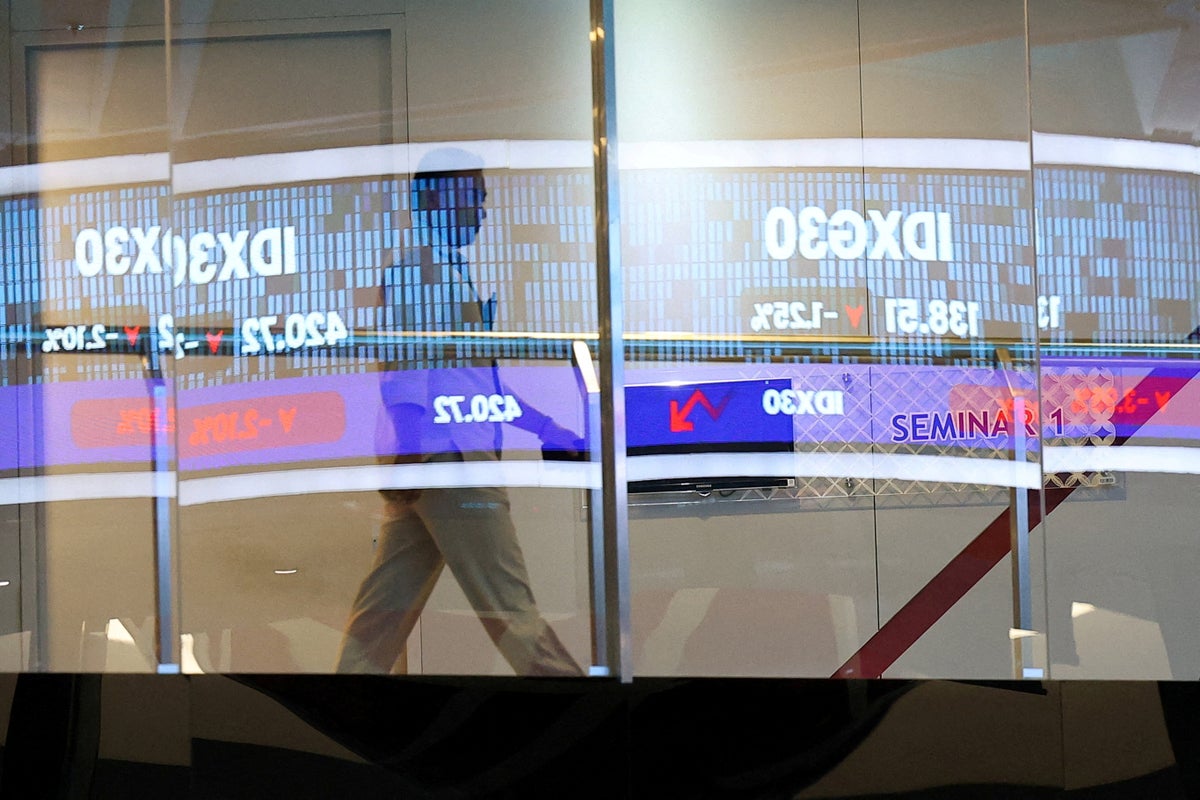
Energy markets are currently pricing a specific transition from high-friction geopolitical volatility to managed diplomatic de-escalation. The recent synchronized movement—falling Brent crude benchmarks alongside rising valuations in major Asian indices—is not a coincidence of sentiment; it is a recalibration of the Geopolitical Risk Premium (GRP). When the probability of a supply-side shock in the Strait of Hormuz decreases, the cost of holding physical and paper oil positions drops, freeing up liquidity for capital-intensive emerging markets in Asia that are historically sensitive to energy input costs.
The Mechanics of Risk Premia Compression
Oil prices are currently dictated by the delta between projected supply and the perceived threat of systemic disruption. In the context of US-Iran negotiations and ceasefire extensions, the market is undergoing a structural shift in how it weights "tail risks."
- The Insurance Component: A significant portion of current crude prices is not based on barrel-for-barrel demand but acts as an insurance policy against kinetic conflict. Diplomatic signals act as a deflationary force on this insurance component.
- The Elasticity of Iranian Supply: If talks resume, the market anticipates a gradual re-integration of Iranian barrels into the global supply chain. Even without a formal lifting of sanctions, a "diplomatic thaw" often results in reduced enforcement of existing restrictions, increasing effective global supply.
- Logistics and Transit Stability: The Strait of Hormuz remains the world’s most critical maritime chokepoint. Any rhetoric suggesting a ceasefire extension directly reduces the "war risk" premiums applied to freight rates and maritime insurance, lowering the landed cost of crude regardless of the nominal price on the ICE or NYMEX.
Why Asian Equities Outperform During Energy Deflation
Asia’s status as a net energy importer creates a direct inverse correlation between crude prices and corporate margins. The rally in Tokyo, Seoul, and Hong Kong is the result of three specific economic transmission mechanisms:
- Current Account Optimization: For nations like India and South Korea, a $5 drop in oil prices significantly improves the balance of trade. This strengthens local currencies against the USD, making their domestic equities more attractive to foreign institutional investors.
- Operating Margin Expansion: In manufacturing-heavy economies (Taiwan and China), energy is a primary input. When energy costs retreat, the "cost of goods sold" (COGS) falls faster than consumer prices, leading to immediate earnings-per-share (EPS) upgrades across industrial and transport sectors.
- Central Bank Maneuverability: High oil prices are a primary driver of imported inflation. As energy prices cool, central banks in the Asia-Pacific region gain the "monetary space" to pause rate hikes or pivot toward accommodation without risking a currency collapse.
The Fragility of the Ceasefire Logic
The market is currently operating under a base-case assumption of rational actors. However, this logic ignores the Security Dilemma inherent in Middle Eastern geopolitics. The primary risk to this bullish equity trend is a "Binary Shock Event"—a sudden breakdown in talks that forces a rapid re-pricing of the risk premium.
The current ceasefire extension is a temporary suppression of volatility, not a removal of the underlying structural friction. Investors must distinguish between Tactical De-escalation (a temporary pause for regrouping) and Structural Stabilization (a long-term diplomatic framework). The former leads to a "bear market rally" in equities, while only the latter can sustain a multi-quarter bull run.
The Cost Function of Energy-Dependent Growth
To quantify the impact of these geopolitical shifts, one must look at the Energy Intensity of GDP. This metric measures how many units of energy are required to produce one unit of economic output.
| Region | Energy Intensity (Higher = More Sensitive) | Reaction to Oil Price Drop |
|---|---|---|
| Emerging SE Asia | High | Aggressive Equity Inflows |
| Japan | Moderate | Currency Stabilization |
| China | High | Industrial Margin Recovery |
| Western Europe | Moderate | Consumer Confidence Boost |
This table demonstrates that the "Asia Rise" observed in the headlines is a rational response to the disproportionate benefit these regions receive when the cost of hydrocarbon energy falls. The "Asian Century" is built on cheap, reliable energy; therefore, any diplomatic breakthrough that secures that supply is an asymmetric positive for the region.
The Role of US-Iran Diplomacy as a Supply Lever
The resumption of talks introduces the "Shadow Supply" variable. Iran possesses one of the largest proven oil reserves globally, yet much of it remains sidelined or traded through opaque "dark fleet" channels.
- Production Capacity: Iran has the technical capacity to return roughly 1 million barrels per day (mb/d) to the market within six to nine months of a formal agreement.
- Floating Storage: Millions of barrels are currently held in tankers off the coast of Iran and China. A diplomatic breakthrough would allow this "instant supply" to hit the market, creating a sharp, albeit temporary, downward spike in prices.
- OPEC+ Dynamics: A return of Iranian crude complicates the existing production quota system. Saudi Arabia and Russia would be forced to decide whether to cut their own production to maintain price floors or engage in a market-share battle—a scenario that further depresses prices in the short term.
Strategic Allocation in a De-escalating Environment
Institutional players are shifting capital away from "Defensive Energy" (Oil majors, coal) and toward "Consumer Discretionary and Tech" in the Asian theater. The logic follows a clear causal chain:
- Diplomatic Progress signals lower geopolitical risk.
- Crude Oil Futures lose their risk premium and slide toward the cost of production.
- Inflation Expectations in Asia-Pacific economies are revised downward.
- Equity Risk Premiums for Asian stocks compress as the macro outlook clears.
The primary limitation of this strategy is its reliance on the US political cycle. Any shift in Washington’s appetite for diplomacy—especially as elections approach—could instantly reverse these gains. The market is not pricing in a permanent peace; it is pricing in a liquidity window created by a temporary absence of conflict.
Investors should monitor the "Spread" between Brent and WTI. A narrowing spread often indicates that global supply concerns (represented by Brent) are easing faster than domestic US concerns. If Brent falls toward WTI levels, it confirms that the "Hopes" mentioned in the headlines are being converted into "Hard Data" by physical traders.
The immediate tactical play is to overweight large-cap Asian exporters while hedging against a breakdown in negotiations through short-dated call options on Brent. The market has signaled its preference for diplomacy; however, the lack of a formal signed agreement means the "Floor" for oil prices remains sensitive to a single headline. The current rally is a bet on the persistence of rational diplomacy over ideological friction—a historically profitable but high-variance wager.