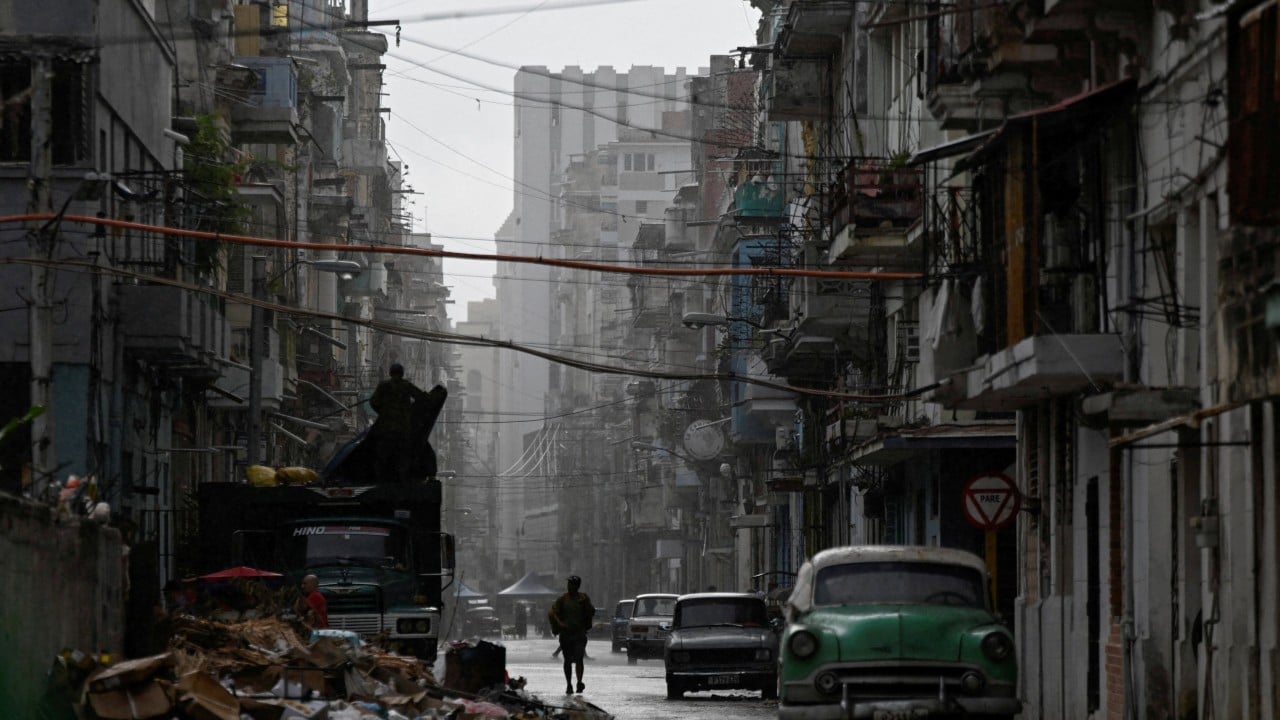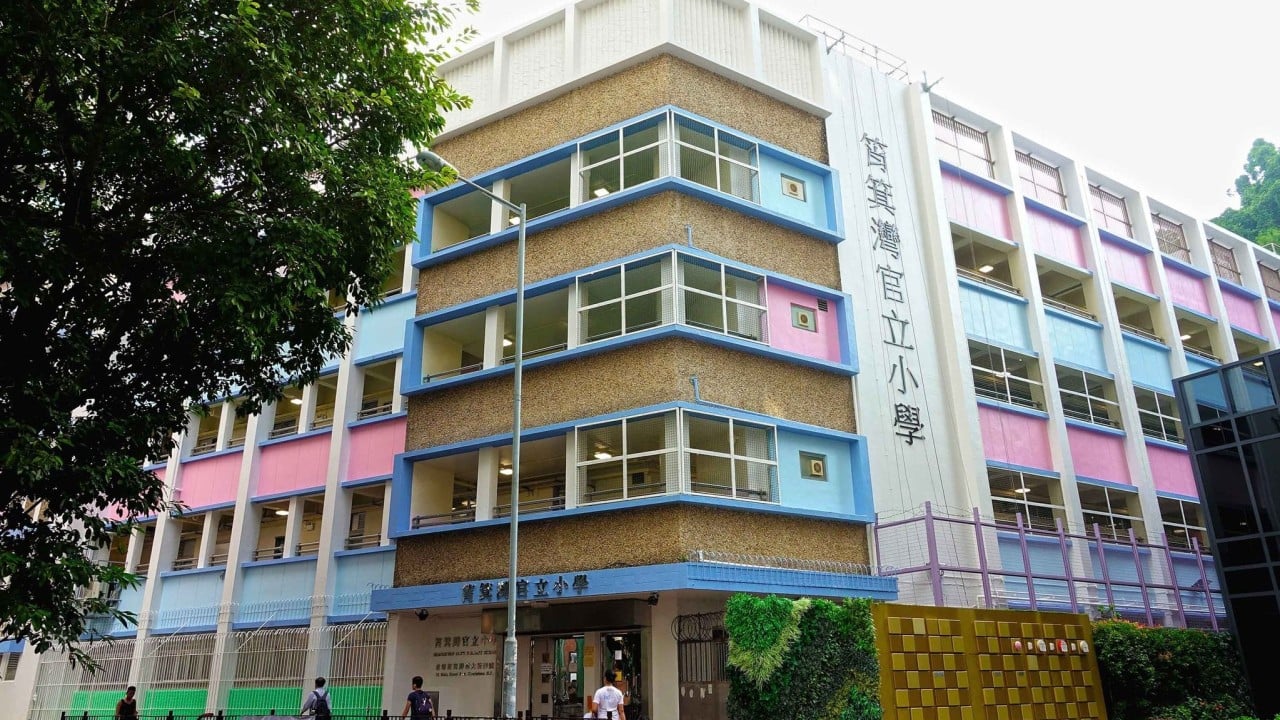
The silence in a primary school hallway should never be absolute. It should be a frayed, messy thing, stitched together by the rhythmic squeak of sneakers on linoleum and the distant, chaotic melody of a recorder group practicing in the basement. But at the edge of a shrinking neighborhood in Hong Kong, the silence has become heavy. It is the kind of quiet that settles in when the math is no longer working.
Mrs. Chan stands at the door of Primary 4. She has taught here for twenty years. She remembers when this room held thirty-five children, their desks jammed together like a cedar forest. Today, there are nine. The empty desks have been moved to the back, draped in plastic sheets, looking like small, rectangular ghosts. If you enjoyed this post, you might want to look at: this related article.
This is the reality of the "under-enrolled" school. It is a sterile term for a visceral tragedy. When a school’s population plummets, it doesn’t just lose money. It loses its pulse.
The Mathematics of Loneliness
We often talk about school closures as a failure of policy or a symptom of a birth rate in freefall. In Hong Kong, the numbers are stark. The city is facing a structural shift that no amount of colorful murals or revamped curricula can hide. When a school falls below the "long-stop" threshold—often just sixteen students for a single grade level—the gears of the Education Bureau begin to grind. For another perspective on this development, check out the recent update from Al Jazeera.
To the casual observer, a class of nine sounds like a luxury. Private tutors charge a fortune for that kind of intimacy. But in a public school system designed for scale, smallness is a cage.
Consider the "hidden" curriculum: social friction. A child needs a peer group to learn how to navigate the world. They need a best friend, a rival, a teammate, and someone they simply don't get along with. In a class of nine, if you have a falling out with the only other boy in your grade, your social world effectively ends at the classroom door.
The resources vanish first. A school with three hundred students can afford a dedicated librarian, a full-time IT coordinator, and a robust physical education department. A school with eighty students becomes a skeleton crew. Mrs. Chan isn't just teaching long division; she is the de facto librarian, the morning gate guard, and the person who fixes the jammed copier.
The quality of education doesn't just dip. It thins out until it is translucent.
The Mercy of the Clean Break
There is a persistent myth that keeping a struggling school open "for the sake of the community" is the compassionate choice. It feels right. It feels like a stand against the cold machinery of urban planning.
It isn't.
Propping up a "dwindling" school—one that survives on year-to-year extensions and desperate recruitment drives—is a form of educational hospice care. But unlike medical hospice, the goal here isn't comfort; it’s survival at any cost. This creates a climate of permanent anxiety. Parents live with the constant, low-frequency hum of dread, wondering if the school will exist by the time their child reaches Primary 6.
When the government decides to merge or close these institutions, it isn't an act of cruelty. It is a mercy.
By consolidating resources, the system ensures that a child from a low-income neighborhood in Eastern District gets the same vibrant, resource-rich environment as a child in a prestigious Kowloon Tong private school. They get a choir. They get a basketball team with enough players to actually scrimmage. They get a future that isn't tethered to a sinking ship.
The Invisible Stakes for Parents
Let’s look at a hypothetical parent, Mr. Wong. He chose the neighborhood school because it was three minutes from his flat. He liked the small feel. He felt his daughter, Ling, would be "seen" there.
For two years, it was fine. Then the rumors started. The school didn't get enough Primary 1 applications. The "death warrant" letter arrived from the Bureau. Suddenly, the school’s focus shifted from pedagogy to PR. Every assembly became a plea for parents to stay loyal. Every newsletter was a frantic list of minor awards designed to prove "vitality."
Ling started to notice that her favorite teachers were leaving. Why wouldn't they? A teacher’s career needs stability and growth; a dying school offers neither. The bright, ambitious young educators—the ones who bring coding clubs and experimental art to the table—are the first to jump to schools with guaranteed funding.
Mr. Wong stayed out of a sense of duty. He didn't want to be the "rat leaving the ship." But his loyalty was costing Ling her competitive edge. While her cousins at larger schools were engaging in inter-school debates and STEM competitions, Ling was sitting in a quiet room, watching a tired teacher try to manage three different learning levels simultaneously because the school couldn't afford separate classes.
The "future problems" being spared are not just administrative. They are developmental. They are the missed opportunities that compound over a lifetime.
The Architecture of a New Beginning
Closing a school is a funeral for a building, but it shouldn't be a funeral for a community.
The transition is where the real work happens. When the government facilitates a merger, they aren't just moving desks. They are migrating a culture. The goal is to ensure that the "receiving" school has the capacity not just to house these students, but to integrate them.
This is where the logic of the Education Bureau actually holds water. By concentrating students into fewer, "healthier" schools, the city can maintain a high baseline of quality. It allows for the $16:1$ or $25:1$ ratios that actually work—ratios that provide enough diversity for social growth but enough intimacy for academic support.
We have to be honest about the demographics. Hong Kong’s population is aging. The "golden age" of endless expansion is over. If we refuse to close schools that are no longer viable, we are essentially subsidizing empty hallways with the quality of our children's education.
It is a zero-sum game. Every dollar spent keeping a thirty-student school on life support is a dollar taken away from modernizing a school that serves seven hundred.
The Weight of the Keys
On the final day of a school’s life, there is usually a ceremony. The alumni come back. They take photos in the courtyard. There is a lot of talk about "spirit" and "legacy."
But the real story is in the moving trucks.
When the boxes are packed and the keys are handed back to the authorities, a burden is lifted. The teachers can go back to being teachers in environments that support them. The parents can stop checking the news for closure updates. And the children?
Children are remarkably resilient, provided they are given a fertile place to grow.
In a new, larger school, Ling finds twenty other girls her age. She discovers she’s actually quite good at volleyball—a sport her old school couldn't offer because they didn't have enough players for a net. She meets a teacher who specializes in the exact kind of history she loves. The silence of her old hallway is replaced by the roar of a crowded cafeteria.
It is loud. It is messy. It is exactly what a childhood should sound like.
The ghosts in the old classrooms don't mind. They were never meant to stay there forever. The buildings are just brick and mortar, but the education is a living thing. Sometimes, for a living thing to thrive, you have to move it to better soil.
You have to be brave enough to turn off the lights.
The final bell rings, not as a signal of defeat, but as a release.
A new school year waits on the other side of the city, and for the first time in years, the math finally adds up.