The wind in Stanley doesn't just blow. It scours. It carries the scent of salt spray and peat smoke, whipping across a landscape so ruggedly beautiful it feels like the edge of the known world. For the three thousand souls who call the Falkland Islands home, this wind is a constant companion. It is part of their identity. But lately, a different kind of gale has been blowing in from across the water—one fueled by rhetoric, history, and a territorial claim that refuse to stay buried in the past.
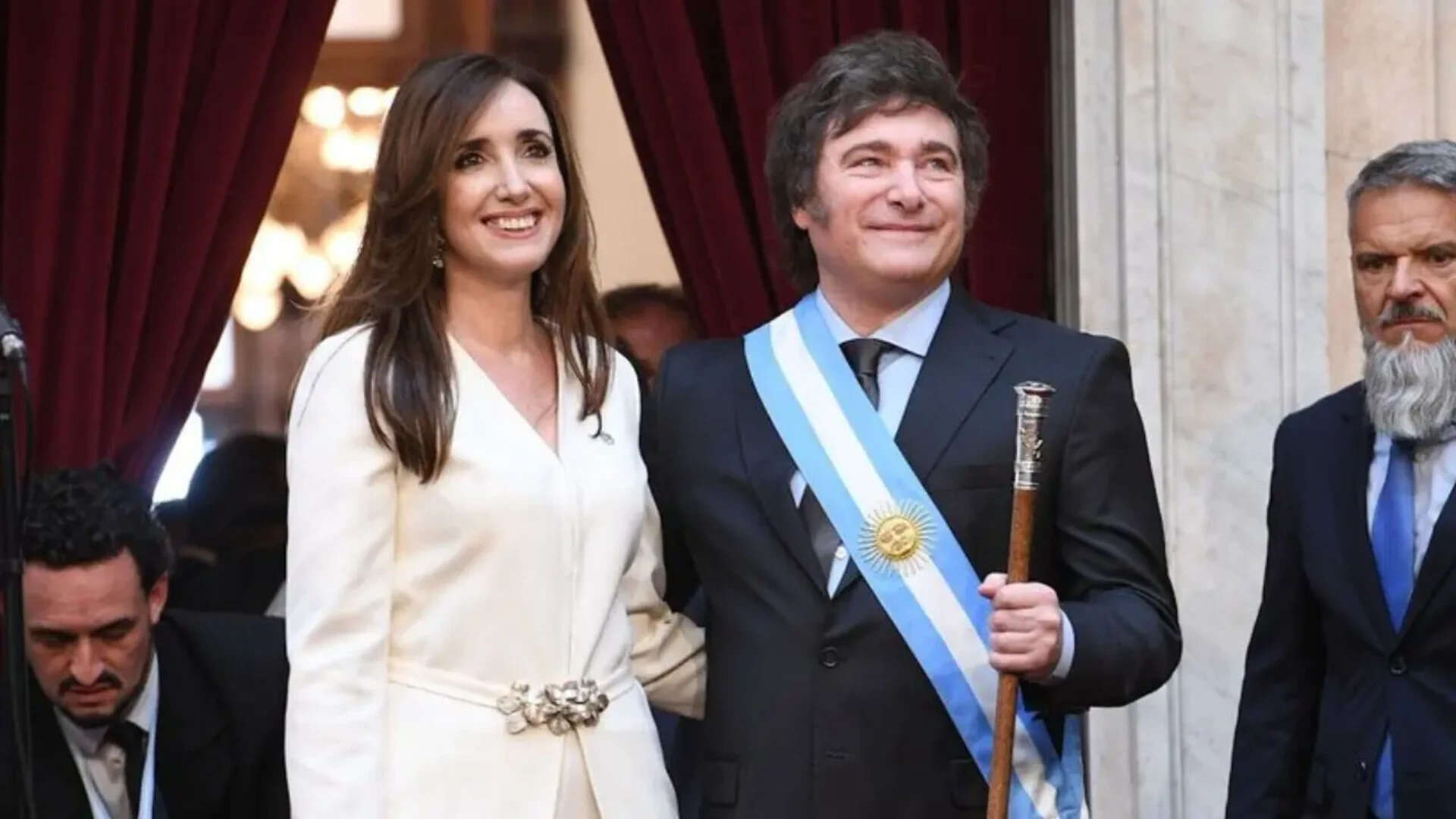
Victoria Villarruel, the Vice President of Argentina, recently sharpened the edge of that gale. Her message to the islanders was devoid of the usual diplomatic fluff. It was a blunt command to "go back to England."
To understand why a single sentence from a politician in Buenos Aires can make a sheep farmer on a remote island reach for his radio, you have to look past the maps. You have to look at the people who actually live in the house everyone is arguing over.
A Kitchen Table in the South Atlantic
Consider a man we will call Alistair. He is a third-generation islander. His hands are mapped with the scars of decades spent working the land. In his kitchen, the kettle is always near the boil. If you asked him about the latest headlines from the mainland, he wouldn't start with a lecture on international law. He would likely point out the window at the hills where, in 1982, the silence of the islands was shattered by the roar of Skyhawks and the thud of artillery.
For Alistair, the Falklands aren't a "dispute." They are home.
The Vice President’s comments weren't just a political stance; they were a denial of his very existence. When Villarruel tells residents to return to England, she ignores a fundamental reality: most of these people have never lived in England. Their ancestors arrived in the 1800s. They have built lives, buried their dead, and raised children on these wind-swept rocks. Telling them to go back to England is like telling a fifth-generation Texan to move back to Germany.
It is an erasure of identity.
The Weight of the 1982 Shadow
The tension isn't new, but the temperature is rising. Argentina has long claimed the islands, which they call Las Malvinas, as part of their national territory. It is a sentiment woven into the fabric of Argentine education and soul. However, the 1982 conflict changed the stakes forever. It wasn't just a brief war over territory; it was a trauma that left nearly a thousand men dead and a legacy of minefields that took decades to clear.
When modern politicians use inflammatory language, they aren't just debating borders. They are poking a wound that has never quite closed.
Villarruel’s rhetoric represents a hardline shift. While previous administrations have fluctuated between aggressive diplomacy and cold indifference, the current stance feels visceral. It suggests that the "Kelpers"—the local name for the islanders—are merely squatters on sovereign soil.
But sovereignty is a cold word. It doesn't account for the way the light hits the harbor at sunset or the way a community rallies when a storm cuts off the supply ships.
The Invisible Stakes
Why does this matter to someone sitting in a coffee shop in London, New York, or Tokyo?
Because the Falklands represent a broader, more frightening trend in global politics: the dismissal of self-determination. In 2013, the islands held a referendum. The question was simple: do you want to remain a British Overseas Territory? The turnout was 92 percent. Of those who voted, 99.8 percent said yes.
Statistically, that is as close to a unanimous voice as humanity ever gets.
When that voice is ignored, the foundation of modern international order begins to crack. If the wishes of the people living on the land don't matter, then we are back to the era of empires, where maps are redrawn by men in distant capitals who have never felt the South Atlantic wind on their faces.
The Sovereignty of the Everyday
Argentina’s claim is rooted in historical succession from the Spanish Empire. They argue the British "usurped" the islands in 1833. The British, meanwhile, point to their continuous administration and the clear will of the inhabitants.
But maps are static. People are fluid.
The Vice President’s "go back" rhetoric is a move to simplify a complex human reality into a binary choice: us or them. It bypasses the nuance of a people who have developed their own unique culture, distinct from both the UK and South America. They have their own slang, their own traditions, and a fierce sense of independence.
Imagine being told your home isn't yours because of a treaty signed before your great-great-grandfather was born. Imagine the psychological toll of living next to a neighbor who refuses to acknowledge your right to exist.
The Ghost at the Negotiating Table
There is a ghost that hangs over every conversation about the Falklands. It is the ghost of 1982, but also the ghost of what could be. The islands sit near potentially vast oil and gas reserves. They are a gateway to Antarctica. They are strategically positioned in a world where trade routes are increasingly contested.
Money and power are the silent partners in this dance.
But for the residents, the "invisible stakes" aren't about oil barrels or shipping lanes. They are about the right to wake up in the morning and know that their children won't be forced to pack a suitcase for a country they’ve only seen on television.
The Vice President’s words were a calculated political maneuver, likely aimed at a domestic audience hungry for a return to national pride. Yet, words have a way of traveling. They cross the 300 miles of ocean and land in the living rooms of Stanley, Goose Green, and Port Howard.
They turn a neighbor into an adversary.
The Sound of the Wind
History is a heavy burden. In Argentina, the Malvinas claim is a point of rare national unity in a country often fractured by economic crisis. For many Argentines, the islands represent a stolen piece of the motherland. It is a deeply emotional, almost spiritual connection.
When Villarruel speaks, she is tapping into that well of national longing.
But the tragedy of the situation is the total disconnect between the two sides. There is no shared language here. One side speaks of historical rights and colonial theft; the other speaks of democratic will and the reality of habitation. They are two ships passing in a South Atlantic fog, neither willing to blink, neither able to see the humans on the other deck.
The real cost of this rhetoric isn't found in a diplomatic cable. It’s found in the heightened anxiety of a small community. It’s found in the need for continued military presence in a place that should be a peaceful sanctuary for wildlife and hardy settlers.
As the sun sets over the craggy peaks of West Falkland, the wind continues its relentless patrol. It doesn't care about sovereignty. It doesn't care about 1833 or 1982. It only knows the land.
The people who live there, who have weathered the storms and the wars, are still there. They aren't going "back" anywhere. They are already home, waiting for the rest of the world to catch up to that simple, undeniable truth.
The kettle in Alistair’s kitchen whistles. He pours the tea. Outside, the gale picks up, rattling the windowpane, a reminder that in this part of the world, survival has always meant standing your ground against the wind.