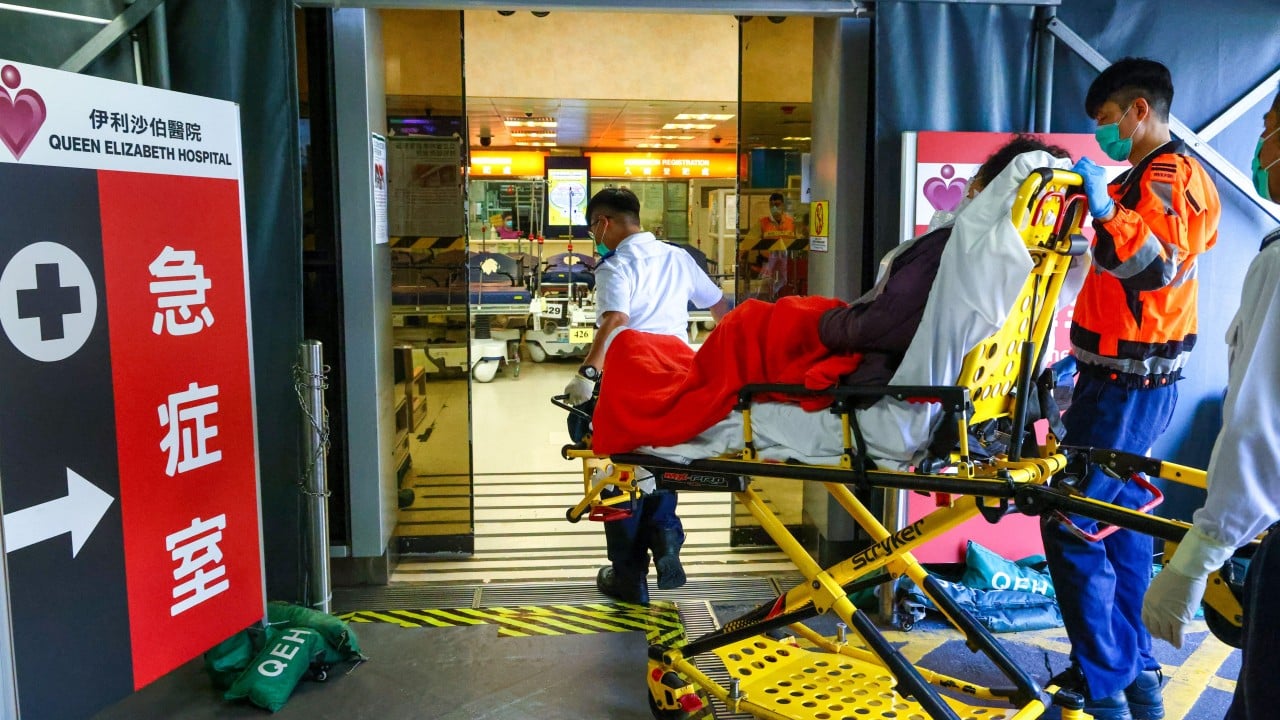
The brain is a hungry, impatient organ. When it is starved of blood, it doesn’t just complain; it begins to die, cell by agonizing cell. Roughly two million neurons vanish every minute during a stroke. In the time it takes to read this sentence, a life is being stripped of its ability to speak, to walk, or to remember the face of a grandchild.
Time is not just money in the medical world. Time is tissue.
For years, the geography of Hong Kong has been a silent adversary in this race against the clock. Imagine a man named Mr. Chan. He is seventy-two. He lives in a high-rise in Kwun Tong. One Tuesday morning, while reaching for a tin of tea, the right side of his body turns to lead. His speech slurs into an unrecognizable thicket of vowels. His wife calls for help, but the journey that follows is governed by a rigid, traditional protocol that, until recently, treated every hospital like a separate island.
The Invisible Wall in the ER
Historically, the path from a patient’s front door to the life-saving operating table was broken by a bureaucratic and physical handoff. An ambulance would rush to the nearest emergency department. There, the patient would be stabilized, assessed, and diagnosed. If that hospital lacked the specialized equipment for a mechanical thrombectomy—the intricate process of physically pulling a clot out of a brain artery—the patient would have to be loaded back into an ambulance and driven to a tertiary center like Queen Mary or Prince of Wales Hospital.
This is the "inter-hospital transfer." It sounds clinical. It sounds efficient. In reality, it was a gauntlet of red tape and traffic.
Each transfer involved a fresh round of paperwork, a new set of doctors getting up to speed, and the physical act of moving a fragile human being through one of the most densely populated cities on earth. On average, this "pit stop" cost patients eighty minutes.
Eighty minutes.
That is 160 million neurons. It is the difference between a person walking out of the hospital a week later and a person spending the rest of their life in a nursing home, trapped behind the silence of auras and aphasia.
Redrawing the Lines of Survival
The Hong Kong Hospital Authority recognized that the geography wasn't the problem; the workflow was. They began a quiet revolution by expanding a specialized transfer scheme designed to bypass the middleman.
The logic is deceptively simple: if the paramedics recognize the signs of a severe stroke using a standardized scoring system, why stop at the nearest hospital at all? Why not go straight to the theater where the surgeons are already scrubbing in?
By skipping the initial, non-specialized stop, the medical system is effectively clawing back over an hour of "brain time." This isn't just a tweak in a spreadsheet. It is a fundamental shift in how a city breathes and heals. The scheme, which proved its worth in initial trials, is now being rolled out across more clusters in Hong Kong, ensuring that a person's zip code doesn't determine their neurological destiny.
Consider the mechanics of the "Direct-to-Angio" suite. In the old world, the patient went to the ER, then to a CT scanner, then to a ward, then to an ambulance, then to another ER. In the new world, the ambulance communicates directly with the specialized center while in transit. The CT scan happens almost the moment the wheels stop spinning. Sometimes, the patient doesn't even stop in the emergency room; they go straight to the angiography suite.
The Precision of the Intervention
A mechanical thrombectomy is a marvel of modern physics and steady hands. A surgeon inserts a catheter, usually through the groin, and threads it all the way up into the delicate, branching vessels of the brain. Using a tiny wire mesh called a stent retriever, they snag the clot and pull it out.
When it works, the results are nothing short of biblical. A patient who was paralyzed on a stretcher can sometimes regain movement on the table as blood rushes back into the parched territories of the brain. But this "Lazarus moment" is highly dependent on the freshness of the clot and the health of the surrounding tissue. If the surgeon gets there at hour two, the recovery is often total. If they get there at hour four, they are often just salvaging what little is left.
The expansion of this transfer scheme is an admission that the system was the bottleneck. We had the technology. We had the surgeons. We just couldn't get the people to them fast enough because we were following rules written for a different era of medicine.
The Weight of Eighty Minutes
To understand the emotional core of this policy change, you have to look at the people left in the wake of the old system. Talk to the physiotherapists who spend months helping a patient regain the ability to swallow. Talk to the daughters who have to quit their jobs to provide twenty-four-hour care for a father who was "just a little too late" to the specialist center.
The burden of stroke is not just a medical statistic; it is a profound economic and social weight that settles on families. When we talk about "cutting transfer times," we are really talking about saving families from the slow-motion grief of watching a loved one disappear while still sitting right in front of them.
Critics of such centralized systems often point to the "bypass" risk—the fear that skipping a local hospital might be dangerous if the patient is unstable. But the data from Hong Kong’s pilot programs suggests the opposite. The paramedics are becoming more adept at triage. The communication between the ambulances and the "Big Five" stroke centers is becoming a seamless conversation.
The city is shrinking. Not in physical distance, but in the time it takes for help to arrive.
A City That Adapts
Hong Kong is a vertical labyrinth. Between the typhoons, the narrow alleys of Central, and the sheer volume of people, it is one of the most challenging environments on earth to move an emergency vehicle. This makes every minute saved in a hospital hallway even more precious. You cannot control the traffic on the Island Eastern Corridor, but you can control how many times a patient is moved from one gurney to another.
The expansion of this scheme to more districts means that the invisible wall between "local care" and "specialized care" is finally crumbling. It treats the entire territory as a single, living organism.
We are moving toward a future where the "Golden Hour" isn't a tragic reminder of what we missed, but a standard we actually meet. The 160 million neurons saved by this eighty-minute shortcut represent more than just biological matter. They are the memories of a wedding day. They are the ability to tell a joke. They are the strength to hold a spoon.
Somewhere in a flat in Kowloon, an ambulance is pulling away from the curb right now. The sirens are screaming, but for the first time, the path ahead is clear of the obstacles we built ourselves. The driver isn't looking for the nearest door; they are looking for the right one.
The hungry brain is finally being fed.