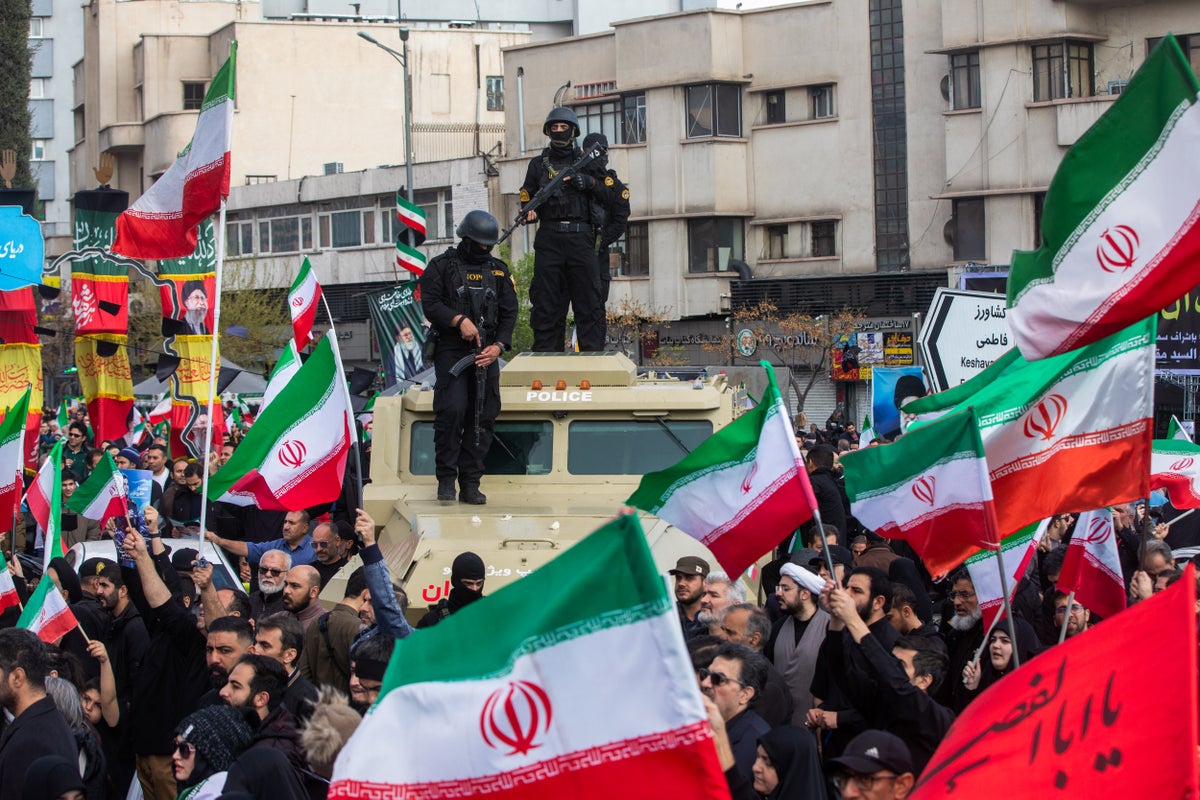
The sight of a Khorramshahr-4 medium-range ballistic missile rolling through Tehran’s Enghelab Square on Tuesday night was designed to project absolute defiance. To the untrained eye, the massive frame of the liquid-fueled projectile suggests a regime that has weathered a month of intensive aerial bombardment with its primary deterrent intact. However, the reality behind the optics is far more desperate. As the current two-week ceasefire nears its expiration, Iran is not showcasing strength; it is engaging in a high-stakes theatrical performance to mask a catastrophic degradation of its strategic missile forces.
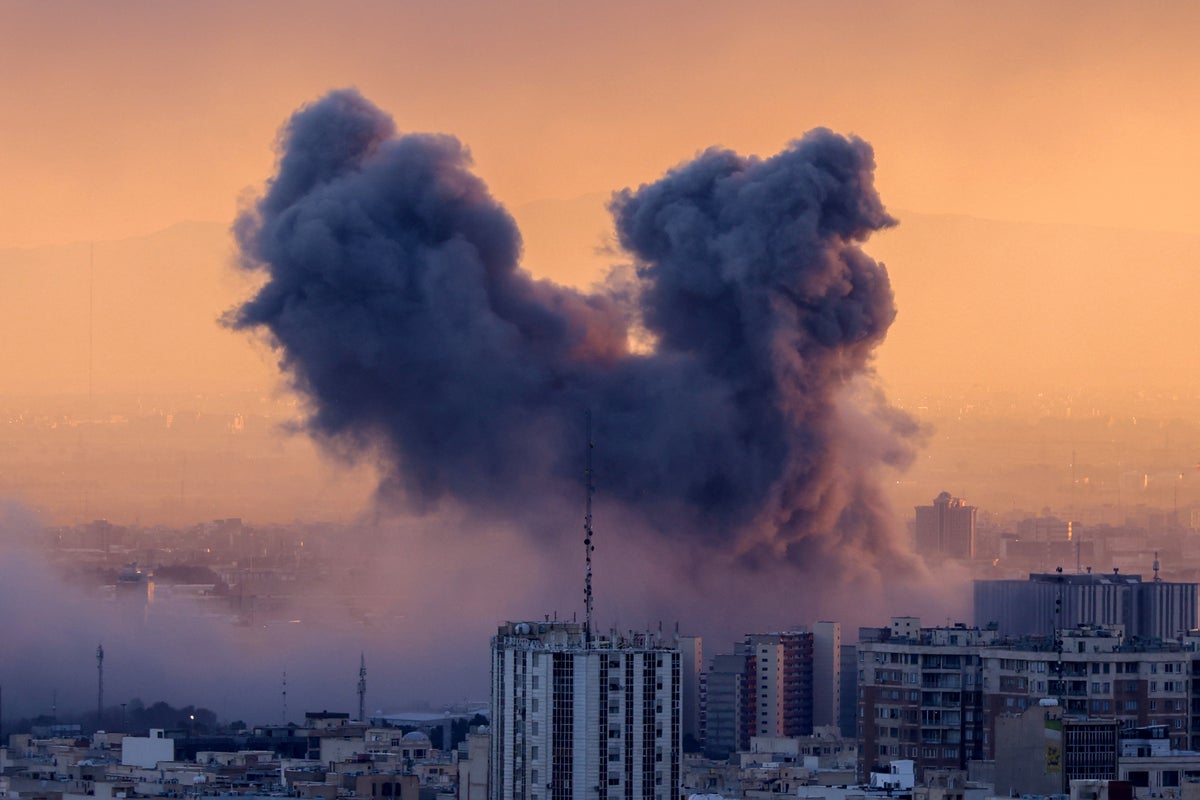
The "Khaibar" variant displayed in the heart of the capital is a formidable weapon on paper, capable of carrying a 1,500-kilogram warhead. But hardware on a trailer is not the same as a functional strike capability. Reliable intelligence suggests that the air campaign launched in late February has eliminated roughly 90% of Iran’s medium-range launch capacity. While the regime can still roll a missile through a crowd of flag-waving supporters, the infrastructure required to actually fire that missile—the hardened silos, the specialized fueling teams, and the command-and-control nodes—is largely in ruins.
The Resurrection Strategy
For the past three weeks, Iranian engineering units have been performing a grim kind of military archaeology. Satellite imagery confirms that crews are actively digging through the rubble of subterranean "missile cities" and depots struck by coalition forces. They are not looking for new technology; they are scavenging for surviving components.
The goal is a desperate mathematical recovery. By retrieving roughly 100 additional systems from fortified bunkers that survived the initial waves of strikes, Tehran hopes to restore its launcher inventory to about 70% of pre-war levels. This is the "why" behind the sudden appearance of the Khorramshahr-4. It is a signal to the domestic population and regional rivals that the "buried" arsenal is being resurrected.
Yet, there is a fundamental flaw in this recovery effort. A ballistic missile is a precision instrument, not a sledgehammer. The vibration and shockwaves from the "Bunker Buster" munitions used throughout March have likely compromised the delicate guidance systems and structural integrity of the airframes now being pulled from the debris.
The Logistics of a Hollow Deterrent
To understand how deep the crisis goes, one has to look at the fuel. The Khorramshahr series relies on storable liquid propellants. These are highly corrosive, volatile chemicals that require a massive logistics tail.
- Fueling windows: Unlike solid-fuel missiles that can be fired on a moment's notice, liquid-fueled birds like the one seen in Tehran require hours of preparation in the open, making them easy targets for loitering munitions.
- Production bottlenecks: Strikes on the Esfahan steel production facilities and chemical plants have choked the supply chain. Tehran can display the missiles it already has, but it can no longer replace them.
- Manpower attrition: Reports indicate a significant "refusal to launch" among IRGC Aerospace Force units. After seeing dozens of launch sites evaporated by counter-battery fire within seconds of ignition, morale has cratered.
The display in Enghelab Square is an attempt to solve a psychological problem with a physical prop. The regime needs its people to believe that the "Axis of Resistance" still has teeth, even as its proxies in Syria and Lebanon find themselves increasingly isolated by new regional authorities.
The Hormuz Gambit
The most dangerous element of this missile posturing isn't the threat of a strike on Tel Aviv or Riyadh, but the leverage it provides in the ongoing negotiations over the Strait of Hormuz. By wheeling out medium-range systems, Iran is reminding the world that it still possesses the theoretical ability to close the world's most vital oil artery.
Global oil prices have already reacted to the imagery. Every time a missile appears on IRIB state media, the markets bake in a "risk premium," effectively giving Tehran a tool for economic warfare that doesn't require a single launch. This is the true function of the Tehran rally: it is a marketing campaign for a product that might not actually work, aimed at a world that cannot afford to call the bluff.
Tactical Reality vs. Public Spectacle
While the Khorramshahr-4 grabbed the headlines, the more significant movement is happening with short-range systems. These smaller, more mobile rockets have maintained a much higher "survival rate" than their larger cousins. They are the weapons actually being used to harass commercial tankers and strike at regional bases.
The medium-range ballistic missile (MRBM) on display is a dinosaur—a relic of a pre-war strategy that relied on the threat of a massive, overwhelming salvo. That capability is gone. What remains is a guerrilla missile force, hiding in the mountains, capable of sporadic stings but incapable of winning a sustained exchange.
Tehran’s leadership knows that the ceasefire is the only thing keeping the remaining 10% of their "intact" arsenal from being found. The parade is not a victory lap; it is a plea for time. Every hour the tankers remain idle in the Gulf and every day the negotiators stay at the table in Islamabad is a day the IRGC can use to pull one more rusted, shaken, but "apparent" missile out of the dirt.
The international community must distinguish between the capability to parade and the capability to project power. One is a matter of logistics and trailers; the other requires a functional military industrial complex that, for all intents and purposes, no longer exists in Iran. The missile in the square is a hollow shell, and the regime’s future depends entirely on no one finding that out.