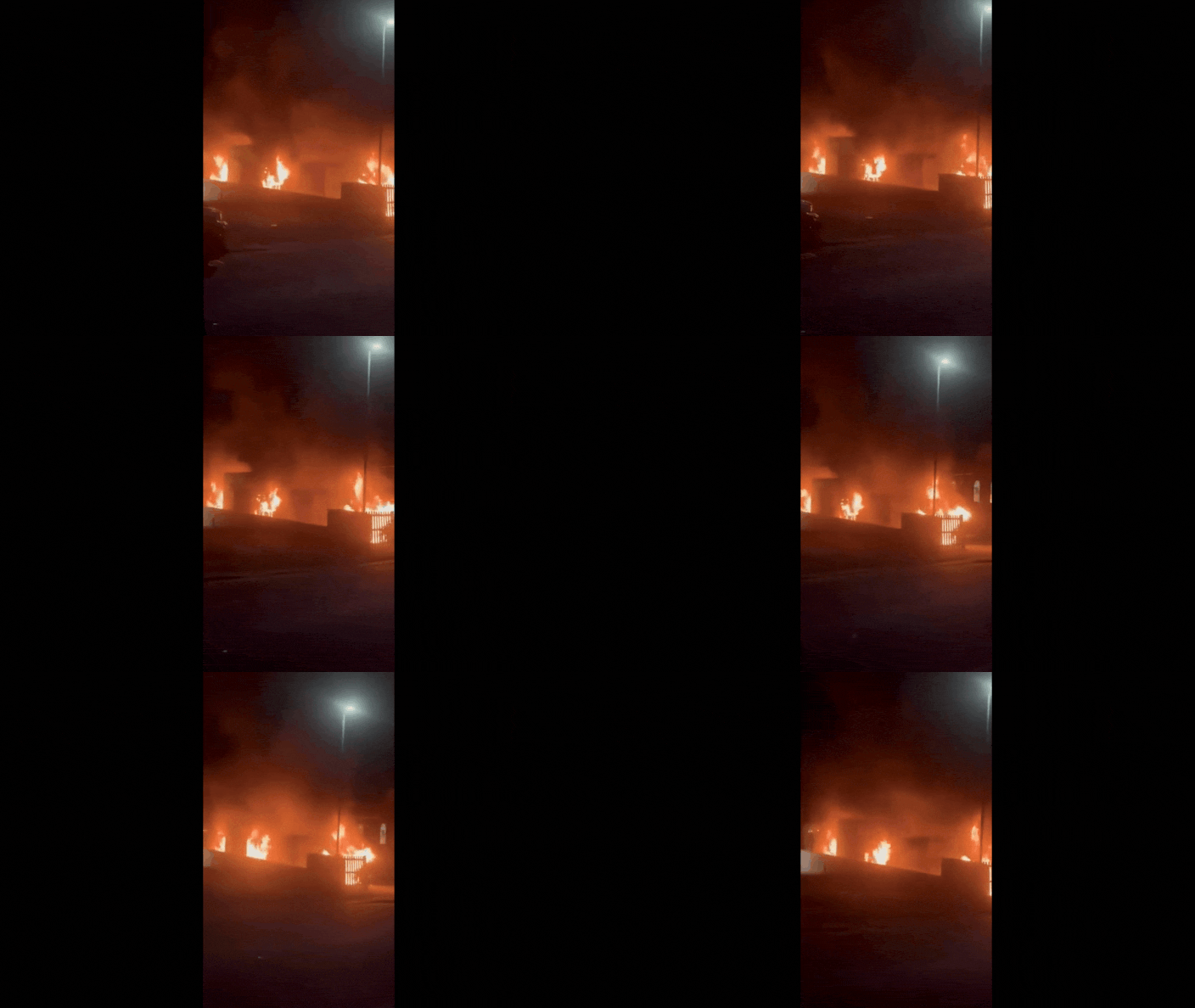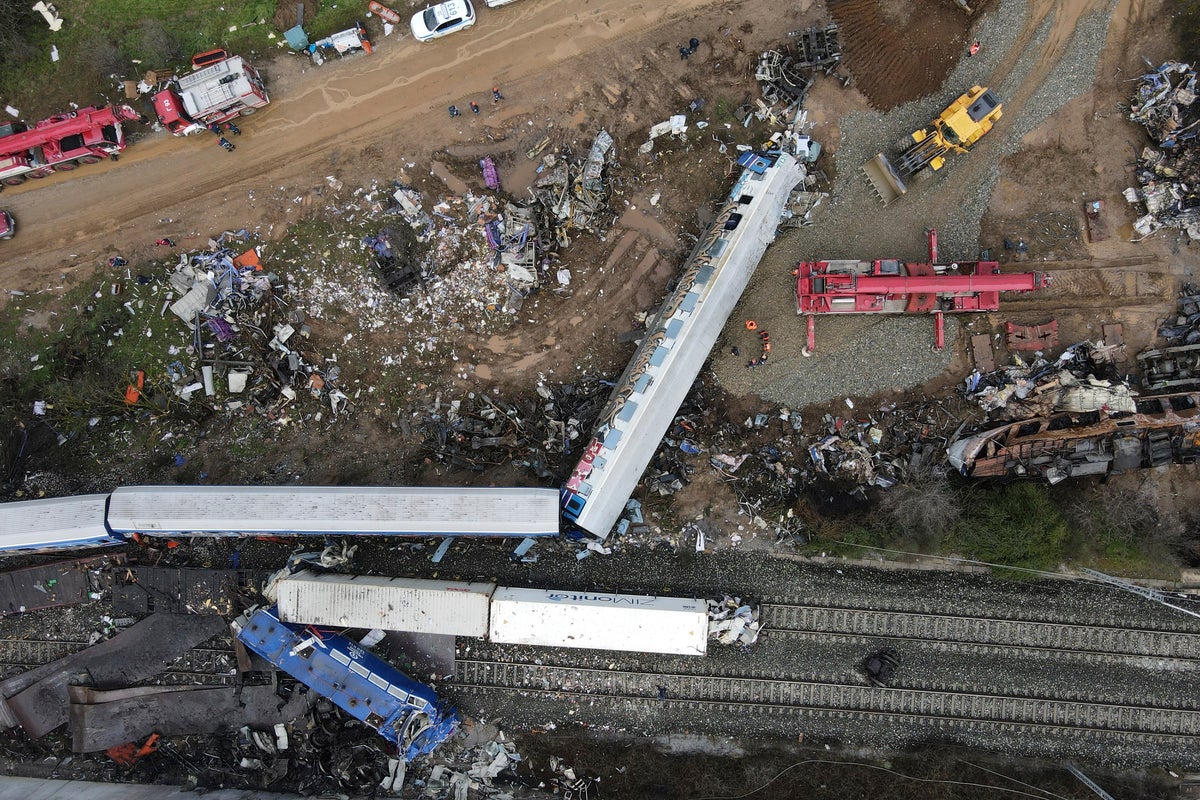
Fifty-seven people died in a head-on collision at Tempi because we refuse to admit that automation is not a luxury—it is the only thing standing between human error and a graveyard.
The trial starting in Greece is being framed as a search for justice. It isn't. It is a choreographed distraction. By putting station masters and mid-level technicians in the dock, the state avoids the terrifying reality that the entire European rail philosophy is built on a foundation of "good enough" while the world around it moves at Mach speed.
The media wants a villain. They want a sleepy station master or a negligent supervisor. They want someone to point at so they can feel the "system" works once that person is behind bars. But the system didn't fail at Tempi. The system performed exactly as it was designed to: it operated on manual hope in an era of digital precision.
The Myth of the Human Safety Net
We have been conditioned to believe that having a "human in the loop" makes things safer. This is a lie. In high-speed, high-stakes environments like rail or aviation, the human is the weakest link, the most prone to fatigue, and the most expensive point of failure.
At Tempi, two trains were on the same track heading toward each other for twelve minutes. Twelve minutes is an eternity in the world of logistics. In those 720 seconds, dozens of "fail-safes" should have screamed. They didn't because the European Train Control System (ETCS) was a ghost. It existed on paper, in procurement contracts, and in lofty EU directives, but it wasn't on the tracks.
When you run a railway without functional automated signaling, you aren't running a modern transport network. You are running a 19th-century steam operation with 21st-century speeds. You cannot ask a human brain to maintain 100% vigilance across an eight-hour shift when their job is essentially "don't let the lines cross." Humans are built for pattern recognition and creative problem solving, not for being a biological redundant switch.
Procurement is the Real Murder Weapon
If you want to find the people truly responsible for the 57 deaths, don't look at the station house. Look at the boardrooms and the ministry offices where "Contract 717" sat gathering dust for nearly a decade.
Contract 717 was supposed to bring the Greek rail network into the modern age. It was the blueprint for remote signaling and automatic braking. Instead, it became a masterclass in bureaucratic paralysis. This is the "lazy consensus" the media misses: they think the crash was an accident. It wasn't. It was an inevitability born of a specific type of institutional corruption that prioritizes budget cycles and vendor disputes over kinetic safety.
I have seen this in every infrastructure sector. A project gets delayed by three years because of a legal challenge over a bolt. Then it gets delayed another four years because the technology is "outdated" and needs a refresh. By the time anyone actually tries to install it, the original engineers have retired and the documentation is lost.
We treat infrastructure like a static asset. It’s not. It’s a depreciating organism. If you aren't upgrading it, you are actively killing it.
The Cost of "Saving" Money
The Hellenic Train sale to Italy's Ferrovie dello Stato Italiane was hailed as a privatization success. It was supposed to bring "efficiency." But privatization without strict, automated regulatory enforcement is just a way to shift liability.
The Greek government sold the "wheels" (the trains) but kept the "steel" (the tracks and signaling). This split created a lethal disconnect. The operators had the shiny new trains, but the state-owned infrastructure company, OSE, was hollowed out by austerity and brain drain.
- Fact: The number of station masters in Greece plummeted over the last decade.
- Fact: Maintenance budgets were slashed to meet fiscal targets.
- Fact: Signaling systems were cannibalized for parts.
When you strip a system of its technical redundancies (automated braking) and its human redundancies (experienced staff), you are gambling with lives to balance a spreadsheet. The trial will focus on why the station master turned a key. It should be focusing on why the key was the only thing stopping the collision.
The False Comfort of the Courtroom
The trial will likely drag on for years. There will be emotional testimony. There will be expert witnesses arguing over the frequency of radio transmissions. And at the end, a few people will go to jail.
And nothing will change.
This is the "Search Intent" we need to redefine. People ask: "Who is to blame for the Greece train crash?" The better question is: "Why are we still allowing passenger trains to run on tracks without active Interlocking?"
Interlocking is the technical term for a system that prevents conflicting movements through an arrangement of tracks. It’s binary. If Train A is on Segment 1, the signal for Segment 1 MUST be red for Train B. It should be physically impossible to clear a route that leads to a collision.
At Tempi, the interlocking was manual or non-functional. That is a choice. Every day a train leaves a station without ETCS Level 2 or 3 active, the government is making a conscious decision that a certain percentage of deaths is an acceptable cost of doing business.
Stop Asking for Justice, Ask for Automation
Justice for the 57 victims isn't a prison sentence for a 59-year-old station master who was poorly trained and overworked. Justice is the immediate, non-negotiable decommissioning of any rail line that does not have functional, automated override systems.
If a Tesla can navigate a highway with more sensors than a NASA shuttle, there is zero excuse for a train—which moves on a fixed, predictable track—to ever hit another train. The technology isn't "emerging." It’s been around since the 1980s.
We are obsessed with the "morality" of the error. We want to know if the station master was drinking or if he was distracted by his phone. Who cares? Even if he was the most diligent worker in the history of the world, he is still a human. He can have a stroke. He can have a momentary lapse in spatial awareness. He can mishear a radio call through static.
The obsession with human fault is a shield for the people who failed to install the robots.
The Brutal Reality of Rail Safety
You want unconventional advice? Stop trusting the "safety ratings" of national rail networks that rely on voice-only communication. If you are on a train and you see the conductor using a handheld radio as their primary source of navigation, you are on a rolling dice.
The industry insider truth is that Europe's rail network is a patchwork quilt of 1970s hardware covered by a 2020s marketing budget. We talk about "Green travel" and "High-speed rail" to lure people out of planes, but we aren't willing to pay the massive upfront tax of total automation.
The trial is a pressure valve. It lets the public scream at a few individuals so they don't start screaming at the systemic failure of the European Union's inability to enforce its own safety standards on its member states.
If you want to honor the students who died, stop looking at the courtroom. Look at the tracks. If the lights aren't digital, the danger is still there.
Stop blaming the man at the switch and start blaming the men who left him with nothing but a switch.