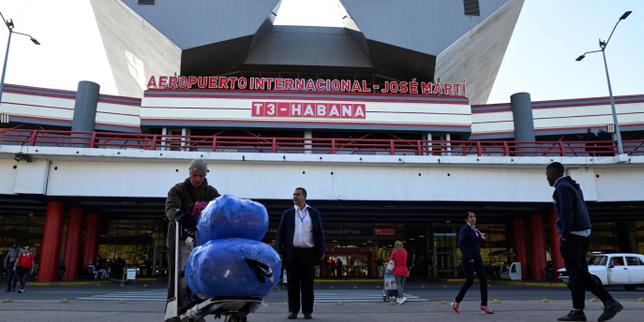
The tarmac at José Martí International Airport doesn’t usually feel this heavy. Normally, it is a place of frantic motion—the humid air vibrating with the roar of turbines, the smell of burnt kerosene mingling with the salt spray of the Caribbean, and the chaotic, beautiful arrival of thousands seeking a slice of a world frozen in time.
Now, the silence is beginning to bite.
Cuba is running out of breath, and in the world of global aviation, breath is jet fuel. A critical shortage of kerosene has sent a shudder through the island's carotid artery: its tourism industry. This isn't just a logistical hiccup or a line item in a government ledger. It is a slow-motion collision between a nation’s desperate need for hard currency and the brutal reality of a drying tank.
The Mechanics of a Stall
Consider a pilot—let’s call him Mateo—sitting in the cockpit of a mid-sized jet in Madrid. He is looking at a flight plan for Havana. Usually, he carries enough fuel to get there, plus a safety margin. Today, the calculations are different. He has to "tanker" the fuel. This means carrying enough weight from Europe to fly the return leg because he cannot be certain there will be a single drop available for him once he touches down in Cuba.
Weight is the enemy of aviation. Carrying extra fuel requires burning more fuel just to haul that weight. It is expensive. It is inefficient. For many airlines operating on razor-thin margins, the math simply stops working.
The Cuban authorities have sent out the warning: the shortage will persist until at least April. For an island that relies on the "high season" of winter and early spring to keep its economy tethered to reality, April is a lifetime away.
The Ghost in the Resort
Three hundred miles east, in a resort in Varadero, the shortage manifests in ways the brochures never mentioned.
A hotel manager stands in a lobby that should be humming with the sound of rolling suitcases. Instead, he watches the departures board with a sense of dread. If the planes don't come, the rooms stay empty. If the rooms stay empty, there is no money for the eggs, the flour, or the maintenance of the vintage Buicks that wait outside like brightly colored fossils.
Cuba’s relationship with tourism is visceral. It is not a luxury; it is the lifeblood. The country is currently caught in a tightening vice. On one side, the global supply chains are stuttering. On the other, the domestic infrastructure—the refineries and the storage tanks—is aging, gasping for the very investment that the lack of tourism prevents.
When the kerosene stops flowing, the dominoes don't just fall; they shatter. Regional flights between Havana and Santiago de Cuba are the first to vanish. Then come the charter cancellations from Europe and Canada.
The Invisible Stakes
We often talk about fuel in terms of liters and gallons, but in the streets of Old Havana, fuel is measured in hope.
The "jinetero" offering tours, the paladar owner who spent his savings on a new stove, and the grandmother renting out a room in a casa particular—all of them are looking at the sky. They are waiting for the silver glint of a wing. Every cancelled flight is a missed meal, a repair deferred, a dream placed back on the shelf.
The shortage is a symptom of a much deeper exhaustion. Cuba has spent decades mastering the art of the "remiedo"—the makeshift fix. They fix 1950s Chevrolets with boat engines; they fix plumbing with hope and twine. But you cannot "remiedo" jet fuel. It is a precise, volatile necessity. You either have it, or the world stays away.
The irony is thick enough to choke on. The island is more beautiful than ever, the culture as vibrant and defiant as it has been for a century, yet it is becoming an accidental fortress. The moat isn't made of water; it's made of empty pipes.
The Logistics of a Siege
The official explanation points toward "delivery difficulties" and "supply chain instability." In plain English, this means the ships aren't coming, or if they are, they are diverted by creditors or logistical nightmares that the island cannot solve with charisma alone.
Airlines are now faced with a choice that feels like a betrayal of their passengers. Do they raise ticket prices to cover the astronomical cost of tankering fuel from the mainland? Or do they simply cut the frequency of flights, leaving travelers stranded and the Cuban people further isolated?
For the traveler, the risk is a ruined vacation. For the Cuban worker, the risk is the collapse of the only bridge left to the outside world.
The Long Wait for April
April is supposed to be the month of relief, the time when the "technical issues" are resolved and the tankers supposedly arrive. But confidence is a fragile thing. Once an airline removes a route from its schedule, it doesn't just reappear overnight when the pumps turn back on. Trust, like kerosene, is easy to burn and incredibly hard to refine.
The silence at the airports is a warning. It tells us that the world is more interconnected than we like to admit, and that a glitch in a fuel line can silence a city.
As the sun sets over the Malecón, the vintage cars still idle, their engines coughing out blue smoke, burning the last of the lower-grade diesel. Above them, the sky is vast, clear, and hauntingly empty of the streaks of white that usually signal the arrival of the world.
The island is waiting. It is holding its breath. It is watching the horizon for a ship that hasn't yet appeared, while the clocks in the departure lounges tick toward a deadline that nobody knows how to meet.
In the end, a country isn't defined by its borders, but by its ability to move, to trade, and to welcome. Without the kerosene, the music in the plazas feels a little quieter, and the distance between the island and the rest of us grows just a little wider, one cancelled flight at a time.