The Point of No Return
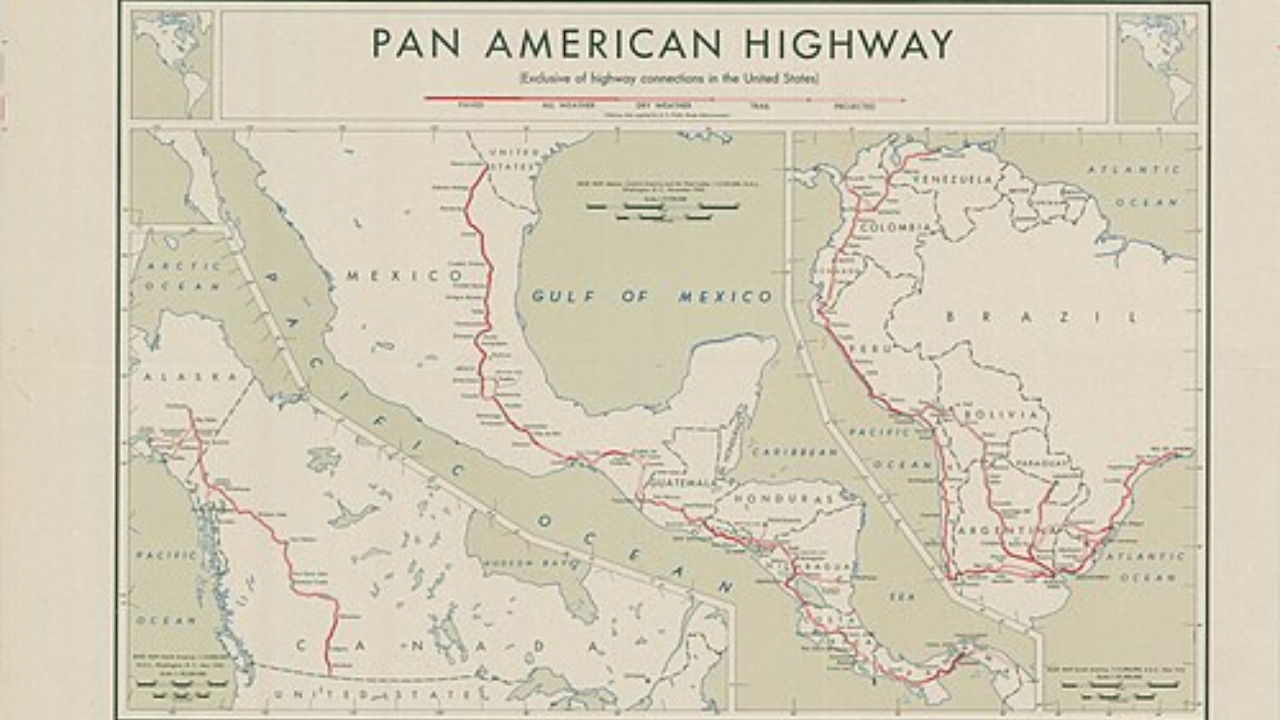
If you find yourself on the Pan-American Highway, somewhere between the frost-bitten edges of Prudhoe Bay and the windswept tip of Tierra del Fuego, you are doing more than driving. You are participating in a 30,000-kilometer commitment. It is a ribbon of asphalt that stitches together two continents, fourteen countries, and nearly every climate known to man. But there is a psychological weight to this road that a map cannot convey.
Imagine a driver named Elias. He is thirty hours into a stretch of Peruvian coastline. The sun is a white-hot coin pressed against the windshield. The radio is static. He realizes he has forgotten something—a passport, a suitcase, a piece of his own mind—left at a roadside diner two hundred miles back. He looks for a break in the median. He looks for the familiar gravel cutout of a U-turn. For another perspective, see: this related article.
There is nothing.
The road dictates his future. To turn back is not a simple flick of the wrist; it is a logistical odyssey. On the Pan-American, the geography itself often forbids the second guess. Similar analysis on this matter has been published by National Geographic Travel.
A Concrete Pulse Through Fourteen Nations
The sheer scale is dizzying. We are talking about a distance that could wrap around a significant portion of the moon. It begins in the oil fields of Alaska, where the air tastes like iron and ice, and it terminates in Ushuaia, Argentina, the literal end of the world. In between, the road transforms. It is a six-lane artery in North America; it is a crumbling, mud-slicked ledge in the mountains of Central America.
The "No U-turn" reality isn't always about a legal sign posted by a highway department. It is about the physical impossibility of retreat. When the road is carved into the side of the Andes, with a vertical rock wall to your left and a three-thousand-foot drop to your right, the concept of "going back" becomes a fantasy. You move forward because the Earth demands it.
The Ghost in the Map
There is a 106-kilometer gap in this legend. It is called the Darien Gap. Between Panama and Colombia, the world’s longest road simply stops. The jungle swallows the asphalt. It is a lawless, roadless stretch of swamp and mountains that has defeated engineers for decades.
Consider the irony. You travel thousands of miles on a road that won't let you turn around, only to reach a point where you cannot go forward. Travelers are forced to put their vehicles on ferries, bypassing the emerald wall of the Darien. It is a forced pause. It is the only moment on the 30,000-kilometer trek where the road allows you to breathe, to look back, and to realize exactly how far you have wandered from home.
The Cost of the Long View
Driving this road changes the way your brain processes distance. In a city, we measure trips in minutes. On the Pan-American, you measure life in borders. You learn the specific smell of diesel in Nicaragua compared to the scent of it in Chile. You learn that "straight" is a relative term when you are crossing the Atacama Desert, where the heat mirages make the road look like it is floating toward the sky.
The invisible stakes are found in the solitude. There are stretches where, if your engine fails, you are no longer a traveler; you are a resident of the wilderness. This isn't a weekend road trip. It is a test of mechanical and emotional endurance. The road doesn't care about your schedule. It doesn't care if you are tired of the vibration of the tires or the endless, repetitive rhythm of the white lines.
Beyond the Asphalt
Why do we do it? Why do thousands of people every year attempt to bridge these fourteen nations?
It isn't for the scenery, though the glaciers and rainforests are hauntingly beautiful. It is for the clarity that comes when you remove the option of quitting. When you are on a road that stretches 30,000 kilometers and offers no easy way home, you are forced to confront yourself. You cannot turn the car around and hide in the familiar. You have to solve the problem in front of you. You have to talk to the border guard who doesn't speak your language. You have to fix the flat tire in the pouring rain of a Costa Rican cloud forest.
The road is a mirror.
The Silence of the End
By the time the road reaches the Southern Cone, the landscape softens. The jagged peaks of the north give way to the rolling, golden pampas of Argentina. The air grows cold again, a mirror image of the Alaskan start.
Ushuaia sits at the end of the line. The road finally stops. There is a sign there, weathered by the Antarctic winds, marking the end of the Pan-American Highway. There are no more countries to cross. No more mountains to climb.
Elias, our hypothetical driver, steps out of his dust-covered truck. He looks back the way he came. For weeks, he wanted nothing more than to turn around, to find that elusive U-turn and go back to the life he knew. But standing at the edge of the world, looking at the grey water of the Beagle Channel, he realizes the road did exactly what it was supposed to do.
It led him to a place where he was no longer the person who started the engine in the north.
The road with no U-turns isn't a feat of engineering. It is a one-way trip into a different version of yourself. You don't just drive 30,000 kilometers. You survive them. And when the pavement finally ends, you realize that the hardest part wasn't the distance, but the moment you realized there was no turning back—and you kept driving anyway.